
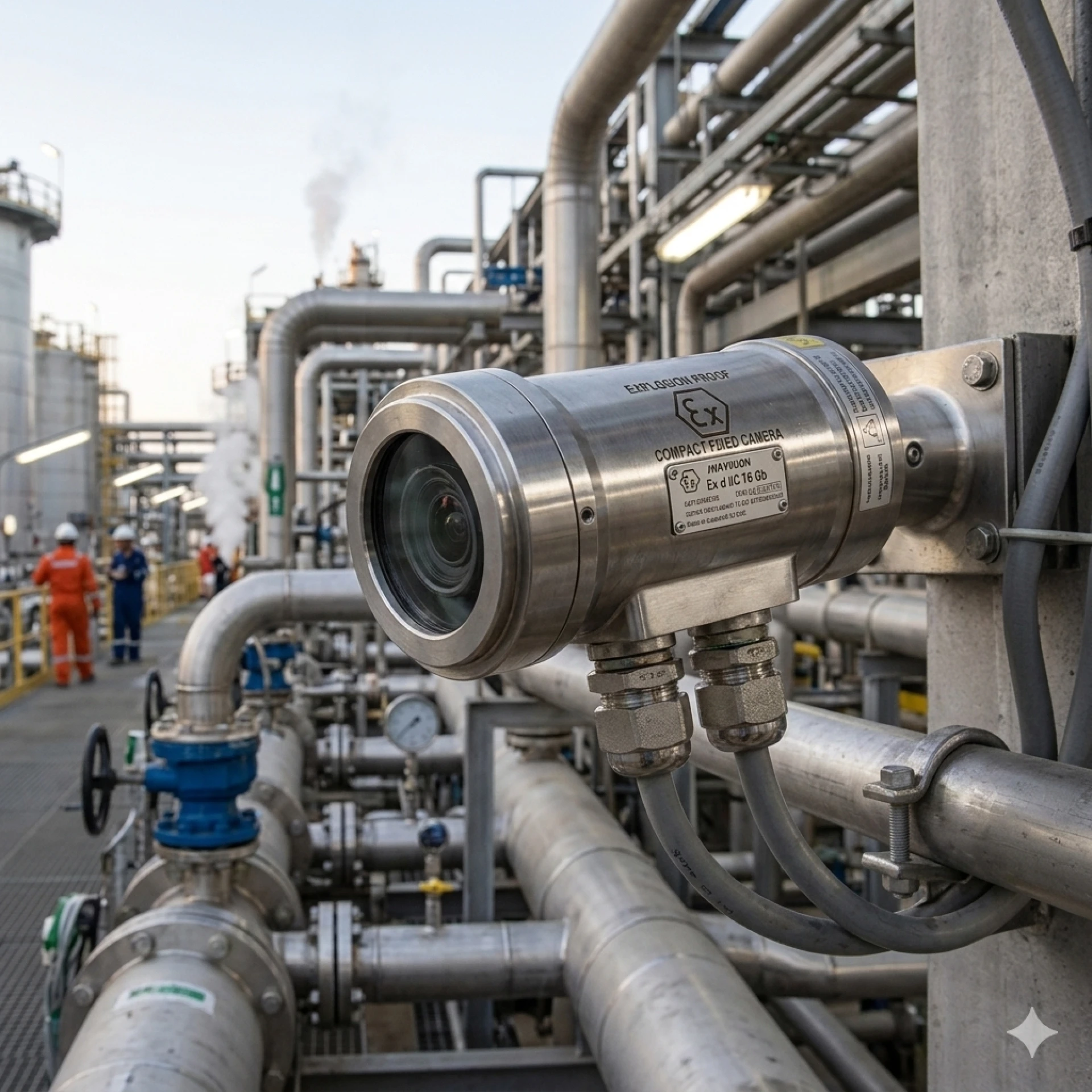
Purchasing an explosion proof camera for a classified hazardous area is fundamentally different from any other procurement decision a safety manager or HSE team will make during the course of a year. The consequences of selecting a general industrial camera and installing it in a Zone 1 or Zone 2 environment are not limited to a compliance audit finding or a regulatory notice. They extend to the real and immediate possibility of the camera itself becoming an ignition source in an explosive atmosphere — an outcome that no amount of retrospective corrective action can undo.
Yet across the oil and gas, chemical processing, pharmaceutical, and fuel storage sectors in the UK, UAE, and Kuwait, procurement decisions for hazardous area cameras are still being made on the basis of price and pixel count alone, without the structured technical evaluation that the safety and compliance stakes genuinely demand. This checklist is designed to change that. Here are fifteen specifications that every safety manager must evaluate before committing to an Explosion proof Fixed Camera purchase in 2026.
1. ATEX Zone Certification Category
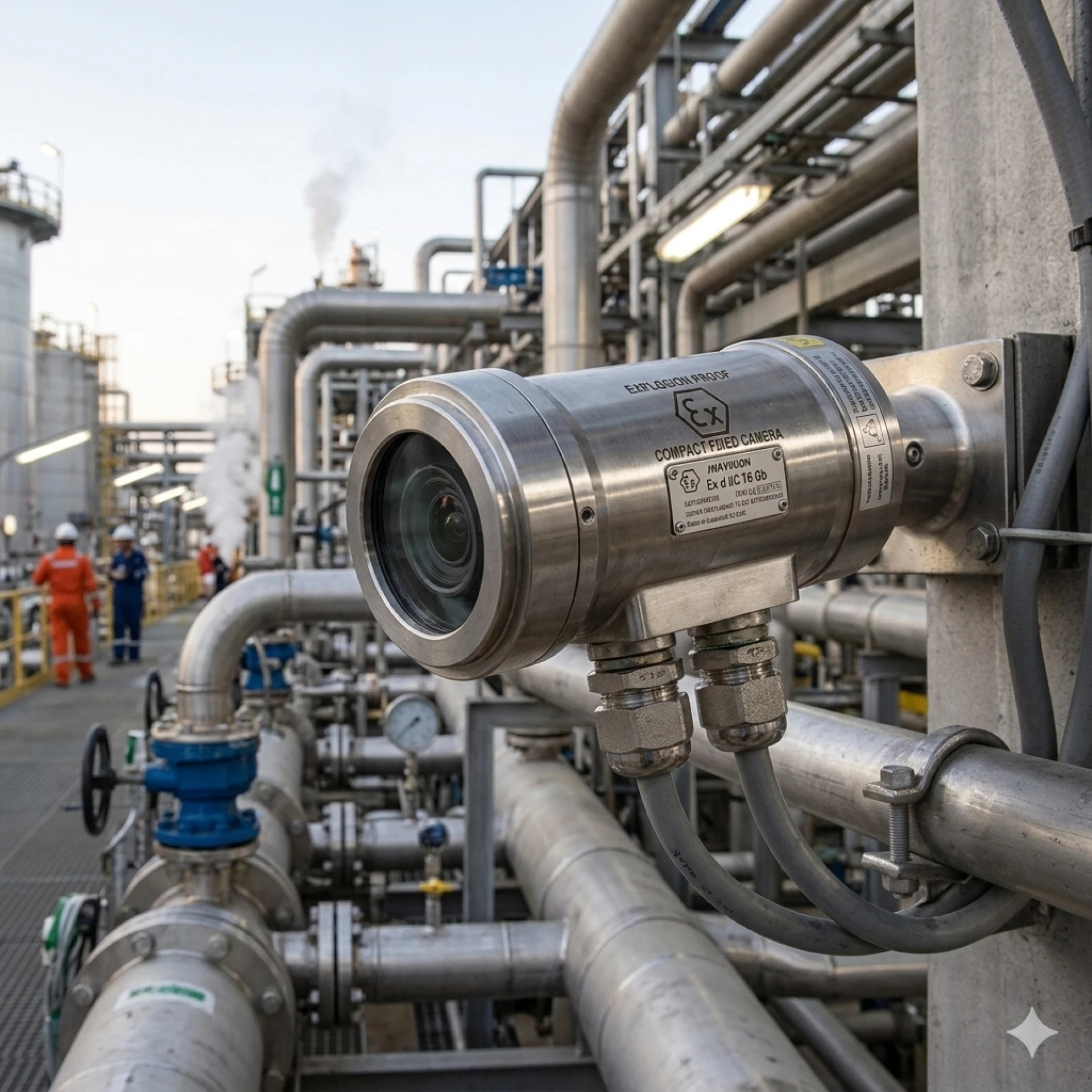
The single most important specification on any hazardous area camera is its ATEX zone certification. The camera must be certified for the specific zone — Zone 1, Zone 2, Zone 21, or Zone 22 — in which it will be installed. Equipment group and category markings must match the zone classification drawing for the installation location. This is a binary compliance requirement, not a preference.
2. IECEx Certification for International Deployments
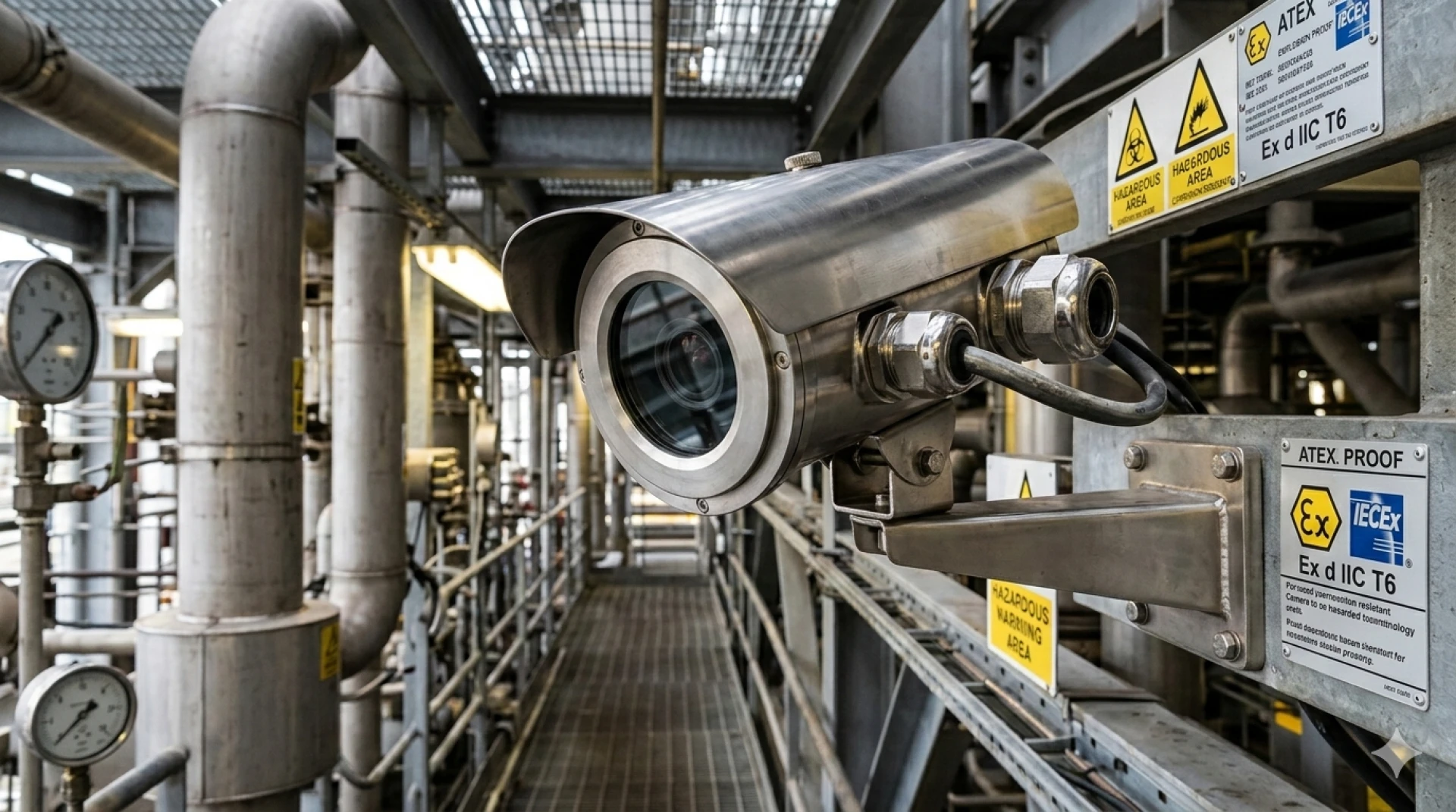
For facilities operating in the UAE and Kuwait, IECEx certification is the internationally recognised equivalent of ATEX and is required by many regional regulatory authorities. A camera carrying both ATEX and IECEx markings provides the broadest compliance coverage for operators managing assets across multiple jurisdictions simultaneously.
3. Image Resolution: 2MP Minimum, 5MP Preferred
In 2026, a 2-megapixel sensor represents the practical minimum for a hazardous area fixed camera used in process monitoring or incident investigation applications. A 5-megapixel or higher resolution sensor provides the image detail necessary to read instrument displays, verify valve positions, and identify the early physical indicators of process anomalies at meaningful distances from the mounting point.
4. Infrared Night Vision Range and Performance
Process monitoring in hazardous areas does not pause after dark. Infrared illumination range must be evaluated against the actual monitoring distance required at each installation point. Cameras with IR cut filter mechanisms must be assessed for their performance in the mixed-lighting conditions that are common in partially illuminated industrial environments.
5. IP Rating for Ingress Protection
An IP66 rating provides protection against powerful water jets and total dust ingress prevention — the practical minimum for outdoor and semi-outdoor hazardous area installations. Facilities in coastal, offshore, or high-humidity environments should specify IP67 or IP68 rated enclosures where immersion or sustained water exposure is a realistic operating condition.
6. Corrosion Resistance and Enclosure Material Specification
Marine environments, chemical plant atmospheres, and facilities processing sulphur-bearing hydrocarbons subject camera enclosures to aggressive corrosion conditions that standard aluminium or mild steel housings cannot withstand over multi-year service periods. Stainless steel or GRP enclosures with appropriate surface treatments should be specified for installations in corrosive service environments.
7. Operating Temperature Range
The camera's certified operating temperature range must encompass both the maximum ambient temperature expected at the installation location — which may be significantly elevated in process areas near furnaces, heat exchangers, or in the Arabian Gulf summer — and the minimum temperature for cold climate or cryogenic proximity installations.
8. Temperature Class (T-Class) Rating
The temperature class marking on an ATEX-certified camera defines the maximum surface temperature the camera can reach under fault conditions. This must be lower than the auto-ignition temperature of the most easily ignitable substance present in the hazardous area. Selecting a camera with an insufficient T-class rating is a fundamental ATEX compliance failure.
9. Mounting Strength and Vibration Resistance
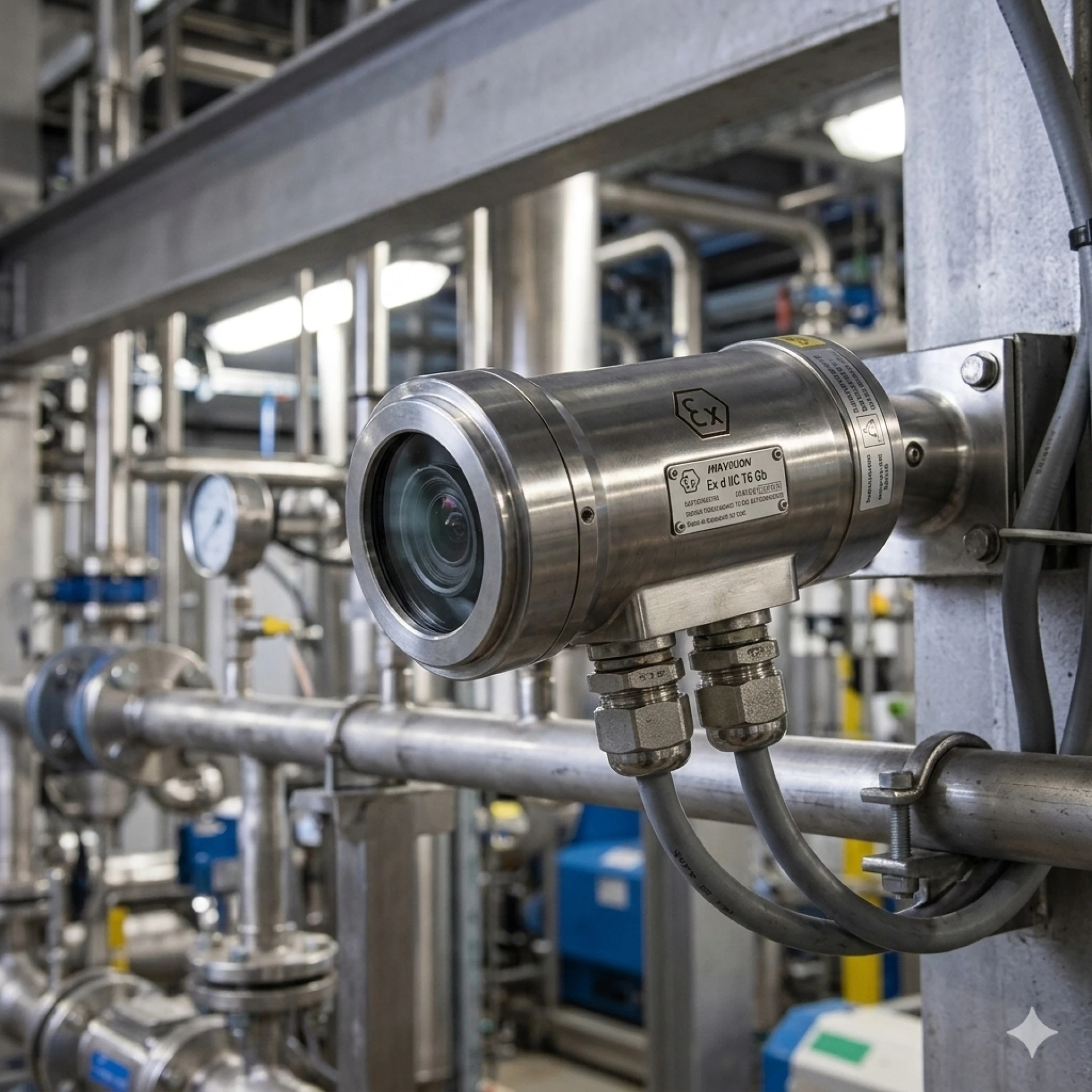
An Explosion proof Compact Fixed Camera installed on a compressor module, pump skid structure, or offshore platform deck is subject to continuous mechanical vibration that can progressively loosen standard mounting hardware and fatigue camera housings. Vibration resistance ratings, mounting bracket specifications, and the quality of the cable gland and conduit entry arrangement must all be evaluated for the specific installation environment.
10. Power over Ethernet Capability
PoE (Power over Ethernet) capability simplifies installation in hazardous areas by reducing the number of cable penetrations required through classified zone boundaries — each of which must be appropriately sealed and documented. PoE-capable cameras that meet the power budget requirements of their IR illuminators and onboard processors reduce installation complexity and ongoing maintenance requirements significantly.
11. Lens Options and Field of View Flexibility
Fixed focal length lenses deliver superior optical quality for defined monitoring distances, while varifocal lenses provide installation flexibility in environments where the precise mounting position cannot be determined until the physical installation is underway. The lens specification must be matched to the monitoring distance, field of view requirement, and lighting conditions of each individual camera position rather than standardised across an entire installation.
12. Video Analytics Readiness and Onboard Processing
In 2026, an Explosion proof Fixed Type Camera that cannot support onboard or edge video analytics represents a significant limitation for facilities seeking to integrate their surveillance network with alarm management, access control, and process safety response systems. Analytics capabilities including motion detection, line crossing, object detection, and smoke or flame recognition are increasingly standard expectations in hazardous area camera specifications for new installations and major upgrades.
13. Cybersecurity Compliance and Network Architecture
Industrial control system cybersecurity frameworks — including IEC 62443 — are now routinely applied to surveillance networks in oil and gas and chemical processing facilities. Cameras must support encrypted communications, password enforcement, and secure firmware update mechanisms. The network architecture of the camera system must be reviewed against the facility's OT cybersecurity policy before procurement is finalised.
14. Certification Documentation Package
Every ATEX and IECEx certified camera must be supplied with a complete documentation package including the EC Type-Examination Certificate, the Declaration of Conformity, the manufacturer's installation and maintenance instructions specific to the hazardous area application, and the marking schedule that confirms all parameters visible on the camera enclosure. Incomplete documentation is a compliance failure that will be identified in any competent safety audit.
15. Supplier Technical Support and Spares Availability
A camera installed in a Zone 1 classified area of an operating refinery or chemical plant cannot simply be replaced with an equivalent model from a different supplier if the original specification becomes unavailable. Spare parts availability, firmware support continuity, and the technical competence of the supplier's hazardous area engineering team must be evaluated as seriously as the camera's technical specifications — because the total cost of ownership across a five to ten year service life will be significantly influenced by all three.
ConclusionSelecting an explosion proof fixed camera for a hazardous area installation in 2026 is a structured technical decision that demands evaluation across certification compliance, environmental resilience, imaging performance, network integration, and supplier capability in equal measure. Safety managers who approach this procurement with a comprehensive checklist — rather than a price comparison — protect their facilities, their people, and their organisations from the consequences of a compliance failure or a surveillance gap in a location where neither is acceptable. For every HSE professional and procurement lead responsible for hazardous area camera specifications across oil and gas, chemical processing, fuel storage, and offshore facilities in the UK, UAE, and Kuwait, the most important question to ask before signing any purchase order is: have you evaluated every one of these fifteen specifications against the actual operating conditions, zone classifications, and compliance requirements of each specific installation point in your facility?