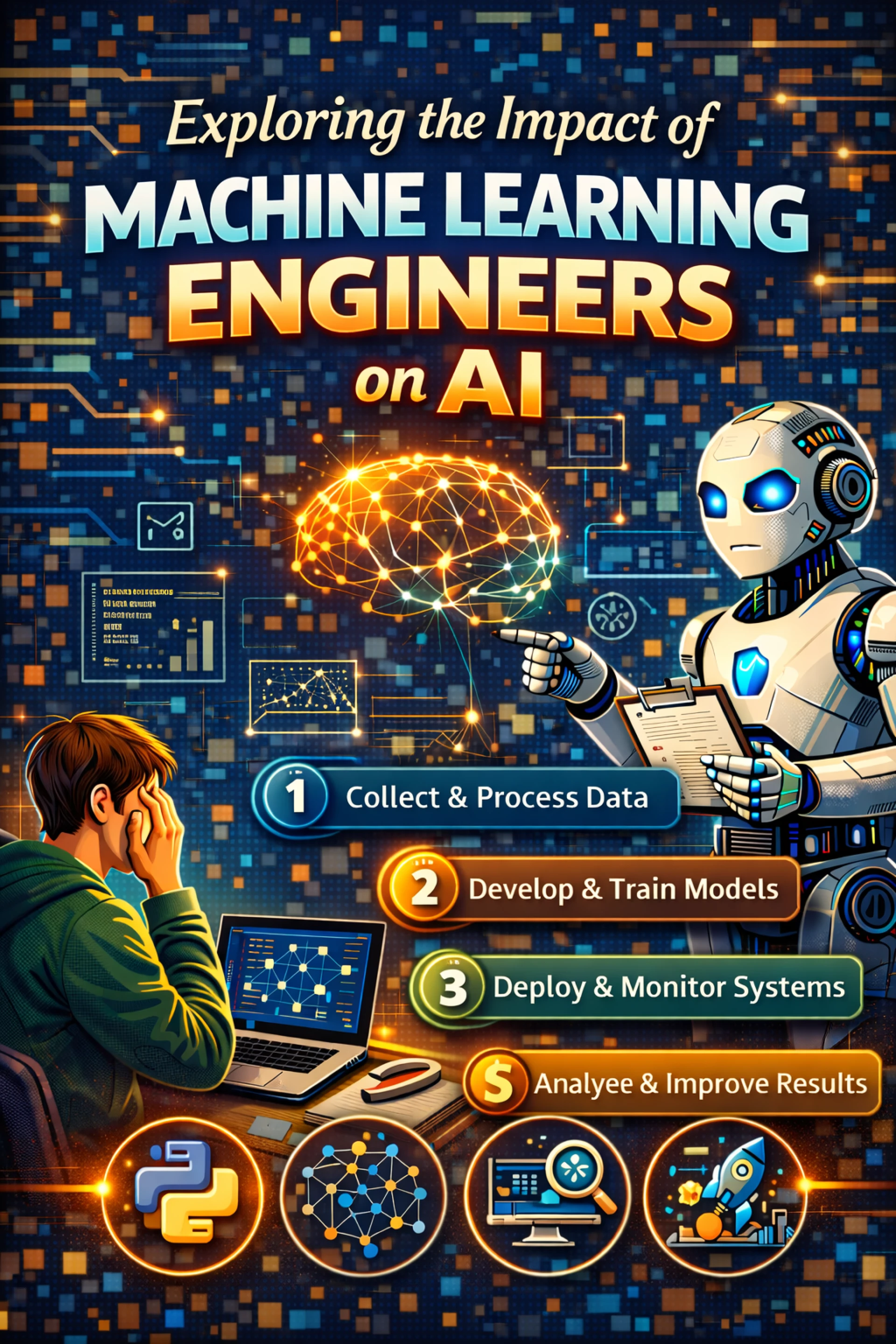
The rise of the Machine Learning (ML) Engineer has shifted the AI landscape from "experimental science" to "industrial reality." While data scientists often focus on the why of a model, ML Engineers focus on the how—specifically, how to make it survive in the wild.
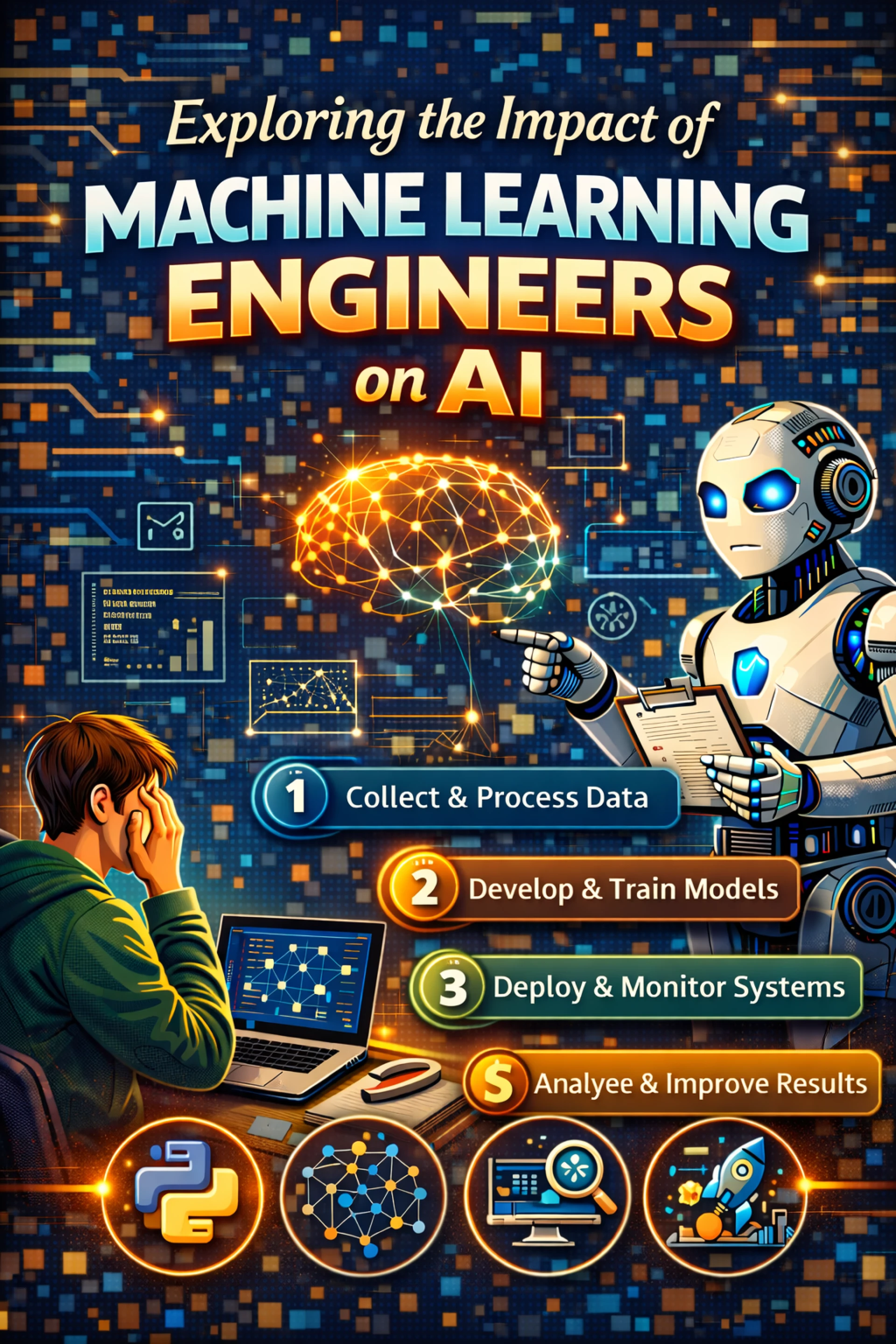
The Bridge Between Theory and Reality
In the early days of AI, many brilliant models died in Jupyter Notebooks. They worked perfectly on a static dataset but crumbled when faced with real-world scale. The ML Engineer acts as the bridge, translating mathematical research into production-ready software.
Core Pillars of Their Impact
- Scalability: They ensure a model that works for 10 users can handle 10 million. This involves optimizing inference latency and managing distributed computing resources.
- MLOps (Machine Learning Operations): Just as DevOps revolutionized software, MLOps has standardized the AI lifecycle. ML Engineers build automated pipelines for CI/CD, data validation, and model monitoring.
- Infrastructure Design: They don't just write code; they design the "foundry" where AI is forged. This includes managing GPU clusters and cloud architecture.
Technical Synergy
The impact of an ML Engineer is best seen through their collaboration with other roles.
Feature
Data Scientist
ML Engineer
Primary Focus
Statistical analysis & Model accuracy
Deployment & System reliability
Tools
R, Python, Jupyter, Statistics
Docker, Kubernetes, Spark, APIs
Goal
Find the best algorithm
Build a resilient system around the algorithm
The "Hidden" Work: Data Engineering & Maintenance
A significant portion of an ML Engineer's impact is invisible. They tackle Data Drift—the phenomenon where a model's performance decays because the real world changes (e.g., a shopping recommender failing because of a sudden global trend). By building "self-healing" systems that trigger retraining, they ensure AI stays relevant.
The 80/20 Rule of AI: It is often said that 20% of the work is building the model, while 80% is the engineering required to serve, monitor, and maintain it. ML Engineers own that 80%.
Why This Matters Now
As we move into the era of Large Language Models (LLMs) and Generative AI, the stakes are higher. Integrating a model like Gemini or GPT into a corporate workflow requires rigorous engineering to manage costs, prevent "hallucinations," and ensure data privacy. The ML Engineer is the gatekeeper of this transition.