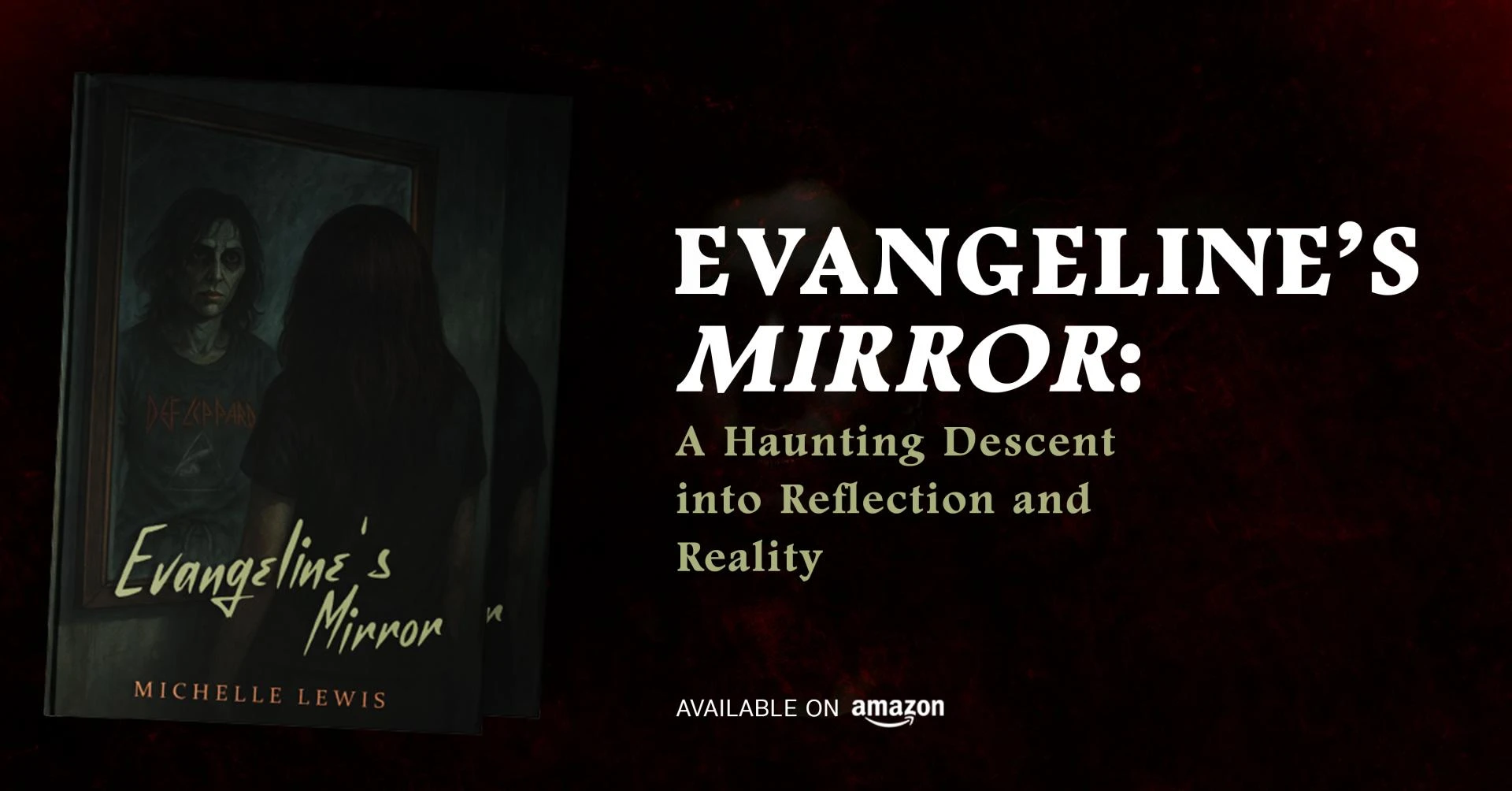
Psychological thrillers walk a razor’s edge between mind and madness, and Evangeline’s Mirror by Michelle Lewis takes that tightrope walk to bone-chilling heights. This haunting novel explores the fragile boundary between what is real and what lurks deep within the subconscious, as protagonist Evangeline confronts a world where the MirrorMirror no longer reflects her image — it torments her.
From the very first page, readers are drawn into an unsettling atmosphere where nothing is quite what it seems. Evangeline's journey begins in a moment that could be dismissed as fatigue: her reflection moves on its own. But when that exact reflection begins whispering her name, what she initially chalks up to exhaustion becomes an obsession that distorts her reality. The once‑familiar MirrorMirror becomes a threshold into something far more terrifying — a realm where memory, fear, and truth are indistinguishable.
Michelle Lewis crafts this story with acute psychological depth. Rather than relying solely on external scares, Evangeline’s Mirror brings readers into the protagonist's internal world — a place where doubt and perception collide. The MirrorMirror serves as a chilling metaphor for the parts of ourselves we try to ignore. As Evangeline becomes increasingly entangled with the manifestations in the glass, the novel probes not just what we fear, but why we fear it.
What makes this novel especially compelling is the way it blurs conventional boundaries. Is Evangeline descending into madness, or is something truly supernatural at play? The answer twists through each chapter, keeping readers uncertain and engaged. The suspense grows steadily, driven by evocative descriptions and narrative pacing that maintains tension without ever feeling gratuitous. The MirrorMirror becomes an unreliable companion — at once familiar and alien — reflecting not only Evangeline's image, but the unspoken parts of her psyche.
This psychological terrain gives the story emotional resonance beyond horror. As Evangeline faces the Mirror's haunting provocations, she is compelled to confront the truths she has long avoided. The novel's exploration of identity, memory, and self-temptation gives it depth that resonates. Rather than presenting horror as spectacle, Lewis treats it as a lens on the human condition — a way of illuminating the parts of ourselves we rarely face in the light of day.
The setting of the novel further enhances its chilling mood. Every day, spaces take on a sinister quality as Evangeline's experiences escalate, making familiar places feel deeply unsettling. The MirrorMirror, usually a symbol of clarity and self-recognition, becomes a tool that reveals darker currents beneath the surface of her life. Lewis's narrative skill lies in creating a sense of intimacy and vulnerability, so that each turn of the story feels personal and immediate.
Through atmospheric tension and psychological insight, Evangeline’s Mirror delivers more than just a thriller — it offers an emotional and introspective journey. The novel taps into universal fears: the dread of losing control, the terror of confronting one’s own imperfections, and the haunting knowledge that sometimes what we avoid seeing is precisely what needs to be faced.
Ultimately, Evangeline’s Mirror is a gripping exploration of how fragile reality can be when the self begins to unravel. Michelle Lewis invites readers to peer into the MirrorMirror alongside her protagonist, but warns that some reflections may refuse to remain silent. For fans of psychological horror with depth and character-driven suspense, this novel promises an unforgettable journey into the heart of fear, identity, and truth.