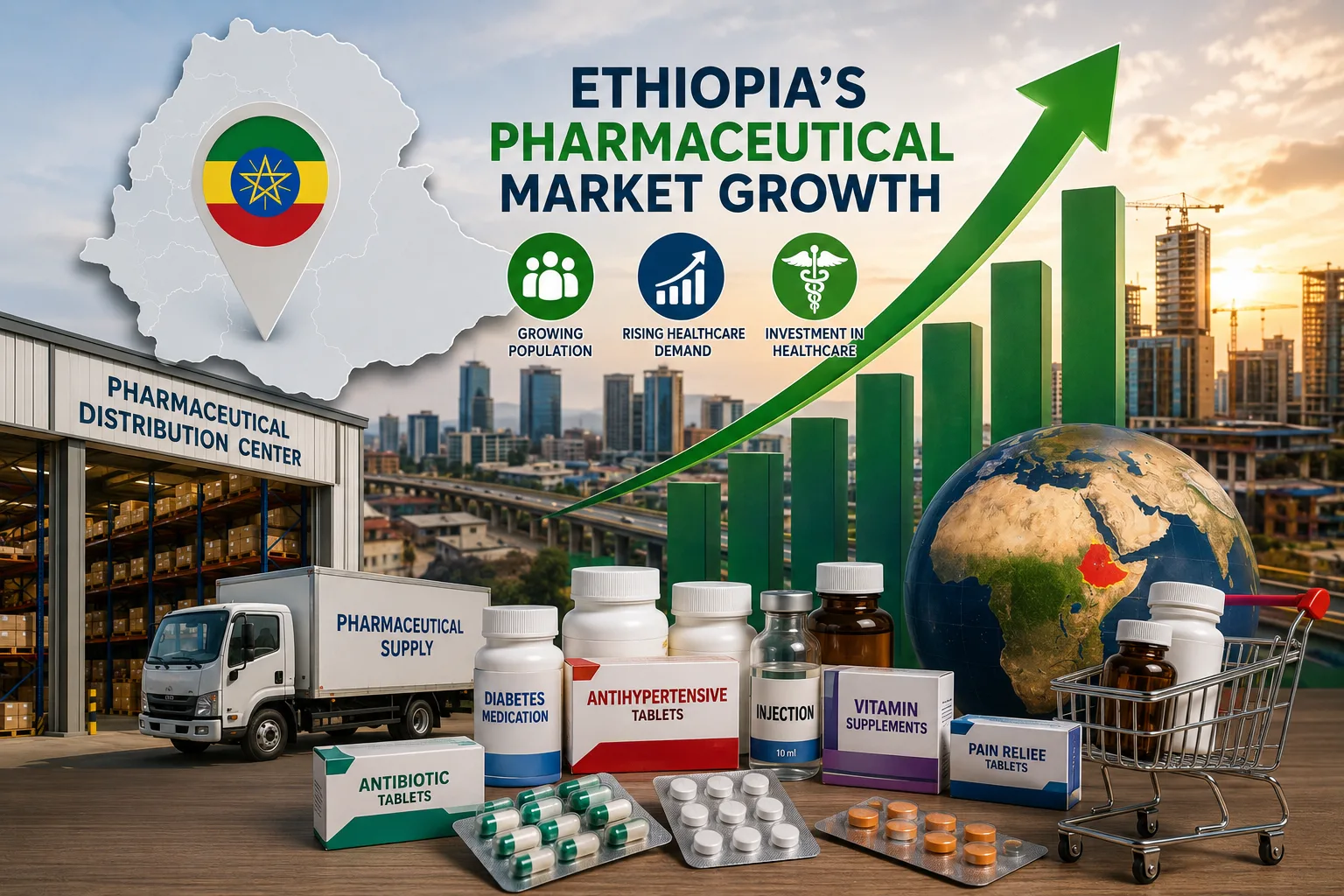
Ethiopia's pharmaceutical market is expanding. Not slowly. Fast. I've watched it transform over the past decade. The market that barely existed is becoming one of Africa's most dynamic pharmaceutical sectors. For importers and distributors, this represents extraordinary opportunity.
But opportunity without understanding is risk. You need to understand what's driving growth. You need to see where the opportunity lies. You need to know how to position yourself to capture it.
Let me walk you through Ethiopia's pharmaceutical market growth and the real opportunities available to importers and distributors right now.
The Market Context: A Decade of Change
A decade ago, Ethiopia's pharmaceutical market was small. Very small. Most medicines were imported. Manufacturing was minimal. Distribution was chaotic. Importers were few. The market seemed trapped.
But things changed. Healthcare investment increased. Economic growth accelerated. Population expanded. Disease burden shifted. Demand for medicines grew dramatically.
Today, Ethiopia's pharmaceutical market is one of East Africa's fastest growing. Annual growth rates exceed 10%. In some segments, growth is 15-20% annually. This isn't stagnation. This is explosive growth.
The market is still small compared to Kenya or South Africa. But it's growing faster. The trajectory is upward. The opportunity is real.
What's Driving Growth
Several factors are driving this pharmaceutical market expansion.
Healthcare Investment is increasing. Government is spending more on healthcare. The health sector is expanding. New clinics are opening. Hospitals are upgrading. More healthcare facilities mean more medicine demand.
Population Growth is significant. Ethiopia's population is young and growing. From 100 million to 120 million in a decade. More people means more healthcare demand. More disease. More medicine needed.
Urbanization is accelerating. People are moving to cities. Urban populations have better healthcare access. They demand medicines. Rural-to-urban migration drives urban pharmaceutical demand.
Non-Communicable Disease Burden is rising. Diabetes is increasing. Hypertension is spreading. Obesity is climbing. These diseases require long-term medication. Chronic disease management drives sustained medicine demand.
Generic Medicine Growth is explosive. Patents expire. Generics enter market. Prices drop. Affordability increases. More patients can access medicines. Volume grows dramatically.
Manufacturing Expansion is underway. Ethiopia is building pharmaceutical manufacturing capacity. More local production reduces import dependence. But it also creates supply chain opportunities for raw materials and intermediates.
Middle Class Expansion is creating purchasing power. More Ethiopians have income. They can afford medicines. Private healthcare is growing. Private pharmacies are expanding. Consumer demand is increasing.
Government Initiatives are supporting pharmaceutical sector growth. Healthcare policy is improving. Pharmaceutical sector support is increasing. Regulatory environment is becoming more business-friendly.
All of these factors combine. The result: rapid pharmaceutical market growth.
Market Size and Projections
Ethiopia's pharmaceutical market is currently estimated at $500 million to $700 million annually. This is relatively small. But growth is double-digit annually.
Projections suggest the market could reach $1-1.5 billion within 5-10 years if current growth trends continue. That represents 100-200% expansion. That's enormous opportunity.
But these projections assume continued economic growth and healthcare investment. They assume political stability. They assume no major disruptions. These aren't guaranteed. But they're reasonable assumptions based on current trends.
Where the Opportunities Lie
For importers and distributors, opportunities exist in several areas.
Chronic Disease Medicines are in high demand. Diabetes medicines, hypertension treatments, statins. These are growth categories. Patients need them continuously. Demand is reliable.
Generic Medicines are growing fastest. Patents expire. Generics enter market. Volumes explode. Importers who supply generics find ready markets.
Over-the-Counter Medicines are accessible to consumers. Pain relievers, cough medicines, digestive aids. These don't require prescription. Consumers buy directly. Retail pharmacies stock heavily.
Nutritional Supplements are growing category. Vitamins, minerals, herbal products. Demand is rising. Regulatory barriers are lower. Profitability can be good.
Veterinary Medicines are underappreciated opportunity. Ethiopia's agricultural sector is large. Livestock is important. Veterinary medicine demand is growing.
Hospital Supplies represent large opportunity. Injectable medicines, infusions, diagnostic supplies. Hospitals need consistent supply.
Pediatric Formulations are needed for growing population. Child healthcare is priority. Pediatric medicines are in demand.
Antimicrobials remain essential. Despite shift to non-communicable diseases, infections still matter. Antibiotics, antivirals are needed.
All of these categories offer import opportunities. The key is identifying demand and positioning appropriately.
Competitive Landscape
The competitive landscape is changing. A decade ago, few importers competed. Now many do. Competition is increasing.
Established Importers have advantages. They have relationships. They have distribution networks. They have cash flow. They're hard to displace.
New Entrants can still succeed. They can find niches. They can serve underserved regions. They can compete on price or service. The market is large enough for multiple players.
Manufacturers are entering Ethiopia. Some companies are starting local manufacturing. This reduces need for imports. But it also creates opportunities for those importing raw materials and equipment.
Consolidation is happening. Larger distributors are acquiring smaller ones. The market is concentrating. This creates both challenges and opportunities.
The competitive environment is dynamic. It's not easy. But it's accessible for serious importers.
Distribution Channels: Where to Focus
Different channels offer different opportunities.
Retail Pharmacies are the largest channel. Thousands exist across Ethiopia. They're fragmented and independent. Serving them requires relationships and service.
Hospital Systems are important channel. Government and private hospitals. They buy in volume. But procurement is slow and sometimes unpredictable.
Clinic Networks are growing. Small health clinics are expanding. They need reliable medicine supply.
Wholesale Distributors aggregate demand. Working with wholesalers gives scale but reduces control.
Direct-to-Consumer is emerging. Online pharmacies are growing. E-commerce is developing. New channels are opening.
Different importers will choose different channels. The key is understanding each channel's characteristics and serving it appropriately.
Regional Opportunities
Ethiopia's regions offer different opportunities.
Addis Ababa is largest market. Urban. Wealthy. Competitive. High volume. Best for those seeking scale.
Regional Cities (Dire Dawa, Adama, Harar) are growing. Less competitive. Growing demand. Good for those seeking less saturated markets.
Secondary Towns offer untapped opportunity. Limited current supply. Growing demand. Good for regional distributors.
Rural Areas are underserved. Difficult to serve. Low margins. But enormous untapped need.
Smart importers will identify their ideal region and focus on serving it well.
Challenges to Navigate
Growth opportunities come with challenges.
Regulatory Complexity requires navigation. EFDA registration takes time. Compliance is mandatory.
Import Infrastructure can be slow. Addis clearance procedures are cumbersome. Customs can delay.
Payment Systems are challenging. Cash flow management is critical. Credit terms vary.
Distribution Logistics are difficult. Roads vary in quality. Rainy season creates access problems.
Currency Fluctuations affect costs. Shilling movements change profit margins.
Price Controls limit profitability on some medicines.
These challenges are real. But they're navigable. Companies successfully operating in Ethiopia manage these challenges daily.
Market Entry Strategy
For those considering market entry, strategy is important.
Start with Products You Understand. Don't try everything. Focus on therapeutic areas you know.
Build Relationships Early. Meet distributors. Understand the market. Build partnerships before major investment.
Choose Your Region Carefully. Don't try to serve all Ethiopia. Pick a region. Dominate it. Expand strategically.
Find the Right Local Partner. A good local agent is invaluable. They navigate the system. They open doors.
Invest in Compliance. Get registered properly. Meet EFDA requirements. Don't cut corners.
Understand Your Costs. Know your margins. Understand your economics. Price competitively but profitably.
Start with Volume Products. High-demand medicines give you market entry. Build from there.
Market entry requires strategy. But it's achievable for serious importers.
The Long-Term Outlook
Ethiopia's pharmaceutical market will continue growing. Healthcare demand is increasing. The economy is developing. Population is expanding. Market drivers are in place.
But growth isn't guaranteed. It depends on continued economic development. It depends on political stability. It depends on healthcare investment.
For now, trends are positive. The opportunity window is open. Those who enter now, with good strategy and execution, will be well-positioned for years ahead.
The market that was small is becoming significant. The opportunity that was marginal is becoming substantial. The market that was uncertain is becoming clearer.
Moving Forward: Capturing the Opportunity
For importers and distributors, Ethiopia's market growth represents opportunity. Real opportunity. Not guaranteed riches. But genuine business potential.
The key is understanding the market. Understanding demand. Understanding distribution. Understanding competition. Understanding your own capabilities and resources.
Then positioning yourself to serve that market effectively. With quality products. With reliable supply. With good relationships. With professional service.
Resource: To understand how established pharmaceutical exporters approach Ethiopia's market growth opportunity, examine how experienced companies structure their market entry and expansion strategies. For example, reviewing how manufacturers approach Ethiopia's growing market shows the product strategies and market positioning that successful importers use to capture growth opportunity.
Ethiopia's pharmaceutical market is growing. The growth is real. The opportunity is there. The question is whether you'll be positioned to capture it.
Start understanding the market now. Build relationships. Develop strategy. Position yourself for opportunity. The pharmaceutical sector in Ethiopia is expanding. Those who understand it and serve it well will thrive.
The time to enter is now. The market window is open.