
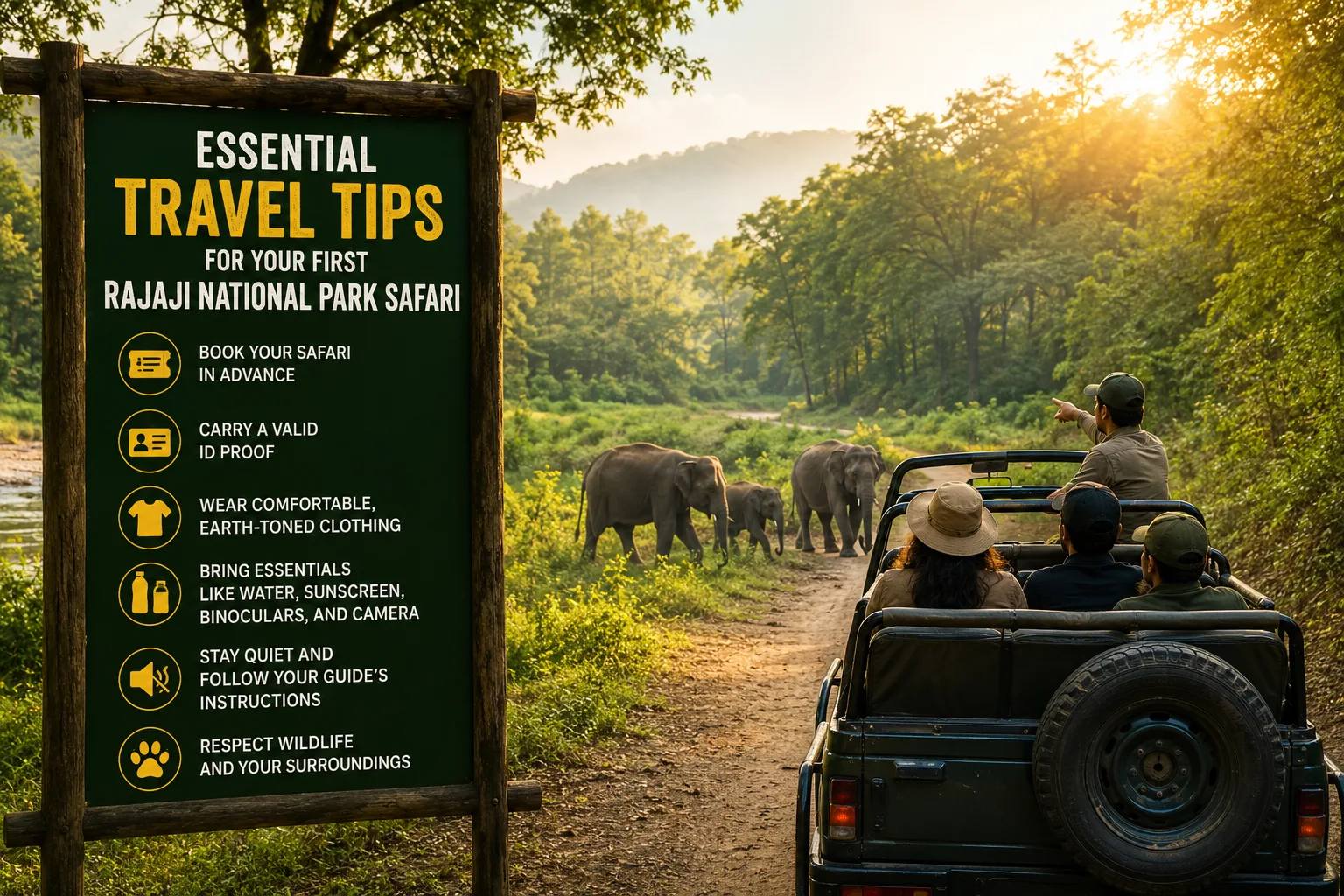
If this is your very first jungle safari, Rajaji is actually a good place to start. It's close to Rishikesh and Haridwar, so you don't need a long, tiring journey just to reach the park. The zones are well managed, guides are experienced, and the range of terrain, from riverbanks to sal forest to open grassland, means every trip feels a little different.
You also don't need any special gear or experience to enjoy it. A jeep safari here is comfortable and beginner-friendly, which is exactly why so many first-timers choose Rajaji over parks that feel more remote or harder to plan for.
Best Time to Visit Rajaji National Park
Rajaji's safari season runs from mid-November to mid-June. Most zones close during the monsoon, since heavy rain makes the forest tracks unsafe and animals move deeper into cover anyway.
Here's a simple way to think about the months:
- November to February: Cool, comfortable weather. Great for long safaris without getting tired from the heat.
- March to April: Warmer days, but animals visit water points more often, so sightings can actually improve.
- May to mid-June: Hot and dry. Not the most pleasant weather, but this is peak sighting season since animals stick close to water.
If comfort matters more to you than sightings, go between December and February. If you're chasing tiger or leopard sightings, April and May tend to work better.
Choosing the Right Safari Zone
Rajaji has five main safari zones, and each one offers a different experience. This matters a lot when you're booking Rajaji National Park, since the zone you pick decides what you're likely to see.
A Quick Look at the Zones
- Chilla: Best known for tigers and elephants, close to Haridwar and Rishikesh.
- Motichur: Great for families, known for reliable elephant sightings in sal forest.
- Jhilmil: The zone for birdwatchers, with over 400 bird species recorded.
- Ranipur: Quiet and less crowded, known for leopards and sloth bears.
- Mohand: Convenient if you're coming from Dehradun, offers both tigers and birds.
If you're not sure which one to pick, Chilla or Motichur are the easiest starting points for a first safari. They're well organised and see fewer surprises.
What to Pack for Your Safari
Packing right makes a bigger difference than people expect. A few small things can make your safari far more comfortable.
- Light, neutral colored clothing (avoid bright colours and white)
- A cap or hat for sun protection
- Sunglasses and sunscreen
- A light jacket for early morning safaris, since it can get chilly before sunrise
- Binoculars, if you have a pair
- A camera or phone with a decent zoom
- A bottle of water
- Comfortable, closed shoes
Avoid strong perfumes or scented products. Animals have a sharp sense of smell, and strong scents can actually reduce your chances of a close sighting.
Booking Tips for First-Time Visitors
Booking Rajaji National Park safari isn't complicated, but a bit of planning goes a long way, especially during peak months.
Book Early, Especially for Popular Zones
Chilla and Motichur permits sell out fast during December and January. If you have specific dates in mind, try to book at least a week in advance.
Choose Your Time Slot Carefully
Each zone runs a morning and an afternoon safari. Morning safaris usually offer better sightings, since animals are more active before the day heats up.
Carry a Valid ID
You'll need a government ID for entry permits. Keep a copy handy, since it's asked for at the gate.
Confirm Your Zone Before You Travel
Some zones open a little earlier or later than others. Jhilmil, for example, opens in October while most other zones open in mid-November. Always double-check before you plan your trip around a specific zone.
Wildlife You Can Expect to See
Every zone has its own highlights, but here's a general idea of what shows up across the park.
- Tigers, mostly in Chilla and Mohand
- Elephants, especially in Motichur and Chilla
- Leopards, commonly spotted in Ranipur
- Sloth bears, occasionally seen in Ranipur
- Spotted deer and sambar, found in almost every zone
- Over 300 bird species across the park, with Jhilmil being the top spot for birdwatching
Sightings aren't guaranteed anywhere, since this is a wild forest, not a zoo. But going in the early morning and staying quiet during the drive genuinely improves your chances.
Safety Guidelines You Should Know
Safety rules exist for a reason, and they're worth taking seriously.
- Stay inside the vehicle at all times. Getting out isn't allowed, and it isn't safe either.
- Keep your voice low. Loud noise scares animals away and can also attract unwanted attention.
- Don't feed any animals, even the smaller ones like monkeys.
- Follow your guide's instructions, especially if an animal is spotted nearby.
- Carry basic medication if you have any health conditions, since medical help can be far away inside the park.
- Avoid flash photography, since it startles animals and can even be dangerous during a close encounter.
Common Mistakes First-Time Visitors Make
A few small mistakes can take the fun out of your first safari. Here's what to watch for.
- Booking the wrong zone. Picking a zone based on price alone instead of what wildlife you actually want to see.
- Showing up late. Safari slots have fixed timings, and being late can mean missing your safari entirely.
- Wearing bright clothes. This makes animals more alert to your presence and reduces sighting chances.
- Expecting guaranteed sightings. Wildlife spotting depends on luck, season, and timing. It's never a sure thing.
- Not carrying cash. Some smaller expenses at the gate, like parking or guide tips, aren't always covered by card payments.
Rajaji Safari Zones at a Glance
If you want a quick summary before deciding, here's how the five zones stack up.
Chilla is known for tigers and elephants, and it's the easiest choice for first-time visitors. It runs mid-November to mid-June.
Motichur is known for reliable elephant herds and suits families well. It also runs mid-November to mid-June.
Jhilmil stands out for its 400+ bird species and is the top pick for birdwatchers. It has a slightly longer season, open from October to June.
Ranipur is known for leopards and sloth bears, and it's the best choice if you want a quiet, peaceful safari. It runs mid-November to mid-June.
Mohand offers a mix of tigers and birds, and it's the most convenient option if you're travelling from Dehradun. It also runs mid-November to mid-June.
Final Travel Advice for a Smooth First Safari
Reach the gate at least 30 minutes before your slot. This gives you time to complete formalities without rushing.
Carry a printed or digital copy of your booking confirmation. It's usually asked for at the entry point.
Keep your expectations realistic. A good safari isn't only about spotting a tiger. It's about the forest, the quiet, and everything else you notice along the way.
It also helps to travel with an open mind. Some days you'll see three or four animals up close. Other days, the forest stays quiet, and all you get is a peaceful drive through beautiful terrain. Both are part of what makes a real jungle safari worth doing.
Frequently Asked Questions
1. What is the best time for a Rajaji National Park Safari? November to February is best for comfortable weather, while April and May tend to give better wildlife sightings due to the heat pushing animals toward water sources.
2. Which zone should a first-time visitor choose? Chilla or Motichur are the easiest zones for beginners. Both are well organised and offer reliable sightings.
3. How far in advance should I complete my booking for Rajaji National Park? At least a week in advance is recommended, especially for Chilla and Motichur during peak season months like December and January.
4. Is Rajaji National Park safe for families with children? Yes, especially in zones like Motichur, which are calmer and known for gentle elephant sightings rather than fast-paced tiger tracking.
5. What should I avoid wearing on a safari? Avoid bright colours and white clothing. Stick to neutral, earthy tones like green, brown, or khaki to blend in better with the surroundings.
Ready for Your First Safari?
Your first Rajaji National Park Safari doesn't need to be stressful. A bit of planning around timing, packing, and zone selection makes the whole experience smoother and far more enjoyable.
If you're ready to go, don't wait too long. Complete your booking for Rajaji National Park in advance to lock in your preferred zone and time slot before it fills up.