A lane closure is only as safe as the equipment used to build it. The right traffic control equipment warns drivers early, guides them smoothly around the work area and creates a protected space where crews can do their jobs. Missing, damaged or poorly placed devices do the opposite, creating confusion at exactly the moment drivers need clarity.
Whether you manage road maintenance, utility work or a major construction project, knowing what each piece of equipment does helps you plan safer closures. Here are the essentials.
Channelizing Devices: Cones, Drums and Barricades
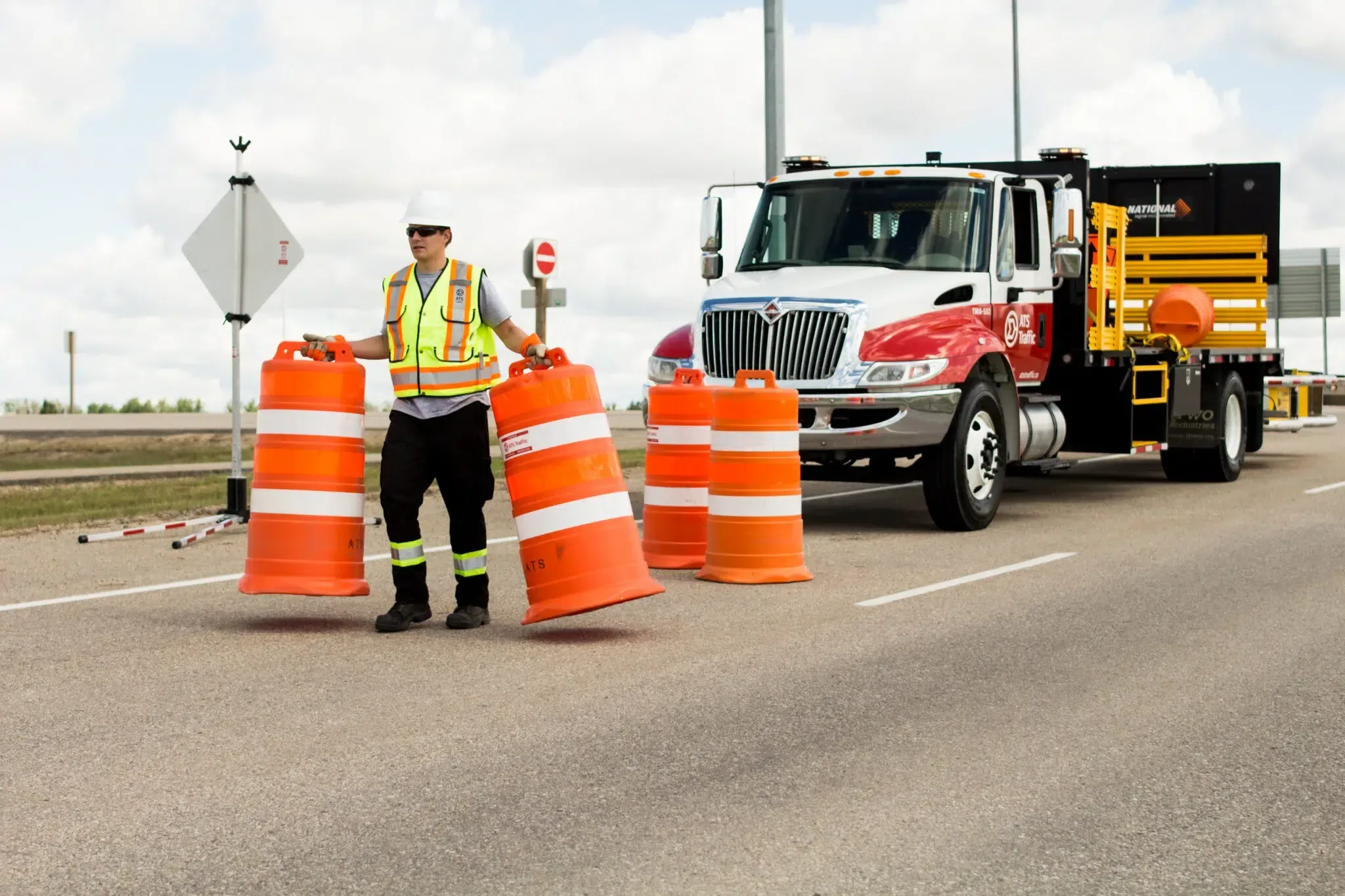
Channelizing devices form the visual path that moves traffic out of the closed lane. They are the most recognizable part of any work zone, and choosing the right type matters:
- Traffic cones are lightweight and quick to deploy, ideal for short-duration closures on lower-speed roads. Taller cones with reflective collars improve visibility at night.
- Traffic drums (barrels) are larger and more visible, making them better suited to higher-speed roads and longer closures.
- Barricades mark the edge of the work area or close a road entirely. Their striped rails show drivers clearly where they cannot go.
- Delineator posts guide traffic along tapers and lane shifts where space is tight.
Spacing is just as important as the device itself. Taper lengths and device spacing are set by speed and road type in standards such as Ontario Traffic Manual Book 7 or Part 6 of the MUTCD.
Advance Warning and Regulatory Signs
Drivers need to know what is coming well before they reach the closure. Advance warning signs such as "Road Work Ahead," "Right Lane Closed" and reduced speed signs give motorists time to slow down and merge safely. Signs should be mounted at the correct height, placed at the right distances and kept clean and reflective so they are readable in all conditions.
Arrow Boards and Portable Message Signs
On busy or high-speed roads, static signs alone may not be enough for effective Lane Closure Management. Arrow boards use flashing lights to guide drivers and indicate where to merge, making them highly visible from a distance, both day and night. Portable changeable message signs display customized information, such as closure dates, detour routes, and expected delays. Many modern units are solar-powered and can be updated remotely, helping traffic control crews respond quickly when road conditions or work zone requirements change.
Protective Vehicles and Barriers
Some of the most important equipment exists to absorb impact. A truck-mounted attenuator (TMA) is a crash cushion fixed to the back of a heavy vehicle positioned upstream of the work area. If a driver fails to stop, the attenuator absorbs much of the energy before the vehicle reaches workers.
For long-term closures, portable concrete or water-filled barriers provide a physical separation between traffic and the work zone, offering far more protection than cones alone.
Flagging Equipment
When traffic must alternate through a single open lane, flagging equipment controls the flow. Traffic control persons use stop/slow paddles and radios to coordinate with each other. On longer sites, automated flagger assistance devices or portable traffic signals let operators manage traffic from a safer position away from live lanes.
High-Visibility PPE
Every person in the work zone needs to be seen. High-visibility vests, jackets and pants with retroreflective striping, along with hard hats and safety footwear, are basic requirements. At night or in poor weather, higher visibility classes of apparel are often required.
Lighting for Night Work
Night closures bring added risk from reduced visibility and impaired or fatigued drivers. Portable light towers illuminate the work area for crews, while warning lights mounted on cones, drums and barricades help drivers spot the closure sooner. Lighting should be aimed carefully so it does not create glare for oncoming traffic.
Regular Inspection and Maintenance
Equipment only works if it stays in good condition. Faded signs, missing reflective sheeting, dead batteries or knocked-over cones can all undermine an otherwise well-planned closure. Professional traffic control teams inspect devices before setup, during the shift and before takedown, replacing anything that falls below standard.
Frequently Asked Questions
What equipment is needed for a lane closure? At minimum: advance warning signs, channelizing devices such as cones or drums, and high-visibility PPE. Higher-speed or longer closures often add arrow boards, message signs, attenuator trucks and barriers.
When is an arrow board required? Arrow boards are commonly used on multi-lane, higher-speed roads where drivers must merge. Exact requirements depend on the governing standard and the approved traffic control plan.
What is a truck-mounted attenuator? It is a crash cushion attached to a heavy vehicle that absorbs the impact of an errant vehicle before it reaches workers.
The Right Equipment Makes the Difference
Safe lane closures depend on traffic control equipment that is chosen for the road, placed correctly and kept in good condition. Cones and signs guide drivers, arrow boards and message signs warn them early, and attenuators and barriers protect crews when something goes wrong.
If you are planning a road project, work with a traffic control provider that supplies certified equipment, trained crews and approved traffic control plans. The right setup keeps your workers protected, your drivers informed and your project moving.