Introduction
Many businesses invest in ERP software but fail to get the expected results. This usually happens because of poor planning or wrong decisions during selection and implementation. Understanding common mistakes can help businesses avoid problems and get better value from their ERP system.
Ignoring Business Requirements
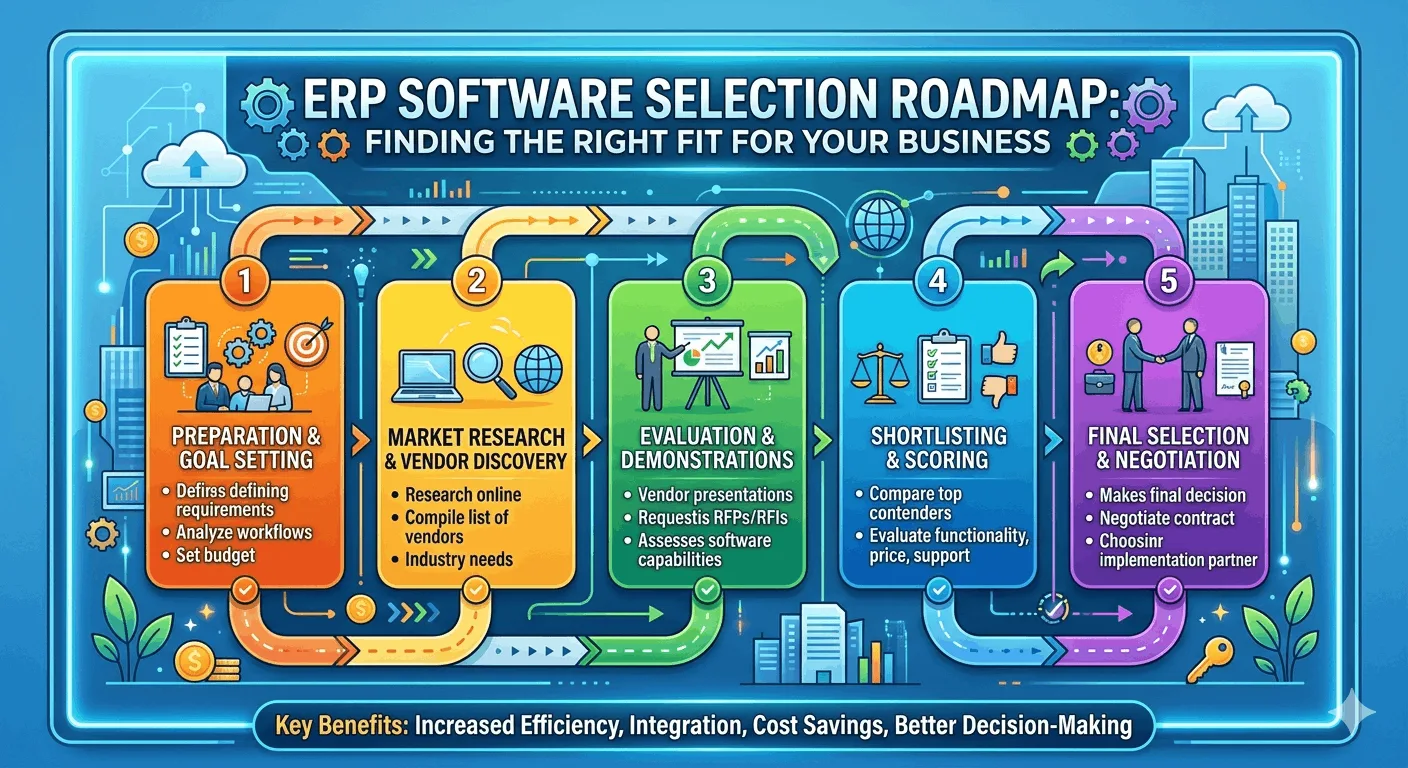
One of the biggest mistakes is choosing ERP software without fully understanding business needs. Companies often select a system based on trends rather than actual requirements. While comparing erp vs off the shelf, it is important to focus on how the system fits daily operations. An erp comparison guide can help businesses list and match their needs with available options.
Choosing the Wrong Type of ERP
Businesses sometimes pick ready-made ERP software without considering long-term needs. Although quick to implement, it may not support future growth. This highlights the off the shelf erp limitations, where fixed features may not meet changing requirements. On the other hand, ignoring custom ERP options can also be a mistake. One of the key custom erp advantages is flexibility, which helps businesses adjust the system as they grow. The erp customization benefits allow better control over features and processes.
Lack of Employee Training
Even the best ERP system can fail if employees do not know how to use it properly. Many businesses skip training to save time, which leads to mistakes and low productivity. Custom ERP systems may require more detailed training, while ready-made ERP systems are generally easier to use.
Poor Implementation Planning
ERP implementation requires proper planning. Without a clear strategy, businesses may face delays, errors, and confusion. When evaluating ready made erp vs custom erp, companies should also consider the time and effort needed for implementation. An erp comparison guide helps in setting realistic expectations for both options.
Ignoring Data Accuracy
ERP systems depend on accurate data. If old or incorrect data is transferred into the new system, it can create ongoing issues. Businesses should clean and verify data before migration. This step is important when comparing custom erp vs off the shelf, as both systems rely on proper data handling.
Not Planning for Future Growth
Some businesses choose ERP systems that only meet current needs. This can create problems as the business grows. Custom ERP systems are more suitable for long-term use due to their flexibility. The erp customization benefits allow businesses to update features as needed, while off the shelf erp limitations may restrict growth.
Final Words
Avoiding common ERP mistakes can save time, money, and effort. Businesses should focus on proper planning, clear requirements, and employee training. By understanding custom erp advantages, erp customization benefits, and off the shelf erp limitations, companies can make better decisions. A well-chosen and properly implemented ERP system helps improve efficiency and supports steady business growth.