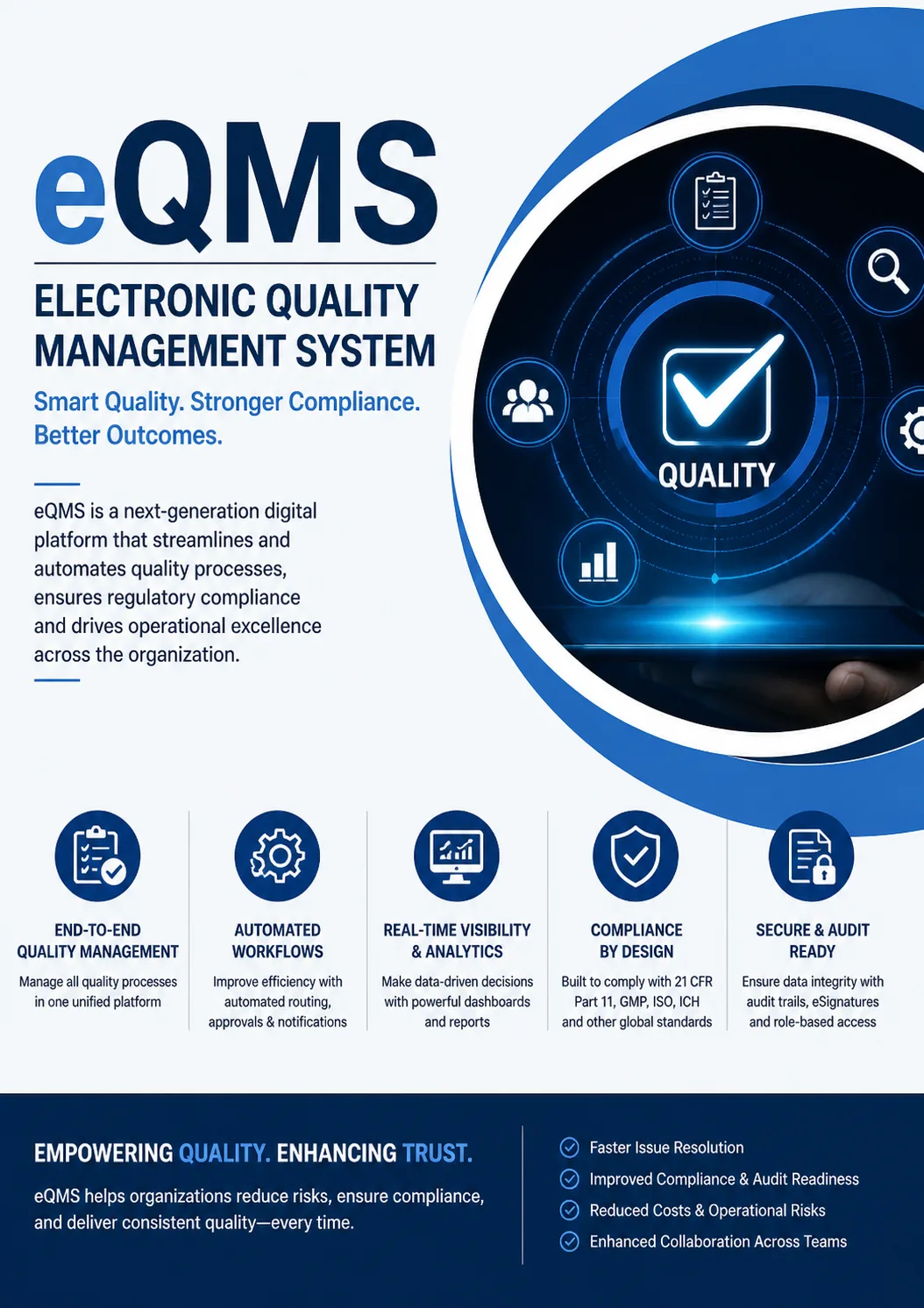
Elevating Quality Management Through Digital Innovation
Quality management has evolved far beyond documentation and compliance checklists. In industries like pharmaceuticals, biotechnology, and medical devices, maintaining consistent quality while meeting stringent regulatory requirements is both critical and complex.
An Electronic Quality Management System (eQMS) is designed to simplify this complexity—bringing automation, visibility, and intelligence into every quality process.
The Shift from Manual to Digital Quality
Traditional quality management systems often rely on paper-based records, spreadsheets, and disconnected workflows. While these methods may have worked in the past, they now create inefficiencies such as delayed approvals, limited traceability, and increased compliance risks.
eQMS addresses these challenges by digitizing and centralizing quality operations, ensuring that every process is streamlined, standardized, and audit-ready.
Core Capabilities of eQMS
A modern eQMS provides a unified platform to manage all quality-related activities, including:
- Deviation Management – Track, investigate, and resolve quality issues efficiently
- CAPA – Implement corrective and preventive actions with full traceability
- Change Control – Ensure controlled and compliant changes across processes
- Audit Management – Simplify internal and external audits with complete documentation
- Complaint Handling – Manage customer feedback and product complaints effectively
By integrating these processes, organizations can maintain consistency and reduce operational silos.
Driving Efficiency with Automation
One of the biggest advantages of eQMS is automation. From workflow routing to approvals and notifications, automation reduces manual intervention and accelerates cycle times.
This not only improves productivity but also minimizes human error—leading to more reliable and consistent outcomes.
Ensuring Compliance and Audit Readiness
Compliance is at the heart of quality management. eQMS platforms are designed to align with global regulatory standards such as 21 CFR Part 11, GMP, ISO, and ICH guidelines.
Features like electronic signatures, audit trails, and secure data management ensure that organizations are always prepared for inspections and audits.
Data-Driven Quality Intelligence
Modern eQMS solutions go beyond process management by offering advanced analytics and AI-driven insights.
With real-time dashboards and trend analysis, organizations can:
- Identify recurring issues
- Perform faster root cause analysis
- Predict potential risks
- Make informed, data-backed decisions
This transforms quality management from a reactive function into a proactive strategy.
Business Impact of eQMS
Implementing an eQMS delivers tangible benefits across the organization:
- Faster resolution of quality events
- Improved regulatory compliance
- Reduced operational costs
- Enhanced cross-functional collaboration
- Greater visibility into quality performance
Ultimately, it helps organizations maintain high standards while scaling operations efficiently.
In an era driven by digital transformation, eQMS has become a critical enabler of quality excellence. By automating workflows, enhancing visibility, and ensuring compliance, it empowers organizations to stay competitive in highly regulated environments.
Adopting eQMS is not just about meeting regulatory requirements—it’s about building a smarter, more resilient approach to quality management.