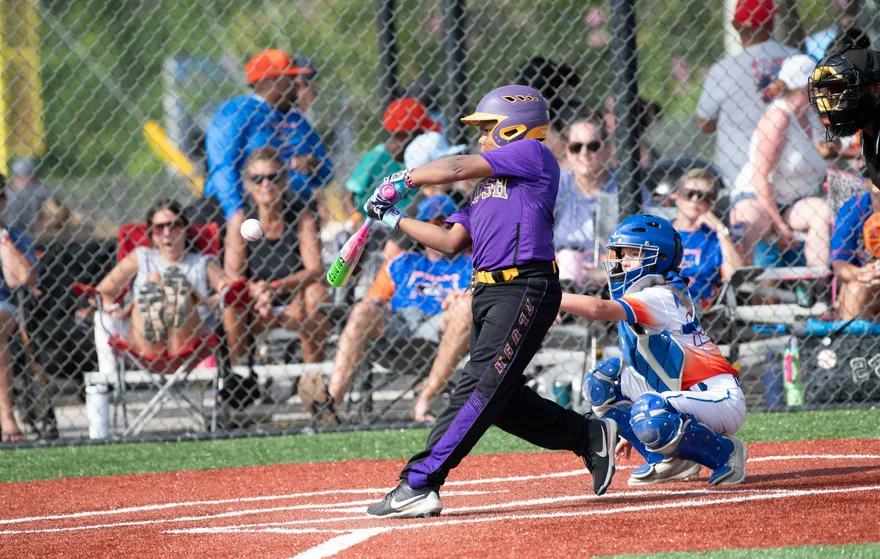
Enclosed, heavy-duty netting structures called batting cage nets are designed to contain softballs, baseballs, or cricket balls during hitting and pitching practice. By creating a protective tunnel or zone that prevents high-velocity balls from straying, they enhance practice efficiency while safeguarding players, coaches, and surrounding property.
Nets' varieties
By Type of Material
• Nylon: The gold standard in materials. It offers great shock/impact absorption, high abrasion resistance, and superior tensile strength. It's perfect for shaded outdoor places or interior facilities (but it can degrade outdoors without chemical treatment).
• Polyethylene (Poly / HDPE): A more affordable batting cage nets, lighter, and harder choice. HDPE is naturally UV and moisture resistant, making it durable and popular for outdoor installations, although it has a shorter lifespan than nylon in heavy use.
Based on its architectural design.
• Knotless vs. knotted:
• Knotted Netting: Consists of individual strands knotted at each mesh junction. Despite the knots serving as main wear points, it is robust, traditional, and simpler to mend or repair.
• Knotless Netting: Woven or interlocked without knots. It offers a smoother, lighter-weight surface without accelerated wear spots and with uniform stress distribution.
• Diamond Mesh vs. Square:
Square Mesh: Generally simpler to install cleanly, it hangs straight down and matches the right angles of a frame or tunnel.
• Diamond Mesh: Slanted like a diamond, it flexes organically and spreads out the kinetic impact of a high-speed strike.
By establishing and configuring
• Complete Cages/Tunnels: Batting cage nets that are rectangular or arched, enclosed, and often 35 to 70 feet long, 12 to 14 feet wide, and 12 feet high. They are held in place by rigid frames or wire tension kits.
• Barrier/Backstop Nets: Nets that are flat or specially hung to prevent balls from going outside fields, home plate, or multi-sport boundaries.
• Movable/Popup Nets: Frame-supported or throw-down mobile devices made for convenient backyard setup, travel, or storage.
Gains from Networks
Enclosed, secure places to practice baseball, softball, or cricket are created by batting cage nets, which prevent stray balls and increase training effectiveness.
• Safety for Players and Property: High-speed hit or thrown balls are caught in the enclosed net, ensuring the safety of nearby players, coaches, spectators, windows, and cars.
• Improved Training Efficiency: By keeping all hits inside a small area, you save time and effort from having to follow stray balls.
• Skill and technique refinement: Hitters may concentrate on their stance, timing, bat speed, and muscle memory thanks to repeated repetitions.
For outdoor usage, high-quality batting cage nets are constructed of strong materials like high-density polyethylene (HDPE) or chemically treated nylon that are resistant to rot, water absorption, and sun damage.
• Solo Practice: Gives players the chance to work on their swing or use pitching/bowling machines without having a complete squad or a coach present.
• Extended Cost-Effectiveness: Because heavy-duty twine weights (36 or 42 gauge, for example) can endure significant impact and last for years, there is no need to replace them frequently.
Dimensions and Standard Sizes
• 70-foot length: Necessary for full baseball throwing distances (60 feet 6 inches) and room behind the pitcher for safety and ball carts.
• 55-foot length: Perfect for facilities with limited indoor or outdoor space, or for softball (43-foot pitching distance).
• 35- 40 feet: best for tee work, soft toss, or younger players.
• 14-foot width: Gives left- and right-handed batters a full follow-through without hitting the side walls.
• 12-foot height: Provides batted balls with a natural peak for tracking exit angles; factor in 8 to 12 inches of extra net slack that rests on the ground to adequately absorb and trap balls.
Materials and Gauges of Twine
• Twine Thickness / Gauge: Varies from light-duty 21–24 (tee-ball and informal backyard use) to standard commercial 36–42 (high school and heavy-duty practice) and pro-grade 60–96 (collegiate and commercial facilities).
• Mesh Size: Blocking baseballs and softballs typically uses standard square mesh measuring 1.75 inches (5 cm).