
It’s your vehicle’s way of warning you that something is not working the way it should. Ignoring it could turn a small problem into a major (and expensive) repair.
So, let’s cut through the panic and discuss what an engine light diagnostic is, explore the most common causes behind that warning light, and show you how to fix the problem quickly.
What Is an Engine Light Diagnostic?
An engine light diagnostic is the process of figuring out why your car’s “Check Engine” light came on in the first place. Modern cars are equipped with an onboard computer system (called the OBD-II, or On-Board Diagnostic system). This system constantly monitors your engine’s performance and emissions.
When it senses something off, even as small as a loose gas cap, it triggers the engine light and stores a specific error code. A computer diagnostic service or tool reads that code to pinpoint what’s wrong.
Common Issues That Trigger the Engine Light
You’d be surprised how many things can make that light turn on. Some are no big deal, whereas others are complete red flags. Here are the usual issues:
1. Loose or Faulty Gas Cap
Yes, something as simple as a loose gas cap can trip the engine light. It messes with your fuel system pressure. Twist it tight and see if the light goes away after a few miles.
2. Failing Oxygen Sensor
Your O2 sensor measures how much oxygen is in your exhaust. If it’s broken, it affects fuel economy and emissions. Do not ignore it, as it might damage your catalytic converter, which is an expensive fix.
3. Bad Spark Plugs or Wires
If your engine isn’t firing correctly, your car will run roughly. Spark plugs that are old or misfiring can cause long-term damage if not handled fast.
4. Malfunctioning Catalytic Converter
This device reduces harmful emissions. If it goes bad, your engine may overheat or lose power, and you’ll probably fail your emissions test. Not to mention, it can cost a hefty bill to replace.
5. Faulty Mass Air Flow Sensor (MAF)
This sensor tracks how much air enters your engine. If it fails, your fuel mix will be off, which means poor performance and possibly stalling out.
6. Transmission or Emissions Issues
Sometimes, the issue isn't the engine itself. An auto computer repair diagnostic by a trusted mechanic can tell if there are transmission faults, fuel system failures, or exhaust issues, which can trigger that engine light.
Why You Should Never Ignore the Engine Light
That little light is not a suggestion, it’s a warning. The longer you ignore it, the worse things can get and the more it’s going to cost you. Waiting too long could lead to:
- Lower fuel economy
- Engine misfires or breakdowns
- Permanent damage to the catalytic converter
How a Computer Diagnostic Service Fixes It
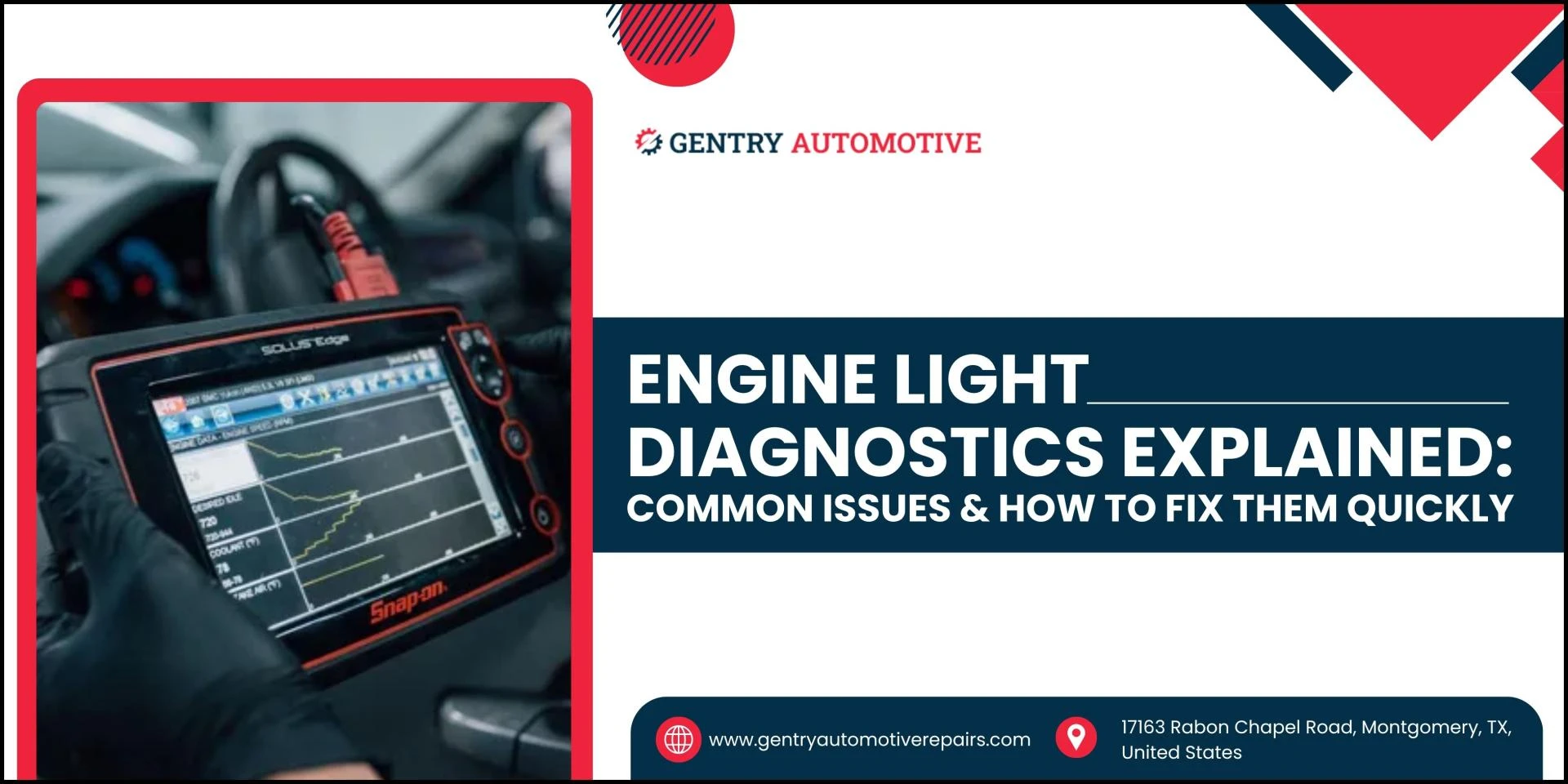
This diagnosis uses a special scan tool to read your car’s OBD-II codes. Sure, you can buy a cheap scanner online and pull the code yourself. But if you’re not a mechanic, interpreting that code can be difficult. Auto computer diagnostic tools work best in expert hands. The mechanic will plug in a diagnostic scanner, inspect the suspected problem area, and recommend the right fix.
It’s fast, relatively cheap, and accurate. No guesswork and no unnecessary parts replacement. It’s just straight-up problem-solving.
Final Thoughts
Your engine light is a red flag you can’t afford to ignore. A quick engine light diagnostic might reveal a simple fix, or it might save you from an expensive repair later.
So, don’t wait until your car sounds like it’s dying. Book a computer diagnostic service the moment that light comes on. The sooner you act, the better your chances of fixing it fast, cheap, and without breaking down on the side of the road.