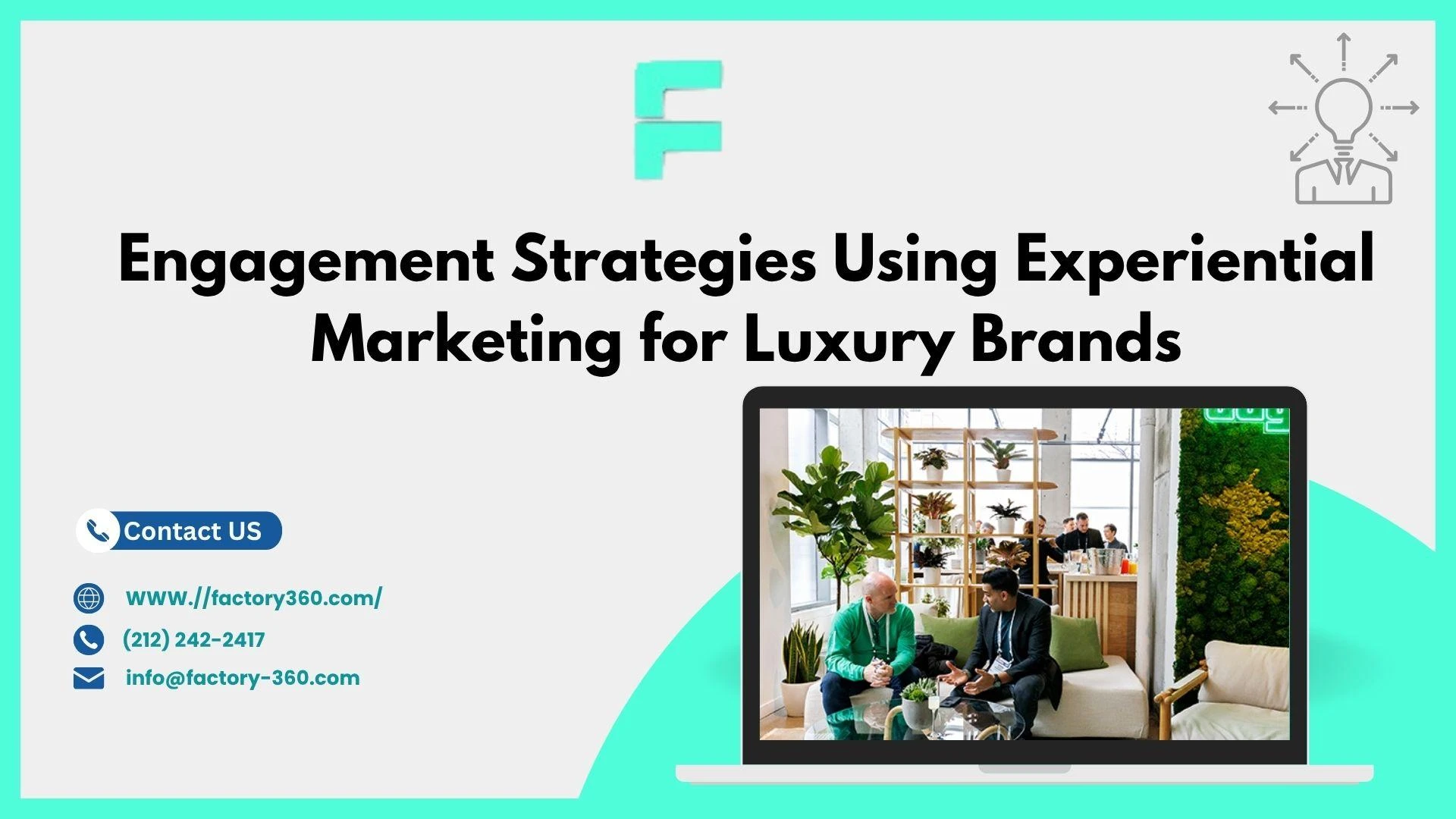
Last summer I was heading to an upscale store in New York, you know, the type where it seems like the air is impregnated with self-esteem. And something curious I saw. People did not keep staring at the products with the same emotion as they stared at the moment. The small detail stuck in my mind since it made me aware of the fact that the experiential marketing for luxury brands is constantly changing, particularly when the sunny season provides consumers with a new type of energy. The manner in which luxury shoppers react whenever a brand provides them with more than a display shelf is always special.
Why Experiential Marketing for Luxury Brands Feels Different
Crafting emotional memory instead of promotional noise
Luxury shoppers don’t usually want loud campaigns. They want to feel something personal. When a brand builds a story or an interaction that feels tailored, it stands out longer than any billboard ever could. Summer experiential marketing seems to enhance this because warm weather and outdoor environments make people more relaxed and receptive.
Slow decision makers need richer engagement
People who invest in high‑end products take their time. Experiences that encourage slow exploration help. Touch, scent, sound, or even temperature control are small pieces but they add up. Luxury brands benefit when they let the shopper pause, experiment and enjoy the setting.
Blending Sensory Design With Summer Experiential Marketing
Heat, light and texture shaping the mood
Summer brings natural elements that can be used in positive ways. Warm sunlight can highlight craftsmanship. Soft ambient music mixed with a breezy environment offers a small vacation-like feeling. The idea is to let the weather become a supporting actor rather than a challenge.
Outdoor pop‑ups that feel like retreats
Outdoor activities are popularized on a temporary basis. The most successful of them provide the impression of entering a world that is exclusive and friendly. I have even witnessed a brand constructing a tasting lounge that is shaded, to launch its perfume where the whole walkway smelled like a light citrus mix. People didn’t rush. They lingered.
One such idea brings to mind something I have read recently in Wikipedia regarding sensory branding strategies, in which firms engage more than one of the five senses in a calculated way to enhance recognition and emotion. Luxury brands are more likely to do it instinctively, albeit in a low profile.
Role of Experiential Marketing Companies in Building Luxury Engagement
Bringing specialist creativity to premium environments
Their product is known by most luxury teams better than anyone else, yet the craft of the experiential marketing companies is different. They understand how to develop a flow of traffic, how to control crowds, and how to introduce small things of interactivity. These make a good event an event worth discussing in the future.
Ensuring scalable ideas that still feel exclusive
The brands would desire something that would be operating across cities without losing its distinctiveness. Agencies help balance this. An experiential marketing idea of summer could be very breezy in Los Angeles and would require minor adjustments in Miami heat or in New York crowds. Firms who are excellent in their production knowledge are able to adapt and preserve the spirit.
Successful Engagement Structures Luxury Brands Often Use
Timed entry experiences for intimacy
Luxury buyers like feeling chosen, so timed entry or small-group walkthroughs work quite well. Instead of huge queues or loud attractions, these experiences give people space to connect with the product. Quiet engagement feels premium.
Personalized product testing or styling help
Whether it’s accessories, technology or couture, personalization always raises perceived value. Even a simple gesture like assigning a style consultant during the event can shift the way someone sees the brand.
Multi‑day experience journeys
Some luxury brands stretch an event across a few days and allow visitors to explore different zones at their own pace. Day one may focus on story, day two on the craft, day three on social sharing. The repetition makes the message settle deeper.
Storytelling Tactics That Work Especially Well in Summer
Leaning into travel energy
People naturally think of travel, beaches and road trips during summer. When experiential marketing for luxury brands taps into this sensation, campaigns feel timely. A luggage brand might build a pretend check‑in zone, while a jewelry brand may design a coastal-inspired installation that feels like stepping onto a private terrace.
Mixing digital touchpoints with physical surprises
QR murals, near‑field interactions or digital projections help create layers of discovery. Technology should support, not distract from, the emotion. Luxury loses its charm if things feel gimmicky.
Social Sharing Without Forcing It
Subtle setups create natural photo moments
Most luxury shoppers dislike prompts like “Scan this for a selfie spot”. Instead, gentle design choices such as elegant lighting or a carefully framed floral wall create share-worthy moments people enjoy capturing. A natural share beats a forced one.
Influencer presence handled delicately
Inviting influencers can help but the tone must stay intimate. Micro influencers with a refined aesthetic often match luxury messaging better than larger, more general personalities.
FAQs
1. What makes experiential marketing different for luxury brands?
Luxury consumers want more emotional involvement. The experiences should be realistic, silent, high end and very detailed.
2. Are summer experiential marketing campaigns more effective?
The increased engagement of many brands during summer is as a result of people being more receptive to exploring outdoor or relaxed settings, which favors immersive design.
3. Do experiential marketing companies handle both design and production?
Many do. They tend to take care of concept development, graphic design, logistics and on-site implementation to ensure the experience is consistent.
Conclusion
Luxury experiences are successful when they move beyond displaying a product and emphasize on creating a memory. Once the experiential marketing of summer is combined with high-end storytelling, the two unite in an organic manner that neither comes across as insistent but warm. Brands that slow down the visitor, allow exploration and design for emotion will usually see stronger engagement. Expert companies play a major role here by bringing the production quality and creativity these experiences need while keeping the premium feel intact.