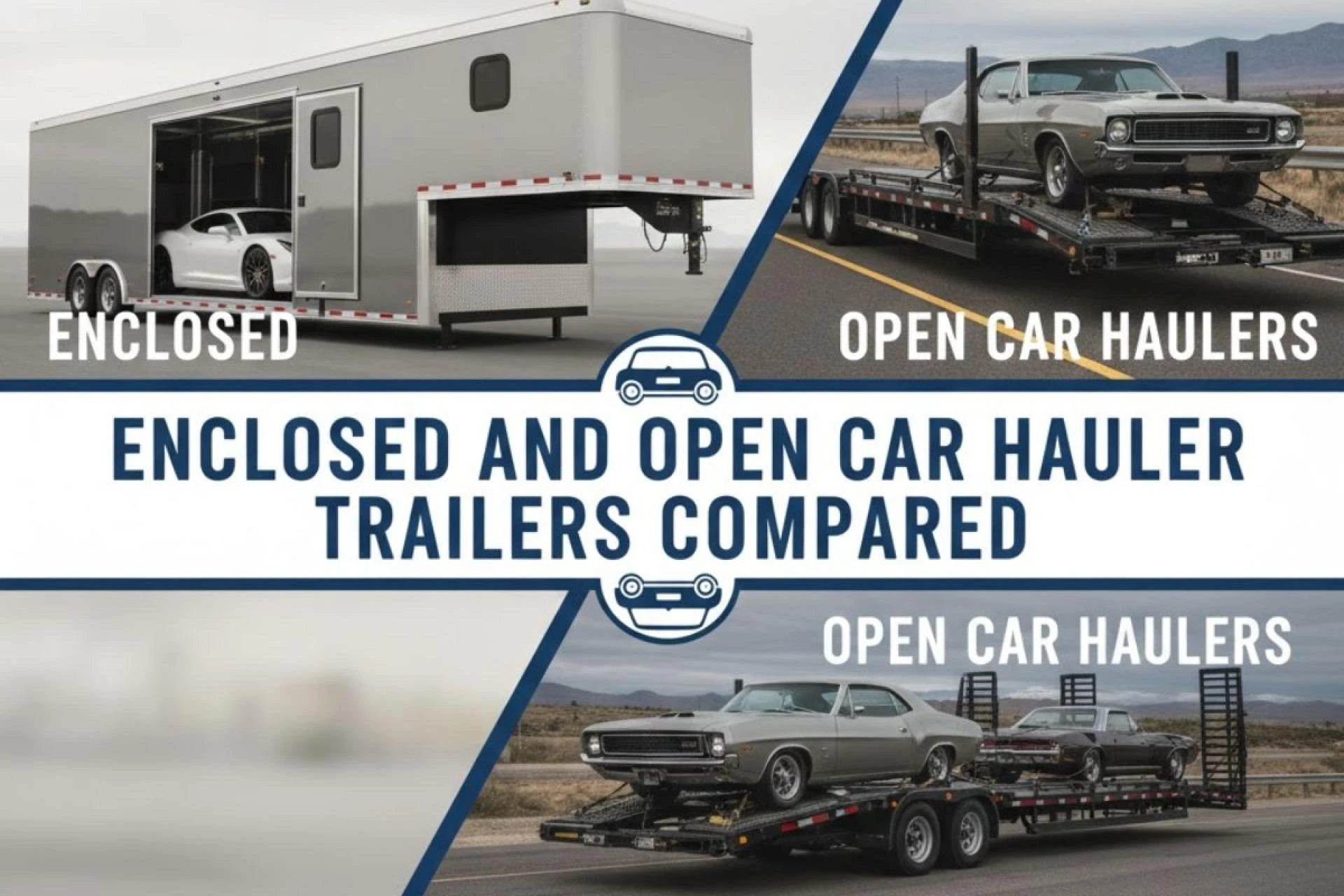
Standing near a row of trailers brings a certain pause. You look. You imagine the load. You picture the road. And somewhere in the middle of that moment, the decision shows up again—enclosed or open. It sounds basic, yet it rarely feels that way. Right in the middle of that choice sits car haulers trailers, doing very different things depending on their shape, weight, and how much they hide.
We’re not writing this from a spec sheet mindset. This comes from miles. From loading ramps scraping slightly. From straps humming at speed. From checking mirrors more times than planned.
Let’s walk through it without polishing the edges too much.
Living With Open Car Hauler Trailers
Open car hauler trailers are familiar for a reason. You see them everywhere. They’re exposed, straightforward, and honest about what they are.
No walls. No roof. Just steel rails, ramps, and air rushing past.
That openness makes loading easier. You see everything. Tire placement. Strap angles. Balance. Nothing is hidden, which oddly builds confidence, especially early on.
They also feel lighter behind the wheel. Less wind resistance. Fewer surprises during turns or braking. Fuel use stays friendlier too, which shows up quickly over repeated trips.
Price plays a role. Open car hauler trailers usually cost less upfront. For many buyers, that’s the deciding factor, plain and simple.
Still, exposure is part of the deal. Rain doesn’t pause. Dust settles where it wants. Sun works slowly but consistently. Some owners shrug at that. Others start wishing for walls after a few long runs.
What Changes With Enclosed Car Hauler Trailers
Enclosed trailers shift the mood right away. You step inside and it feels quieter. Dimmer. Almost like the vehicle gets a private space to travel.
The biggest difference shows up in protection. Paint stays cleaner. Interiors stay untouched by weather. Road grit stays outside where it belongs.
There’s also privacy. People can’t see what you’re hauling. Stops feel calmer. Leaving the trailer parked feels less tense.
Space matters too. Enclosed car hauler trailers turn into rolling storage rooms. Tools, spare parts, tires, even personal gear start finding places inside. Over time, that space becomes hard to give up.
Weight is the tradeoff. You feel it when towing. Fuel use climbs. Parking needs more thought. And yes, prices sit higher from the start.
Some hesitate there. Others don’t blink.
Cost Isn’t Only About the First Number
Open trailers usually win the first glance. Lower purchase price. Fewer parts to maintain. Repairs tend to stay simple when something gets bent or scraped.
Enclosed trailers ask more upfront. Doors, panels, and interiors add complexity. Insurance costs can reflect that too.
Yet long-term value tells another story. Enclosed units often hold resale appeal longer. Buyers look for protection and storage when shopping used. That can balance the early cost gap in ways people don’t expect.
We’ve seen owners surprised by this more than once.
Security Feels Different Depending on the Trailer
Open car hauler trailers rely on visibility and good habits. Strong straps. Smart parking. Keeping an eye out. For short trips or constant supervision, that works fine.
Enclosed trailers add concealment. Locked doors. Less attention from passersby. Overnight stops feel less stressful. Sleep comes easier knowing the load isn’t on display.
No setup is perfect. Still, that sense of calm carries weight for many buyers.
Towing Experience: What the Road Teaches
Open trailers feel predictable. Wind passes through. Side gusts behave better. New drivers often feel more relaxed starting here.
Enclosed trailers ask for awareness. Crosswinds push harder. Braking distances grow. Mirrors become constant companions.
Confidence builds with time. Routes get planned with more intention. Rest stops feel chosen rather than random.
It’s not fear. Just respect for physics.
Matching Trailer Type to Real Use
Daily hauling? Open trailers usually make sense. Quick loading. Easy access. Less fuss.
Show vehicles? Track builds? Long-distance transport? Enclosed trailers start paying for themselves fast.
Weather-sensitive cargo leans enclosed. Short, frequent trips often stay open.
Budget-focused buyers tend to begin with open setups. Long-term haulers often drift enclosed after enough exposure to the elements.
Funny how experience nudges opinions.
Storage and Space Considerations
Open trailers store easily. Lower height. Fewer clearance worries. They fit into more spaces without planning gymnastics.
Enclosed trailers demand thought. Height limits matter. Storage spots need measuring. Access becomes part of ownership.
Inside space changes habits too. Enclosed trailers invite organization. Shelving appears. Hooks multiply. Gear slowly moves in.
Open trailers keep things honest. What you bring is what you see.
Choosing Without Overthinking It
We don’t believe there’s a universal answer. We’ve watched buyers switch sides after real-world use. We’ve done it ourselves.
Some stay open forever and feel good about it. Others go enclosed and never look back.
The right choice lines up with how often you haul, how far you travel, what you carry, and how much uncertainty you tolerate.
Weather exposure. Budget comfort. Security needs. Towing confidence. They all matter, just not equally for everyone.
And sometimes the decision just feels right. Hard to explain. Easy to recognize when it happens.