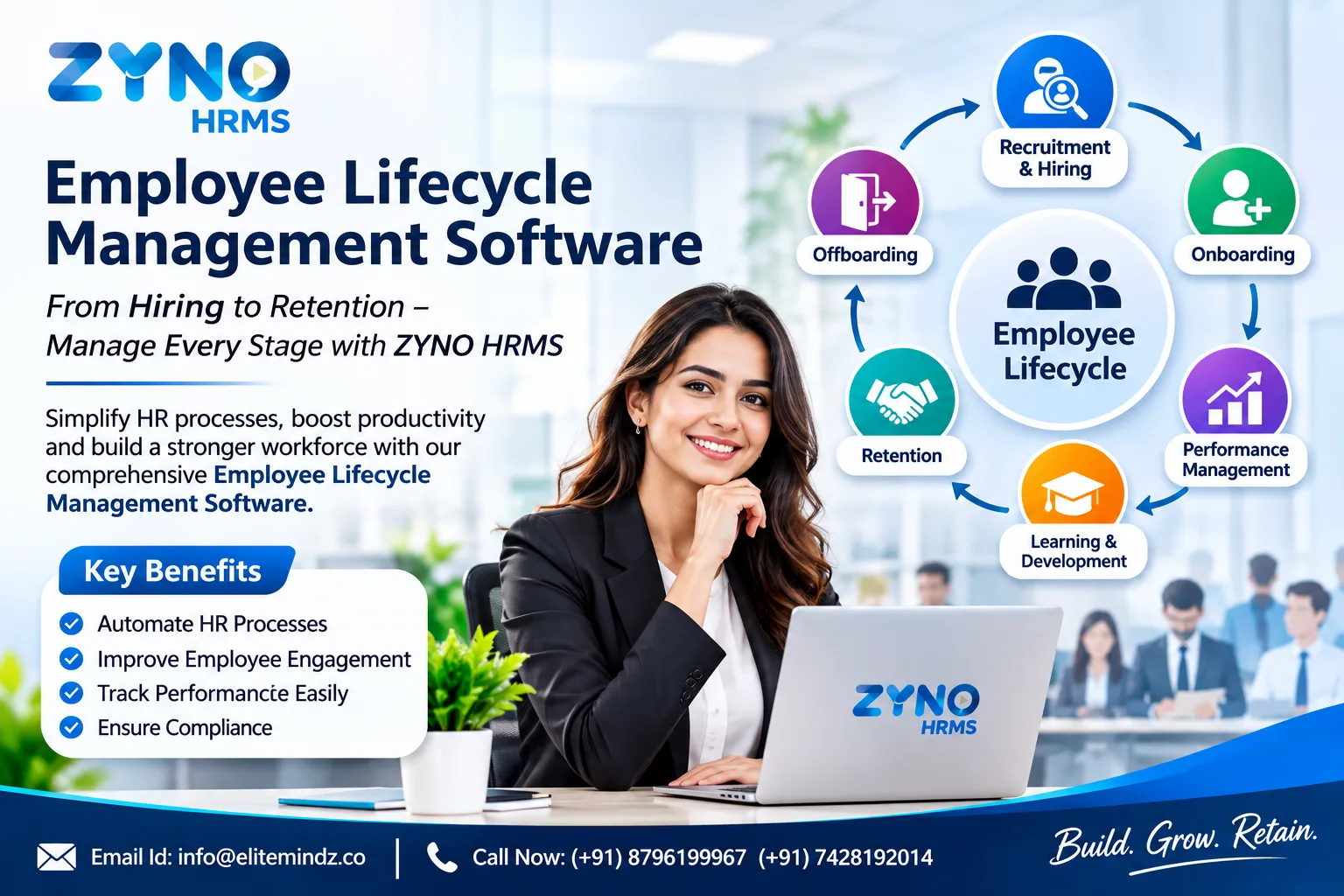
Managing employees effectively is one of the biggest challenges for modern businesses. From hiring new talent to managing daily attendance, tracking performance, and handling employee exits, every stage requires proper planning and coordination. Traditional HR processes often involve spreadsheets, paperwork, and disconnected systems that consume valuable time.
Employee lifecycle management software helps organizations bring these activities together in one digital platform. It enables HR teams to manage the complete employee journey while improving productivity, transparency, and employee experience.
What Is Employee Lifecycle Management Software?
Employee lifecycle management software is a digital HR solution that manages every stage of an employee's relationship with an organization. It supports recruitment, onboarding, development, performance management, engagement, and offboarding.
An integrated employee lifecycle management system gives HR professionals a centralized view of workforce information. Instead of switching between multiple applications, teams can manage employee records and HR activities through a single platform.
For growing companies, this approach makes workforce administration more organized, consistent, and efficient.
Why Businesses Need a Digital Employee Lifecycle Platform
As organizations expand, managing employee information manually becomes increasingly difficult. HR teams may struggle with delayed approvals, incomplete records, attendance errors, and inconsistent communication.
A digital employee lifecycle platform helps solve these challenges through automation and centralized data management.
Key benefits include:
- Reduced manual work: Automates repetitive HR activities and administrative tasks.
- Better employee records: Keeps employee information organized in one place.
- Improved communication: Makes HR policies, updates, and announcements easier to access.
- Faster HR decisions: Provides useful workforce information for better planning.
- Consistent processes: Standardizes employee-related activities across departments.
- Enhanced employee experience: Simplifies common tasks such as applying for leave and accessing records.
These advantages make employee lifecycle automation software valuable for both small businesses and large enterprises.
Six Important Stages of Employee Lifecycle Management
1. Recruitment and Talent Acquisition
The employee journey begins with finding and selecting suitable candidates. HR teams need to manage job openings, applications, interviews, and candidate information efficiently.
Recruiting software can help organize candidate details, simplify interview coordination, and improve communication between recruiters and hiring managers.
2. Employee Onboarding
Once a candidate accepts an offer, the onboarding process begins. It includes document collection, employee registration, policy communication, and department allocation.
Employee onboarding and lifecycle management software helps HR teams create a structured onboarding experience. New employees can complete essential formalities while HR professionals track pending activities.
3. Attendance and Workforce Administration
Accurate attendance information is important for salary processing and workforce planning. A connected HR system helps businesses monitor attendance, manage shifts, and maintain employee work records.
HR teams can also coordinate leave requests and approvals through integrated leave management features.
4. Learning and Performance Development
Employee development supports long-term business growth. Organizations need to monitor employee performance, identify skill gaps, and organize training activities.
HR lifecycle management tools help maintain performance records and support structured employee development programs.
5. Employee Engagement and Retention
Retaining skilled employees requires regular communication, recognition, and a positive workplace experience.
An effective employee lifecycle management platform can support feedback collection, employee announcements, performance reviews, and engagement initiatives.
6. Employee Offboarding
The final stage involves resignation management, exit interviews, clearance procedures, and final documentation.
Employee lifecycle tracking software helps HR teams follow exit-related activities and maintain accurate employee records throughout the separation process.
Essential Features to Look for in Employee Lifecycle Management Tools
Before choosing a platform, businesses should evaluate whether it supports their operational requirements.
Important features include:
- Centralized employee database
- Recruitment and onboarding management
- Attendance and leave tracking
- Payroll and employee information management
- Performance evaluation
- Training and development records
- Employee self-service portal
- Workflow automation
- Role-based access and data security
- HR reports and analytics
The best employee lifecycle management tools for HR teams should be easy to use, scalable, and capable of supporting different HR processes.
Cloud-Based Employee Lifecycle Management Solutions for Modern Businesses
Cloud technology has changed how organizations manage their workforce. Cloud based employee lifecycle management solutions allow authorized users to access HR information from different locations.
They can be especially useful for businesses operating across multiple branches or managing remote and hybrid teams.
When comparing cloud platforms, consider accessibility, integration capabilities, customization, security controls, and scalability. An employee lifecycle software comparison should also examine implementation requirements and ongoing support rather than focusing only on the number of features.
Choosing the Right Employee Lifecycle Management Software in India
Businesses evaluating employee lifecycle management software India should consider their workforce size, HR requirements, industry needs, and future expansion plans.
For enterprises, employee lifecycle management software for enterprises should support complex approval structures, multiple departments, and centralized workforce reporting.
Before selecting a solution, ask:
- Can it manage the complete employee journey?
- Does it automate routine HR tasks?
- Can it integrate with existing business systems?
- Does it provide secure employee data access?
- Can it support future workforce expansion?
- Is the interface simple for employees and HR teams?
Comparing these factors can help organizations identify the best employee lifecycle management platforms for their needs.
How ZYNO HRMS Supports Employee Lifecycle Management
ZYNO HRMS by Elite Mindz helps businesses streamline workforce administration through an integrated HR management platform. It supports organizations in managing employee information and important HR activities through a centralized system.
With features designed to simplify everyday HR operations, ZYNO HRMS helps reduce repetitive administrative work and improve visibility across workforce processes.
Businesses looking for an employee lifecycle management application can explore ZYNO HRMS to understand how digital HR tools can support more organized workforce management.
Frequently Asked Questions
What is the best employee lifecycle management software?
The best solution depends on business size, HR requirements, automation needs, integration options, and scalability. Organizations should compare platforms based on their complete employee management requirements.
What are employee lifecycle management tools?
These are digital tools that help HR teams manage recruitment, onboarding, attendance, performance, employee engagement, and offboarding.
How does employee lifecycle automation software help HR teams?
It automates repetitive activities, organizes employee information, improves workflow visibility, and reduces manual administrative work.
Why should enterprises use employee lifecycle management software?
Enterprises can use it to standardize HR processes, manage large employee databases, coordinate multiple departments, and improve workforce reporting.
Conclusion
Managing the employee journey requires more than maintaining records. Businesses need connected processes that support employees and HR teams at every stage of employment. The right employee lifecycle management software can simplify administration, improve coordination, and create a more structured workplace.
With digital solutions such as ZYNO HRMS by Elite Mindz, organizations can move toward smarter workforce management and build a more efficient HR environment.
Explore ZYNO HRMS: https://elitemindz.co/products/emhrms/
Contact Us:
Email: [email protected]
Phone: +91 8796199967 | +91 7428192014