
Introduction
Your inbox is your customers' most personal space, and email marketing lets you enter it with permission. Done well, email marketing turns strangers into subscribers and subscribers into loyal, repeat buyers. This guide shows professionals exactly how email marketing can grow a business, one valuable message at a time.
What Is Email Marketing
It is the practice of sending targeted commercial messages to people who have opted in to hear from you.
Messages promote products, share expert knowledge, or nurture long-term relationships.
You own the list, unlike social media followers who depend on changing algorithms.
It remains one of the most cost-effective channels for professionals expanding their services.
What Are The Types Of Email Marketing
1. Promotional Emails
Announce discounts, product launches, and limited-time offers.
Use one clear call-to-action so readers know the next step.
Highlight urgency, such as real deadlines.
2. Welcome & Onboarding Emails
Greet new subscribers within minutes, while interest is highest.
Introduce your brand story and set expectations for future messages.
3. Newsletters & Informational Emails
Share tips, news, and insights on a regular rhythm.
When writing newsletters, keep one theme per issue, use short sections, and end with a useful takeaway.
4. Abandoned Cart & Browse Emails
Remind shoppers of items they left behind.
Add gentle urgency or a small incentive to close the sale.
5. Transactional Emails
Send receipts, confirmations, password resets, and shipping updates.
Enjoy very high open rates, so add helpful recommendations.
6. Survey & Feedback Emails
Solicit customer feedback on the quality of service being offered.
Keep surveys short and show how feedback shapes improvements.
Reward participation with a small thank-you.
7. Milestone & Special Date Emails
Celebrate birthdays, anniversaries, and loyalty milestones.
Create personalized rewards to make customers feel good about the service received.
8. Onboarding Drip Campaigns:
Automate a timed series that guides new users through key features.
Space messages sensibly so nobody feels overwhelmed.
9. Holiday or Event Emails:
Time seasonal offers and event invitations early.
Use festive, relevant design that matches your brand voice.
10. Ratings and Reviews Emails:
Request reviews a few days after purchase.
Provide social proof to earn trust and be credible.
11. Customer Re-engagement Emails:
Win back inactive subscribers with a fresh offer or a friendly check-in.
Clean your list if they stay silent, protecting your performance.
12. Onboarding Drip Campaigns:
Educate gradually, delivering one lesson per message.
Track which step causes drop-offs and refine accordingly.
Process of Email Marketing
1. Define your Audience:
Segment by interests, behaviour, location, and buying stage.
Create simple buyer personas to guide tone and content.
2. Establish your Goals:
Set measurable targets, such as sales, sign-ups, or booked demos.
Align every email campaign with a single, clear goal.
3. Create your Email List:
Obtain leads through the sign-up forms, lead magnets, and gated content.
Choose reliable email marketing software to manage contacts, segments, and automation.
4. Pick an Email Campaign Type
Match the format to your goal and your audience’s journey stage.
Test two formats before committing your full budget.
Review past results to guide your choice.
5. Make a schedule:
Plan a content calendar around your audience’s habits.
Smooth email deployment depends on testing subject lines, links, and mobile previews first.
6. Measure your Results:
Continuously monitor engagement rates, click rates, conversions, and unsubscribes.
Test, learn, and improve continually using real data.
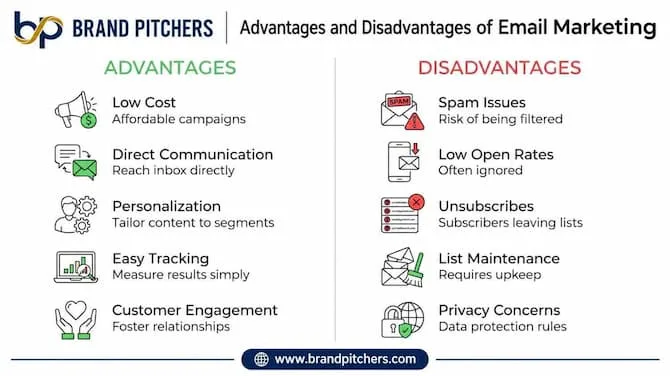
Benefits of Email Marketing
1. Improved Brand Awareness and Customer Engagement
Consistent messages keep your name familiar and trusted.
Personalisation encourages replies, clicks, and sharing.
2. It Provides Reaching Many People at a Low Cost
Thousands of contacts can be reached for very little money.
Automation saves hours of repetitive manual work.
3. Driving Website Traffic:
Every link sends readers to your pages, offers, or blog.
Fresh content gives people reasons to return.
Track clicks to learn which topics attract visitors.
4. Find More Quality Leads
Opt-in subscribers have already shown genuine interest.
Brand pitchers email marketing helps creators and companies connect with collaborators and sponsors.
5. Enhanced Customer Retention
Rewards in the form of loyalty programs, special offers, and useful content will keep customers coming back.
Visit Us www.brandpitchers.com/about-us
Retaining customers costs less than acquiring new ones.
Happy customers refer friends.
6. Increased Reach and ROI (Return On Investment)
Email regularly delivers strong returns compared with many channels.
Small budgets can produce impressive, measurable revenue.
7. Building and Nurturing Customer Relationships
Helpful, human messages build trust over time.
Segment lists so each reader feels understood.
8. Email Campaign Benefits
Results are measurable, testable, and easily repeatable.
Automation lets successful sequences scale without extra effort.
9. It Provides an Advantage By Increasing Your Sales
Timely offers prompt purchases from warm audiences.
Cart reminders recover revenue you would otherwise lose.
Drawbacks of Email Marketing
1. Reaching Inboxes is Hard:
Crowded inboxes mean strong subject lines are essential.
Relevance and timing decide whether you get noticed.
2. Audience Burnout:
Too many messages tire readers quickly.
Balance frequency with real value.
3. Time-Consuming to Create:
Design, copywriting, and testing take effort.
Reusable templates reduce the workload.
4. Advanced Analytics Requires Work:
Deeper insights demand proper setup and analytical skill.
Start with simple metrics before expanding.
Review monthly. Visit Us www.brandpitchers.com/email-marketing
5. Reliance on Tech Platforms:
Outages, pricing changes, or policy shifts can disrupt plans.
Keep backups of your subscriber data.
Never depend on one channel alone.
6. Undelivered emails
Bounces occur from invalid or abandoned addresses.
Verify and refresh your list regularly.
7. Spam Filters:
Avoid spammy words, excessive punctuation, and image-heavy layouts.
Always include clear unsubscribe options.
8. Sender Reputation Risk:
Spam complaints damage future deliverability.
Authenticate your domain and send consistently.
9. High Unsubscribe Rates:
Irrelevant content drives people away.
Use segmentation and preference centres to stay relevant.
Final Thoughts
Start small: define your audience, set goals, and send consistently.
Deliver value first, because sales follow trust.
Measure, adjust, and always respect your subscribers’ inboxes.
Begin your first campaign this week and watch your business grow.
Consistency, relevance, and patience turn email into a dependable growth engine.