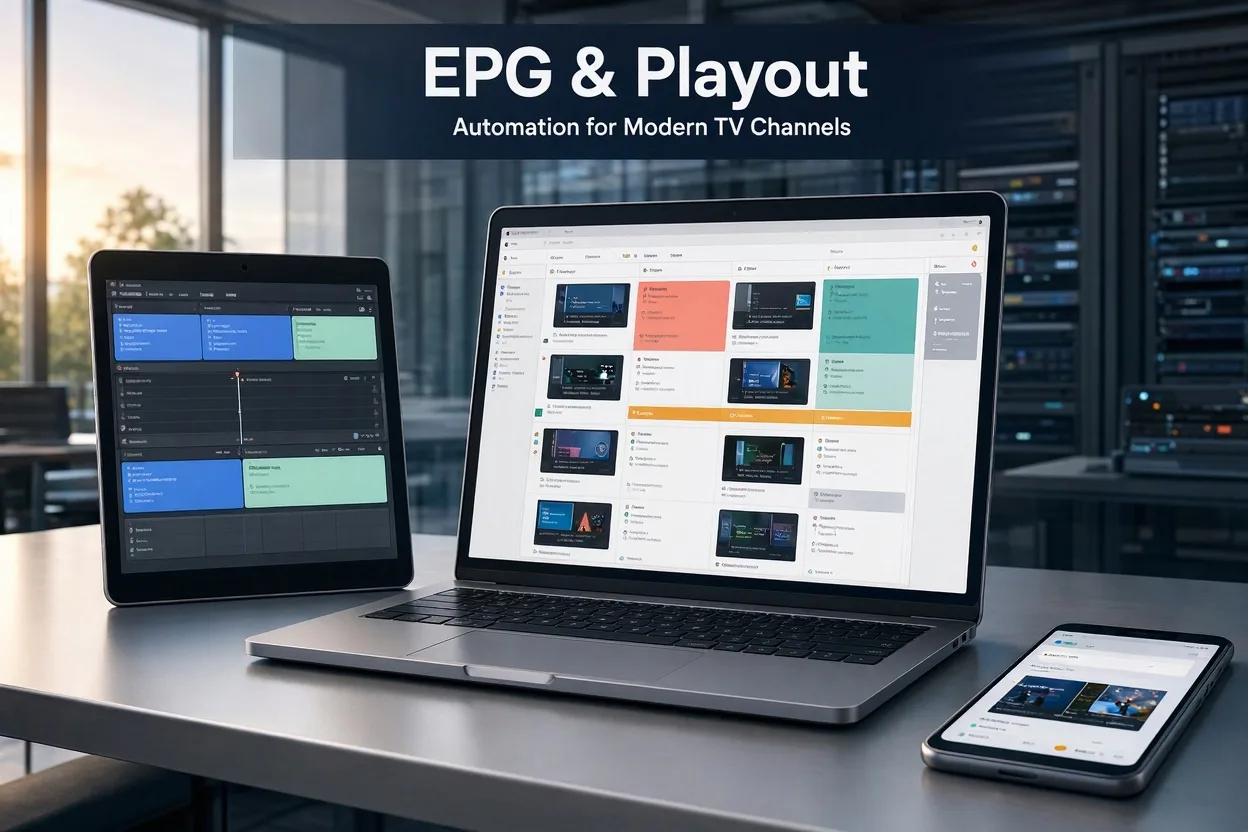
A television channel depends on more than the programs it broadcasts. Viewers need to know what is playing, what is coming next, and when their favorite shows will be available. Behind the scenes, broadcasters need systems that coordinate schedules, media assets, and playback. An Electronic Program Guide and playout automation software are two important parts of this process.
Together, these technologies help create a more organized television experience. The guide presents programming information to viewers, while automation software manages the playback operations that keep a channel running.
What Is an Electronic Program Guide?
An Electronic Program Guide, commonly called an EPG, is a digital schedule that displays television programming information. It may show current programs, upcoming shows, descriptions, start and end times, and other details that help viewers navigate a channel or service.
An EPG can appear in a set-top box, connected TV application, streaming platform, or digital television interface. It is especially useful for services that offer multiple channels or scheduled programming.
A well-maintained guide helps viewers make decisions quickly. If the information is inaccurate, however, the experience can become frustrating. Program metadata should therefore be updated whenever the schedule changes.
How Playout Automation Software Works
Playout automation software manages the playback of media content according to a schedule. Instead of requiring an operator to start every program manually, the system can execute a prepared playlist.
Depending on the platform, it may manage:
- Prerecorded programs and episodes
- Advertisements and promotional segments
- Channel branding and station identification
- Scheduled transitions between programs
- Live input sources and backup content
Automation can reduce repetitive work and improve consistency. It is particularly useful for channels that operate around the clock or distribute programming across several time zones.
Connecting the EPG and Playout Schedule
The EPG and playout system should work from compatible scheduling information. The playout system determines what content is broadcast, while the guide communicates that schedule to viewers.
When the two systems are not synchronized, a program may begin earlier or later than the time displayed in the guide. This can happen when a live event runs long, a scheduled program is replaced, or an advertising break changes the timing.
A reliable workflow should update schedule information when changes occur. Broadcasters can use integrated systems or carefully managed data exchanges to keep the guide and playout schedule aligned.
Improve Channel Continuity
Automation is valuable, but it should not eliminate operational oversight. Broadcasters need monitoring tools that can identify missing media, unexpected silence, playback errors, and signal interruptions.
Prepare backup content for situations in which a live source becomes unavailable. A channel may switch to a promotional loop, a prerecorded program, or another approved source.
Regularly test the system before important broadcasts. Check media files, scheduled transitions, audio levels, and the accuracy of program metadata.
Support Different Distribution Platforms
Television channels may distribute content through traditional broadcast networks, cable systems, satellite services, connected TV applications, or internet streaming.
Each distribution method may have different requirements for schedule data and playback. A channel should confirm that its EPG format and automation output are compatible with the intended platform.
For streaming services, the guide may also need to work across mobile devices and connected TVs. A responsive interface and clear program descriptions can improve the viewer experience.
Conclusion
An Electronic Program Guide helps viewers understand a channel’s schedule, while playout automation software manages the content that appears on air. Keeping these systems synchronized is essential for accurate program information and dependable channel operations. With well-planned scheduling, monitoring, and backup procedures, broadcasters can deliver a more consistent television experience.