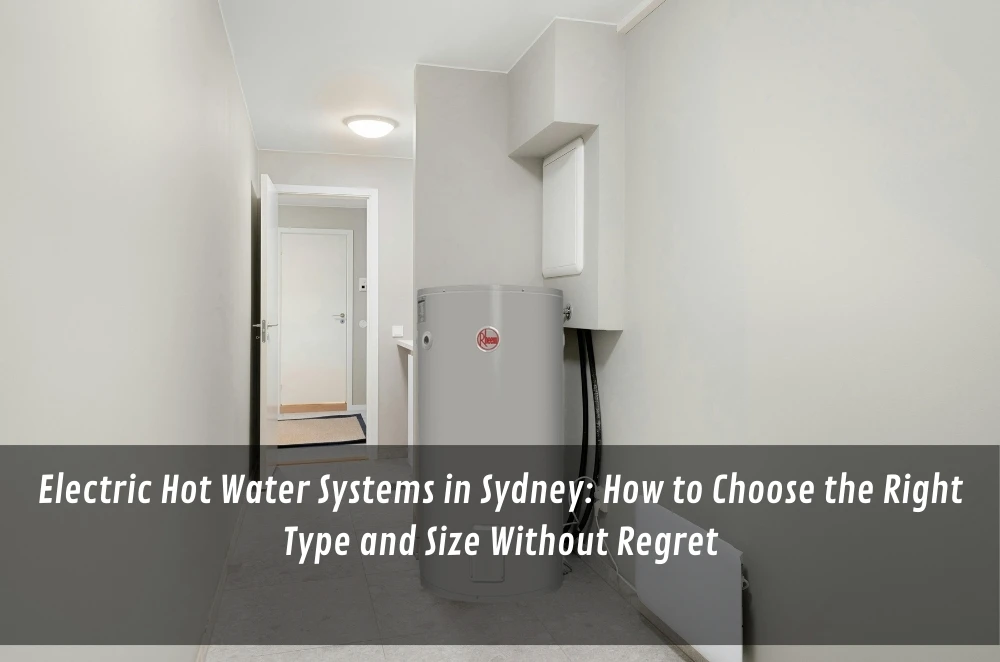
Hot water replacements are rarely planned.
Most people in Sydney only think about the system when showers go cold, a tank leaks, or tenants start calling—often ending up on the phone to local hot water system electricians in Inner West Sydney when time is already tight.
That pressure can lead to “like-for-like” choices that repeat the same old problems—slow recovery, not enough hot water at peak times, or unnecessarily high running costs.
A better approach is to pick the system type and size based on how the property actually uses hot water, plus the installation constraints that shape what’s feasible.
This guide breaks down the options, the common mistakes, and a simple 7–14 day plan to make a confident decision.
When electric hot water is a strong fit (and when it isn’t)
Electric hot water makes sense when the property already has suitable electrical capacity, you want a straightforward installation pathway, or gas isn’t available or desirable.
It can also suit apartments and rentals where placement rules and simplicity matter, and where maintenance needs to be predictable.
Electric systems can be a good match for households that can align usage with off-peak or controlled-load tariffs (where available), because that can materially change ownership costs.
On the other hand, electricity can feel expensive if the system is oversized, the tariff is mismatched to usage, or the household has heavy peak-time demand that constantly forces daytime reheating.
It can also be the wrong fit if the property can’t accommodate the unit footprint, or if a more efficient option would be practical and better aligned to long-term plans.
The main electric system types you’ll see
Electric storage tank systems
Electric storage systems heat a tank of water and keep it ready for use.
They’re common because they’re simple, familiar, and often easier to replace quickly.
Their success depends heavily on sizing and on whether reheating happens at the right times for the household.
The key trade-off is recovery time: once the stored hot water is used up, you wait for the tank to reheat.
Heat pump hot water systems
Heat pumps use electricity but work differently to standard storage tanks, pulling heat from the air to warm water more efficiently in many conditions.
They can reduce running costs when installed in the right location with adequate airflow and acceptable noise placement.
They often perform best when the household can work with reheating cycles and when the unit’s placement won’t create neighbour or strata issues.
The trade-offs are higher upfront cost, placement sensitivity, and the need to think harder about where the unit will live.
Instantaneous electric systems (less common)
Instantaneous electric systems heat water on demand, but they can require high electrical load and aren’t always practical in typical residential setups.
Where they are used, the decision tends to be driven by very specific site constraints and electrical capacity considerations.
For most households, the more common comparison is electric storage versus heat pump.
Decision factors that matter more than the sticker price
1) Peak demand and “overlap moments”
Most hot water regrets come from underestimating simultaneous use.
A household might be fine on weekdays and fail every weekend when showers, laundry, and dishes overlap.
Start by mapping the busiest 30–60 minutes and how many outlets are likely to run close together.
2) Correct sizing is about behaviour, not guesswork
“Bigger is safer” can be an expensive assumption if it leads to heat loss and higher running costs.
But undersizing can be worse, because it creates daily inconvenience and can push the system into constant reheating.
Sizing should reflect peak demand, household routines, and how quickly the system can recover.
3) Tariffs, timers, and when the system reheats
Running cost isn’t just about efficiency—it’s about when the system heats.
If the household drains the tank early and it reheats during peak-rate periods, bills can jump even if the unit is “standard”.
If off-peak or controlled-load is part of the setup, the choice should account for whether the household can live within that rhythm.
4) Installation constraints that affect what’s feasible
Access, footprint, and placement can be the deciding factors, especially in tight side passages, apartment service cupboards, or older properties with limited space.
A replacement that looks simple on paper can become complex if pipe runs need changing, valves need updating, or the unit has to be relocated for practicality.
Treat service access as a real requirement, not a nice-to-have.
5) Noise and placement considerations (especially for heat pumps)
Heat pumps aren’t “loud” in the way a vacuum is loud, but they do produce operational noise and need airflow.
In dense Sydney neighbourhoods or strata settings, placement can be a genuine constraint.
If noise or proximity is a factor, it’s better to resolve it early than to buy a unit and then scramble for an acceptable location.
If you’re shortlisting options, choose an electric hot water system only after you’ve matched the system type (storage vs heat pump), sizing, tariff setup, and placement constraints to the property’s real routine.
Common mistakes people make with electric hot water
Replacing like-for-like without checking whether the old system ever met demand is a classic misstep.
Another common error is choosing a larger tank “just in case,” then paying for it through higher heat loss and reheating costs.
People also overlook tariff setup and end up with a system that reheats at expensive times because household usage doesn’t match the heating schedule.
For heat pumps, underestimating placement and noise considerations can lead to awkward compromises or last-minute changes.
Finally, delaying replacement through repeated faults often turns a manageable decision into a rushed purchase under pressure.
A simple first-action plan for the next 7–14 days
Day 1–2: Write down the busiest hot water window and what’s happening during it (showers, kitchen use, laundry, multiple bathrooms).
Day 2–3: Check whether the property uses off-peak/controlled-load and whether the household routine aligns with that heating pattern.
Day 3–5: Photograph the current unit, its location, access path, and surrounding clearances so quotes can reflect real conditions.
Day 5–7: Shortlist two viable approaches (correctly sized storage vs heat pump where placement suits) and decide what you’re optimising for—comfort, running cost, simplicity, or footprint.
Day 7–14: Gather quotes that clearly state assumptions and installation scope, then schedule work around access and downtime needs.
Operator Experience Moment
The smoothest electric replacements usually happen when someone spends a few minutes upfront on the “boring” details: peak demand, tariff timing, and whether the proposed unit can be placed sensibly and serviced easily.
When those checks are skipped, people often end up with a system that works technically but feels wrong day to day—either not enough hot water at peak times, or higher bills than expected.
A small amount of preparation tends to prevent the expensive back-and-forth later.
A local SMB mini-walkthrough in Sydney
A small Sydney hair salon notices hot water runs out halfway through a busy Saturday.
They assume the unit is too old and look for a quick swap.
They map usage and find demand spikes in short bursts between appointments.
They check whether off-peak heating aligns with trading hours and realise it doesn’t.
They review placement options because the existing unit is in a cramped rear cupboard.
They shortlist a size and setup that fits peak demand and can reheat at sensible times.
They schedule installation after-hours to minimise disruption.
Practical opinions
Size for peak demand first, then compare system types within that band.
Treat tariff timing and placement constraints as part of the decision, not admin details.
Optimise for comfort and serviceability before chasing marginal savings.
Key Takeaways
- Electric hot water can be a strong fit in Sydney, especially where simplicity, access, and predictability matter.
- The best choice depends on peak demand, correct sizing, tariff timing, and realistic placement constraints.
- Most regret comes from like-for-like swaps that repeat old sizing mistakes or from ignoring heating schedules and installation realities.
- A 7–14 day plan improves quote accuracy and reduces rushed decisions.
Common questions we hear from Australian businesses
Q1) Should we choose a standard electric storage unit or a heat pump?
It depends on placement suitability, budget, and whether running cost savings matter enough over time. A practical next step is to check if there’s an outdoor location with airflow and acceptable noise impact, then compare that against a correctly sized storage option. In many Sydney commercial sites, access constraints and neighbour proximity influence heat pump suitability.
Q2) How do we stop running out of hot water during peak periods?
Usually, it comes down to sizing for simultaneous use and ensuring reheating happens at the right times. The next step is to map the busiest hour and confirm whether the current system is undersized or simply reheating too slowly for your usage pattern. In Sydney, mixed-age plumbing and multiple use points can make “peak overlap” more common than expected.
Q3) Can we keep costs down by reusing the existing location and pipework?
In most cases, you can, but it depends on whether the new unit fits the space, meets placement needs, and can be serviced easily. The next step is to photograph clearances and access routes and request quotes that acknowledge those constraints. In older Sydney buildings, tight access and ageing pipework can change installation scope quickly.
Q4) What’s the fastest calm way to decide without rushing?
Usually it’s to shortlist two options that both fit the site constraints, then choose based on peak demand coverage and how the system will reheat within your operating routine. A next step is to write three non-negotiables (peak performance, placement, tariff timing) and use them to filter options. In Sydney, building rules and installer access (parking, loading, strata rules) can affect scheduling, so plan for that early.