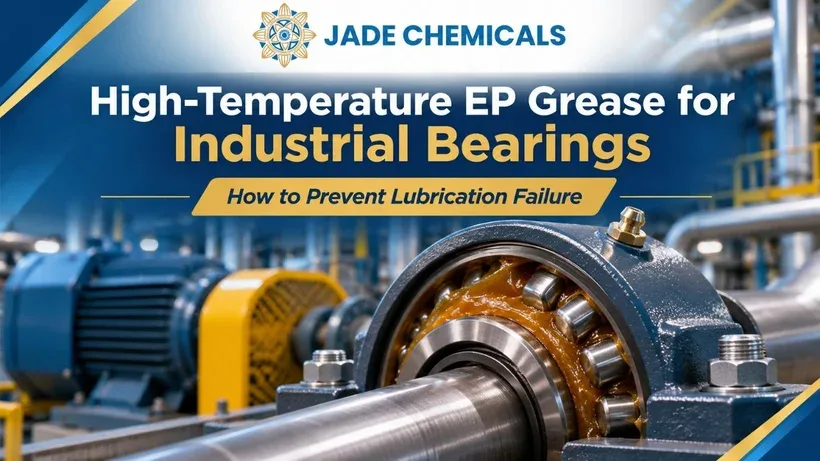
Industrial bearings play an important role in keeping manufacturing equipment running smoothly. Whether used in conveyors, motors or heavy machinery, these components operate under constant mechanical loads and repeated movement. When lubrication begins to deteriorate, the equipment may show warning signs long before a bearing fails completely.
Recognising these early indicators can help maintenance teams identify potential problems and take corrective action before unexpected downtime affects production.
Why Bearing Lubrication Failure Happens
Industrial bearings require a suitable lubricating film to reduce friction between moving surfaces. When that film becomes insufficient, direct surface contact can increase, contributing to heat generation and wear.
Several factors can affect lubrication performance, including elevated temperatures, contamination, incorrect grease quantities and unsuitable lubricant selection.
High-temperature applications present additional challenges because heat can accelerate grease ageing. The lubricant may gradually lose properties necessary for effective operation, particularly when exposed to conditions beyond its recommended limits.
However, not every bearing problem is caused by grease. Misalignment, incorrect installation and excessive loading can produce similar symptoms.
Common Warning Signs Maintenance Teams Should Watch
Changes in equipment behaviour can provide useful clues about developing bearing problems.
- Unusual Temperature Increase: A bearing running hotter than its normal operating range may indicate lubrication, loading or mechanical issues.
- Abnormal Noise: Grinding, rumbling or other unexpected sounds can indicate changes in bearing condition.
- Excessive Vibration: Increasing vibration may suggest wear, misalignment or developing mechanical damage.
- Grease Leakage: Unexpected lubricant loss can affect the amount of grease available inside the bearing assembly.
- Contaminated Grease: Dust, moisture or metal particles can interfere with lubrication and contribute to wear.
These indicators should be investigated rather than automatically treated as proof of lubricant failure.
How High-Temperature EP Grease Supports Bearing Protection
High-temperature extreme-pressure grease is formulated for demanding applications involving heat and heavy mechanical loads.
The performance of these greases depends on their base oil, thickener and additive system. Extreme-pressure additives can provide additional surface protection under severe contact conditions.
Some specialised formulations also contain solid lubricants such as Tungsten Disulfide (WS₂), which may contribute to friction and wear protection in suitable applications.
Choosing an appropriate grease requires considering bearing speed, operating temperature, load and the surrounding environment. A higher advertised temperature range does not automatically mean that the grease is suitable for continuous use at that maximum temperature.
Maintenance engineers should review technical specifications and equipment recommendations before changing lubricants.
Practical Steps to Reduce Lubrication-Related Bearing Problems
Preventive maintenance is essential for machinery operating under challenging conditions. Regular inspections and accurate lubrication records can help identify developing problems.
Maintenance teams should monitor bearing temperatures, observe changes in vibration and inspect lubrication points for leakage or contamination.
Correct relubrication intervals are also important. Applying excessive grease may increase churning resistance and heat generation, while insufficient grease can leave surfaces inadequately protected.
Grease compatibility should be checked before switching products. Mixing incompatible lubricants may affect consistency and lubrication performance.
A maintenance programme based on actual equipment conditions is generally more effective than applying the same schedule to every machine.
Understanding Industrial Bearing Lubrication with Jade Chemicals
Jade Chemicals supplies specialty industrial lubricants for manufacturing and engineering applications in India, including high-temperature EP grease formulated with synthetic base oil and WS₂ additives.
For a closer look at the causes of bearing lubrication problems and suitable preventive practices, read Jade Chemicals' guide on High-Temperature EP Grease for Industrial Bearings: How to Prevent Lubrication Failure.
Effective bearing maintenance requires more than selecting a suitable grease. Monitoring operating conditions, applying lubricant correctly and responding to early warning signs can help manufacturers reduce avoidable equipment problems.
By combining appropriate lubrication products with consistent maintenance practices, industrial facilities can support safer, more reliable machinery operation and minimise unnecessary production interruptions.