
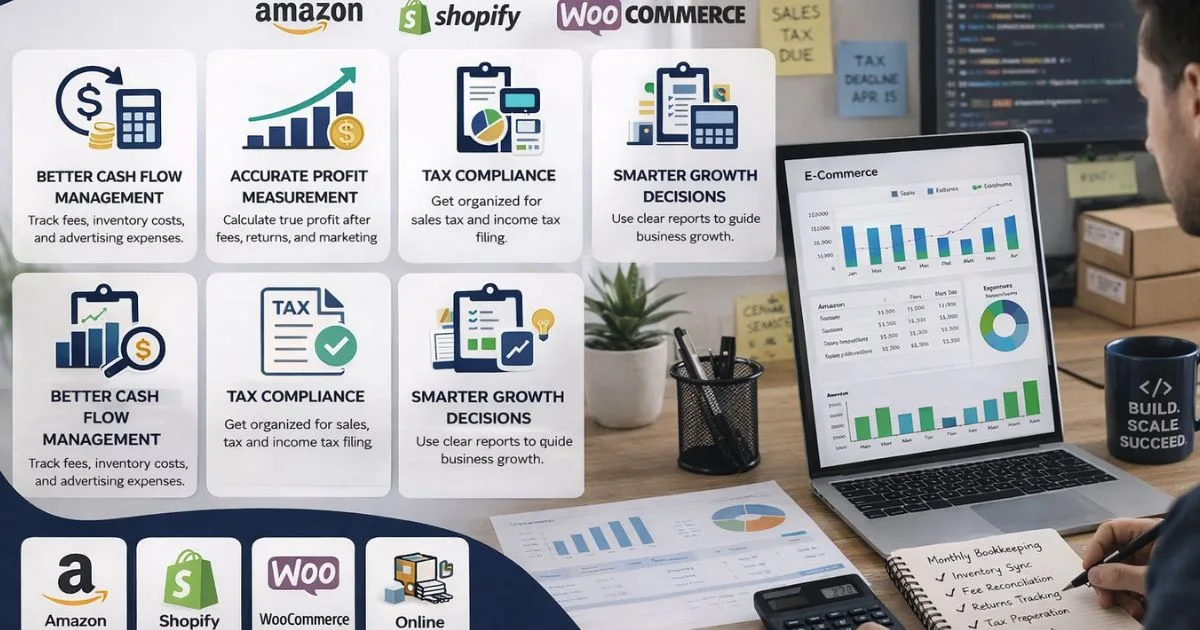
Running an online store today is more complex than simply listing products and processing orders. Sellers on Amazon, Shopify, and WooCommerce must manage inventory, advertising costs, payment gateway fees, returns, taxes, and cash flow—all while trying to grow revenue. This is why E-Commerce Bookkeeping has become a critical part of building a profitable online business.
Whether you are an independent seller or managing a fast-growing brand, accurate financial records help you understand performance, avoid costly mistakes, and make smarter decisions.
Why Bookkeeping Matters for Online Sellers
Many e-commerce businesses process hundreds or even thousands of transactions every month. Orders may come from multiple sales channels, while payments are deposited after deducting platform fees, shipping charges, refunds, and advertising expenses.
Without organized bookkeeping, it becomes difficult to answer important questions such as:
- Which products generate the highest profit?
- Are ad campaigns producing a positive return?
- How much cash is available for restocking inventory?
- What taxes need to be paid?
- Is the business actually growing profitably?
Professional E-commerce Accounting provides clarity by turning raw transaction data into meaningful financial reports.
Bookkeeping Challenges for Amazon Sellers
Amazon sellers face unique accounting issues because marketplace payouts do not always match total sales revenue. Fees, commissions, storage charges, refund deductions, and advertising spend are often taken out before funds are deposited.
That is why Amazon Seller Accounting requires detailed reconciliation of:
- Gross sales
- Amazon referral fees
- FBA fulfillment charges
- Storage fees
- Sponsored ad expenses
- Refunds and returns
- Net settlements
Accurate records help sellers measure real margins rather than relying only on payout amounts.
Shopify Bookkeeping Essentials
Shopify gives businesses control over branding and customer experience, but it also creates accounting complexity when multiple apps, payment gateways, and sales channels are connected.
For Shopify stores, bookkeeping should track:
- Daily sales and refunds
- Shopify Payments or third-party gateway fees
- Shipping income and expenses
- Discount codes and promotions
- Subscription app charges
- Inventory purchases
With proper E-Commerce Bookkeeping, store owners can identify best-selling products, monitor operating costs, and improve profitability.
WooCommerce Seller Accounting Needs
WooCommerce is popular because it offers flexibility and ownership through WordPress. However, sellers often integrate various plugins for payments, shipping, subscriptions, and analytics.
This creates a need for accurate bookkeeping systems that combine data from multiple sources. WooCommerce businesses benefit from monthly reconciliations, expense categorization, and tax-ready reports.
When managed properly, E-commerce Accounting helps WooCommerce sellers maintain control as order volume increases.
Key Benefits of Proper E-Commerce Bookkeeping
1. Better Cash Flow Management
Inventory purchases, advertising, and shipping expenses can quickly drain cash reserves. Bookkeeping helps owners understand incoming funds and upcoming obligations.
2. Accurate Profit Measurement
Revenue alone does not equal profit. Once fees, returns, and marketing costs are included, margins may look very different.
3. Tax Compliance
Sales tax, income tax, and expense documentation become easier when books are organized year-round.
4. Smarter Growth Decisions
Reliable reports help determine when to hire staff, increase ad spend, launch new products, or expand into new marketplaces.
5. Investor and Loan Readiness
If you seek funding, lenders and investors expect clear and accurate financial statements.
Common Mistakes Online Sellers Should Avoid
Many sellers make preventable bookkeeping mistakes, such as:
- Recording deposits as total sales
- Ignoring platform fees
- Failing to track returns
- Mixing personal and business expenses
- Not reconciling payment gateways
- Overlooking inventory costs
These errors can lead to inaccurate profit figures and tax issues.
Why Outsource to Specialists
As businesses grow, bookkeeping becomes more time-consuming and technical. Working with professionals who understand online selling platforms can save time and reduce risk.
For businesses in the United States, Unified Books provides bookkeeping solutions tailored for modern online sellers. Their team supports Amazon, Shopify, and WooCommerce businesses with accurate records, reconciliations, reporting, and dependable financial management.
Final Thoughts
Selling online creates great opportunities, but growth without financial control can cause serious problems. Accurate E-Commerce Bookkeeping helps sellers understand margins, manage cash flow, stay compliant, and scale with confidence.
Whether you need expert Amazon Seller Accounting or complete E-commerce Accounting support across multiple platforms, professional bookkeeping is an investment that strengthens long-term success.