
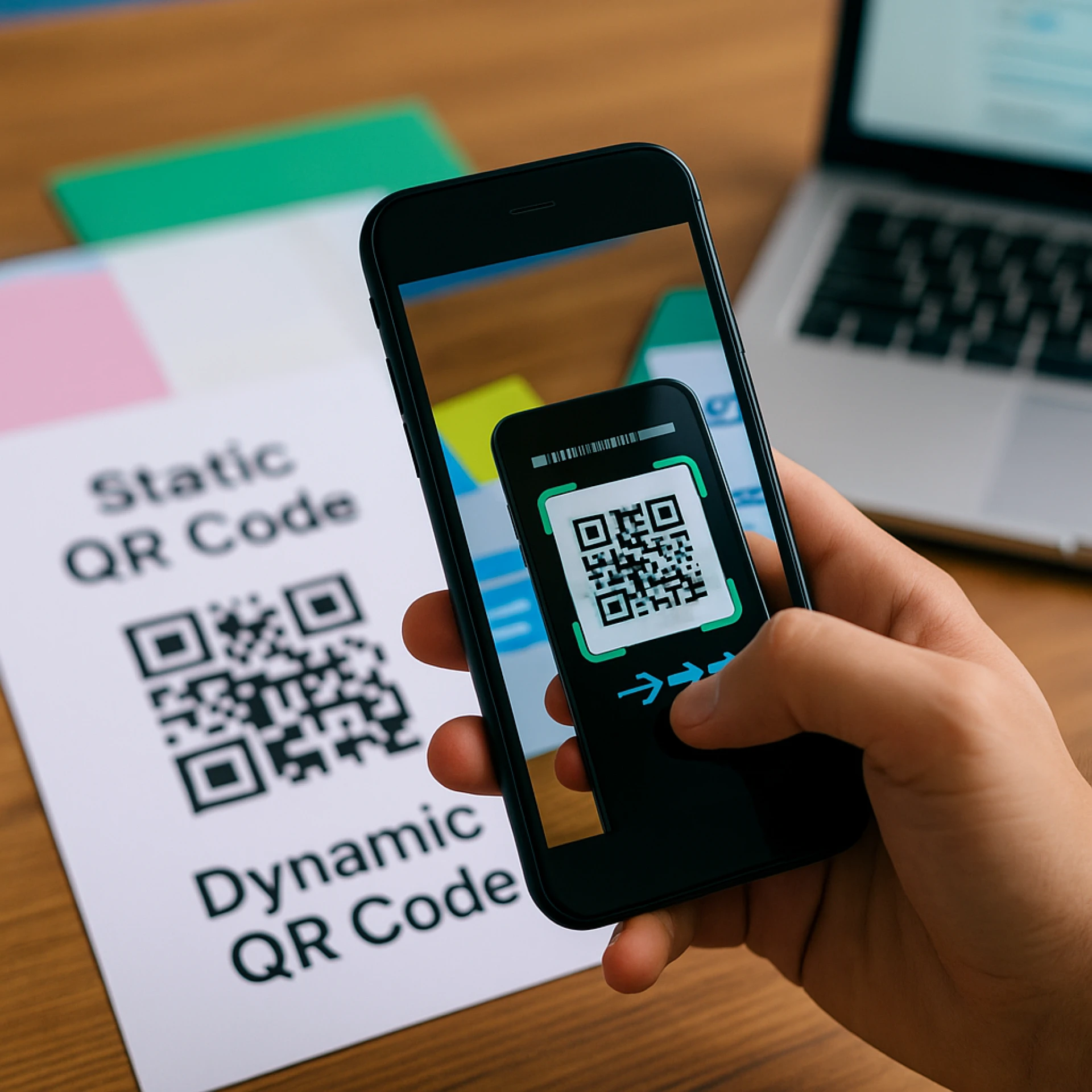
In just the past few years, QR codes have gone from being a niche tech feature to a mainstream marketing tool.
They connect offline experiences — posters, packaging, flyers — directly to the digital world with a single scan.
But if you’ve ever created a QR code, you’ve likely seen two types: static and dynamic.
At first glance, they look identical. However, they function very differently, and choosing the right one can make a big impact on your results.
Here’s a breakdown of how these two types work, what sets them apart, and which one fits your goals best.
What Is a Static QR Code?
A static QR code is simple and permanent.
When you create one, the data — such as a website link or contact information — is stored directly inside the code.
Once it’s generated, you can’t change what it links to.
If your URL changes or you want to update your destination, you’ll need to make a completely new code.
That makes static QR codes ideal for links that won’t change, such as:
- Your homepage or “About Us” page
- A personal portfolio
- Contact details or vCard links
- Permanent resources like PDF files or menus
They’re fast to generate and completely free — perfect for one-time or long-term use cases.
What Is a Dynamic QR Code?
A dynamic QR code works differently.
Instead of embedding your final link, it uses a short redirect link that you can update anytime.
This means you can change the destination — for example, from a product page to a new campaign — without needing to reprint or redesign the QR code itself.
Dynamic codes also support tracking and analytics, allowing you to:
- Count the number of scans
- View scan times and locations
- Identify the type of device used
That data gives businesses real insight into customer engagement.
You can easily create and manage dynamic QR codes at generate-qr-code.com.
Static vs. Dynamic: The Core Differences
Here’s a straightforward comparison to help you decide:
1. Editability
- Static QR Codes: Can’t be changed after creation.
- Dynamic QR Codes: Destination can be updated anytime.
2. Analytics
- Static: Offers no tracking or performance data.
- Dynamic: Tracks scans, engagement, and location metrics.
3. Flexibility
- Static: Great for permanent content.
- Dynamic: Ideal for marketing campaigns and seasonal updates.
4. Cost
- Static: Completely free and quick to make.
- Dynamic: Free to start, requires a user account for management and analytics.
If you need flexibility and insight into user behavior, dynamic QR codes are the smarter option.
Why Dynamic QR Codes Are Better for Marketing
In 2025, digital marketing is all about adaptability and measurement.
Dynamic QR codes make it possible to adjust campaigns in real time and understand exactly how customers interact with your materials.
For example:
- A restaurant can update its digital menu daily without printing new QR codes.
- A retail brand can track which stores or regions drive the most engagement.
- A business can repurpose the same QR code across multiple promotions over time.
With dynamic QR codes, printed assets become long-term tools instead of single-use campaigns.
When Static QR Codes Make More Sense
Static QR codes still have their place.
If you’re linking to something that won’t ever change — like your homepage, contact page, or a permanent product — static codes are perfectly fine.
They’re simple, reliable, and take only seconds to generate at generate-qr-code.com.
For most short-term or fixed links, there’s no reason to overcomplicate things.
How to Create a QR Code
Creating either type of QR code takes less than a minute.
Here’s how:
- Visit generate-qr-code.com.
- Enter the URL you want to share.
- Choose between Static or Dynamic.
- Customize the design (color, style, or logo).
- Click Generate.
- Sign up or log in (required for dynamic codes) to download and track.
Your QR code will be ready to use immediately — for websites, marketing materials, or social media campaigns.
Choosing the Right QR Code for Your Needs
So, which one should you use?
- Static QR Codes: Best for simple, unchanging links.
- Dynamic QR Codes: Best for marketing, tracking, and campaigns that evolve over time.
If you’re a business, startup, or creator looking to build smarter, data-driven marketing, dynamic QR codes are the clear winner.
They save time, reduce printing costs, and turn ordinary materials into measurable engagement channels.
About Generate QR Code
Generate QR Code is a free online platform for creating static and dynamic QR codes.
It’s built to help businesses, marketers, and creators generate custom QR codes that connect offline users to online experiences instantly.