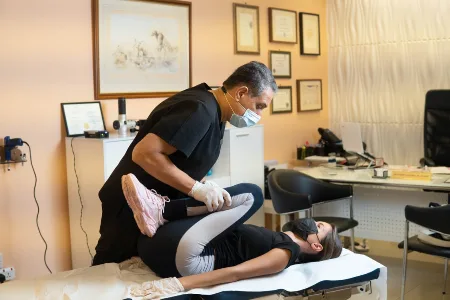
DUBAI, UAE: Dr. Gerry Nastasia, a Dual Board Certified chiropractor in Dubai, has outlined what a thorough, evidence-informed approach to spine care involves, aiming to help residents understand what to expect before they begin treatment. The overview comes as back, neck, and joint complaints continue to rank among the most common reasons working adults in the UAE seek musculoskeletal care.
Chiropractic care is widely recognized by name but less widely understood in practice. Many patients arrive expecting a single quick adjustment, while others are unsure what separates a thorough assessment from a brief consultation. Dr. Nastasia, who has more than 36 years of international clinical experience, says clearer expectations tend to lead to better decisions and more productive treatment.
Why spine complaints are so common in Dubai
Dubai's professional lifestyle places consistent demands on the spine. Long commutes, extended hours at a desk, frequent travel, and limited movement during the working day all contribute to sustained pressure on the lower back, neck, and shoulders. These patterns rarely produce a single dramatic injury. Instead, discomfort tends to build gradually, from stiffness at the end of a long day to pain that no longer settles with rest.
Active residents are affected as well. Regular gym training, running, and racquet sports can place repetitive load on the spine and shoulders, and overuse patterns are common among patients who train consistently without adequate recovery or movement variety.
Care that begins with assessment, not assumption
A central point in Dr. Nastasia's approach is that treatment should follow diagnosis, not precede it. A new patient's first visit begins with a detailed history covering how the problem started, what aggravates or eases it, and how it affects daily activity. This is followed by a physical and orthopedic examination and a review of any existing imaging, such as X-rays or MRI scans.
The purpose of this process is to identify where the problem actually originates. Pain felt in the leg may begin in the lower back. Pain felt in the shoulder may be referred from the neck. Back pain may involve a disc, a joint, a muscle, or a combination of several structures. Each of these possibilities can call for a different approach, which is why a clear working diagnosis matters before a treatment plan is set.
Patients should leave a first appointment understanding what is being considered, what has been ruled out, and what the proposed plan is intended to achieve. If that clarity is missing, Dr. Nastasia encourages patients to ask further questions before committing to a course of care.
Conditions commonly seen in practice
The practice most often sees patients with lower back pain, sciatica, disc-related complaints, neck pain, shoulder pain, and posture-related discomfort. Many of these overlap. A patient with a compressed lower back disc, for example, may also have tight hip muscles from prolonged sitting, and a patient with neck stiffness may also experience tension headaches or pain between the shoulder blades.
Understanding these overlaps helps shape treatment. Addressing a single painful area in isolation can leave the contributing factors untouched, which is one reason pain sometimes returns after a short period of relief.
Matching the technique to the condition
Chiropractic is not a single technique but a range of approaches, and the appropriate choice depends on the condition, the patient's age and comfort, and how the body responds. For disc-related complaints in particular, Dr. Nastasia uses Cox Flexion-Distraction Technic, for which he is certified. It is a gentle, controlled method performed on a specialized table, designed to reduce pressure on an affected disc and nearby nerve root without the higher-velocity movement associated with some other approaches.
For patients whose pain is aggravated by forceful manipulation, this distinction can be significant. Other presentations, such as stiff joints or muscular tension, may call for different methods. The guiding principle is that the technique should be chosen for the condition rather than applied uniformly to every patient.
Structured plans with regular reassessment
A common concern among prospective patients is that chiropractic care involves an open-ended series of appointments. Dr. Nastasia notes that well-structured care should work the opposite way. Treatment plans are built around a specific goal, such as reducing pain, restoring movement, or supporting a return to regular activity, and are reviewed at set intervals.
At each review, progress is compared against the starting point. If a patient is improving as expected, the plan continues or is gradually reduced. If progress stalls, the plan is adjusted or the case is reconsidered. This ensures that visits remain tied to measurable change rather than habit.
Knowing when a case needs another specialist
Part of responsible spine care is recognizing its limits. Dr. Nastasia is recognized as a Primary Spine Practitioner, a designation reflecting training to diagnose, triage, and manage spine-related conditions as a first point of contact. That includes identifying cases that fall outside chiropractic scope and referring them appropriately, whether to an orthopedic surgeon, a neurologist, or another specialist.
Symptoms such as progressive weakness, loss of bladder or bowel control, unexplained weight loss, or pain following significant trauma warrant prompt medical evaluation, and patients are encouraged to seek care without delay when these appear.
Practical considerations for working residents
For many patients, practical factors determine whether a treatment plan is completed. The practice accepts insurance and provides documentation to support claims, and corporate wellness arrangements are available for employers who wish to address workplace-related spine strain among their teams. Patients also travel from Sharjah and Abu Dhabi for care, and scheduling is planned with working commitments in mind.
What patients can do between visits
Treatment in the practice is only part of the picture. Daily habits strongly influence how a spine feels from one week to the next, and patients are encouraged to take an active role in their own care. Simple changes tend to matter most: standing and walking for a few minutes every 30 to 45 minutes during long desk sessions, using a chair that supports the natural curve of the lower back, and adjusting screen height so the head is not held forward for hours at a time.
Regular, moderate exercise also supports the muscles that stabilize the spine. Walking, swimming, and core-strengthening work are common starting points, although the right choice depends on the individual condition and should be discussed during care. Patients are advised to avoid pushing through sharp or worsening pain, and to report any change in symptoms at their next review so the plan can be adjusted.
Sleep position, lifting technique, and the way a bag or laptop is carried can all add up over time as well. Small corrections in these areas are often easy to make and can reduce the strain that brings patients in for care in the first place.
Questions worth asking any provider
To help residents evaluate their options, Dr. Nastasia suggests a short set of questions that apply to any chiropractic provider. Which board certifications does the treating practitioner personally hold? Which technique will be used, and why does it suit this particular condition? How often does the practitioner treat this type of complaint? What will the first visit include, and how will progress be measured? Is the practice and practitioner properly licensed to operate in Dubai?
Providers who are confident in their training generally answer these questions directly. Patients who feel rushed, or who are presented with a long-term package before any examination has taken place, may wish to pause and seek clarification before proceeding.
Additional information on the conditions treated and what a first appointment involves is available on the page covering back pain treatment in Dubai.
About Dr. Gerry Nastasia
Dr. Gerry Nastasia is a Dual Board Certified (DABCO, DIANM) chiropractor and Primary Spine Practitioner based in Umm Suqeim 2, Dubai, with more than 36 years of international clinical experience. He is certified in Cox Flexion-Distraction Technic and treats back pain, sciatica, disc-related conditions, neck pain, and shoulder complaints for patients across the UAE.