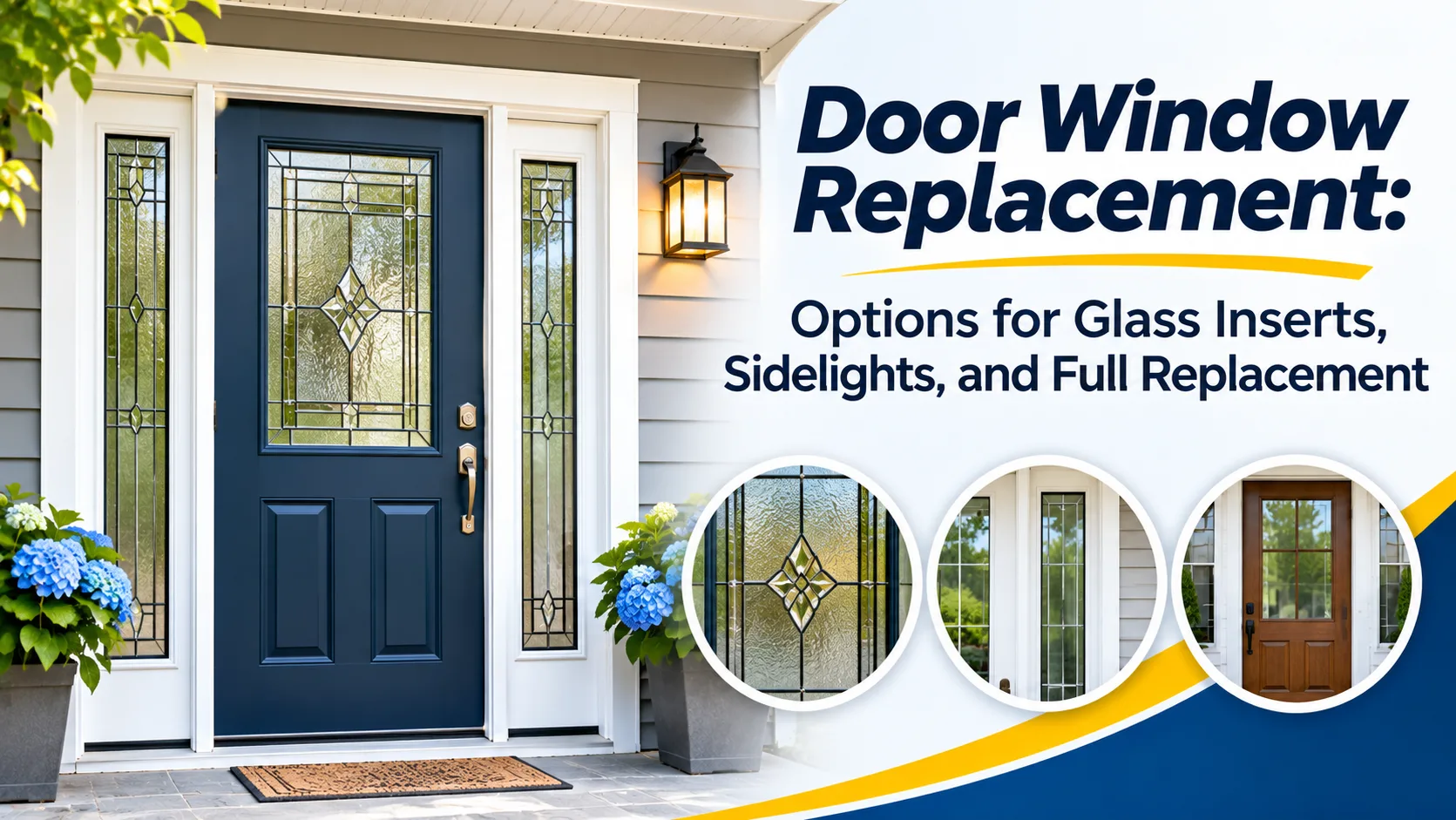
Glass in and around an entry door brings light into a home, but it also affects insulation, security, and appearance. When that glass cracks, fogs, or leaks, owners must decide how much of the door system to replace. Door window replacement can range from swapping a single glass panel to installing an entire new door unit. This article explains the main options for glass inserts, sidelights, and full replacement, the factors that guide the choice, and the steps involved in the process.
Understanding the Parts of an Entry Door Glass System
An entry door can include several glass components. Each one can be replaced on its own or as part of a larger project.
Door Glass Inserts
A glass insert, sometimes called a door light, is the glass panel set into the door slab. It may be clear, frosted, textured, or decorative. Most inserts include two or three panes with a sealed space between them, which slows heat transfer. A frame or trim kit holds the unit in the door.
Sidelights
Sidelights are narrow glass panels that stand on one or both sides of the door. They are part of the door frame assembly and are usually installed with the door. Most are fixed, and many use decorative or privacy glass. A transom is a similar panel above the door.
Full Door Replacement
A full replacement installs a new door slab, or a complete door unit that includes the frame and often the sidelights. The new unit is built to fit together, which helps keep the opening square and weathertight.
Signs That Glass Needs Attention
Glass problems often appear slowly. Common signs include:
- Fog or moisture between the panes
- Cracks or chips in the glass
- Drafts or cold spots near the glass
- Water stains on the door or floor
- Rattling or loose glass in the frame
- Failed seals or peeling trim around the glass
Fog between panes means the seal has failed and the insulating space is no longer protected. Cleaning does not fix this condition.
Comparing the Replacement Options
Replacing Only the Glass Insert
Replacing the insert works best when the door slab is in good condition. The work is usually quick, and the door stays in place. This option fits cracked glass, failed seals, or a desire to change the look of the glass. It does not fix a warped door, a rotted frame, or worn weatherstripping.
Replacing Sidelights
Sidelight glass can be replaced as a unit when the frame is sound. If the frame has water damage, the whole sidelight assembly may need to be removed. Owners who are planning front window replacement elsewhere on the home often review the entry at the same time, so the glass style and energy ratings match across the front of the house.
Choosing Full Replacement
Full replacement is more suitable when the door has several problems at once. Rot in the frame, a warped slab, air leaks around the edges, and damaged sidelights are common reasons. It also allows owners to change door size, material, or style. The process takes more time than an insert swap, but it addresses the whole opening.
Materials, Glass Types, and Energy Performance
Door frames and slabs are commonly made of fiberglass, steel, or wood. Fiberglass resists dents and moisture, steel offers strength, and wood provides a traditional look but needs regular finishing. Glass can be clear, frosted, textured, or leaded.
Energy performance depends on the glass package. Double-pane glass, low emissivity coatings, and gas fills such as argon reduce heat transfer. Labels from the National Fenestration Rating Council list the U factor and solar heat gain of a product. A lower U factor means less heat passes through the glass. Tempered or laminated glass adds safety, and building codes often require safety glass in and near doors.
Privacy, Security, and Appearance
Glass choices affect how much of the interior is visible from the street. Frosted, textured, and leaded glass let in light while limiting the view. Door glass near the lock can be a security concern, so some designs place the glass higher on the slab or use laminated panes that resist breakage.
What the Replacement Process Involves
Measuring and Ordering
Accurate measurements matter. Insert kits are sized to the cutout in the door, while sidelights and full units are sized to the rough opening. Errors can lead to gaps, binding, or leaks, so many owners rely on a trained installer to measure.
Installation and Sealing
For a glass insert, the installer removes the old trim and glass, cleans the opening, sets the new unit, and seals the edges. For sidelights or full units, the installer removes the old unit, checks the sill and framing for rot, applies flashing and sealant, and sets the new unit level and plumb. Proper flashing keeps water out of the wall.
Care After Replacement
New glass and seals last longer with basic care. Clean glass with a soft cloth and a mild cleaner, and avoid abrasive pads that scratch the surface. Check the weatherstripping and caulk each year, and replace worn parts early. Keep the threshold and sill clear of debris so water can drain away from the entry.
Planning a Door Window Replacement Project
Most projects for door window replacement start with an inspection of the glass, the slab, the frame, and the threshold. Exterior contractors such as Northwestern Exteriors Inc. work with homeowners on entry door and window projects, and an assessment can show whether an insert, a sidelight, or a full unit fits the situation. Owners can also review options for front window replacement during the same project, which helps keep the front of the home consistent in style and performance. Homeowners who belong to an association may check rules on door color and glass style before ordering.
Conclusion
Door window replacement covers a range of work, from a new glass insert to a full door unit with sidelights. The right choice depends on the condition of the glass, the slab, the frame, and the surrounding wall. Understanding these options helps homeowners match the scope of work to the actual problem before they speak with a contractor.