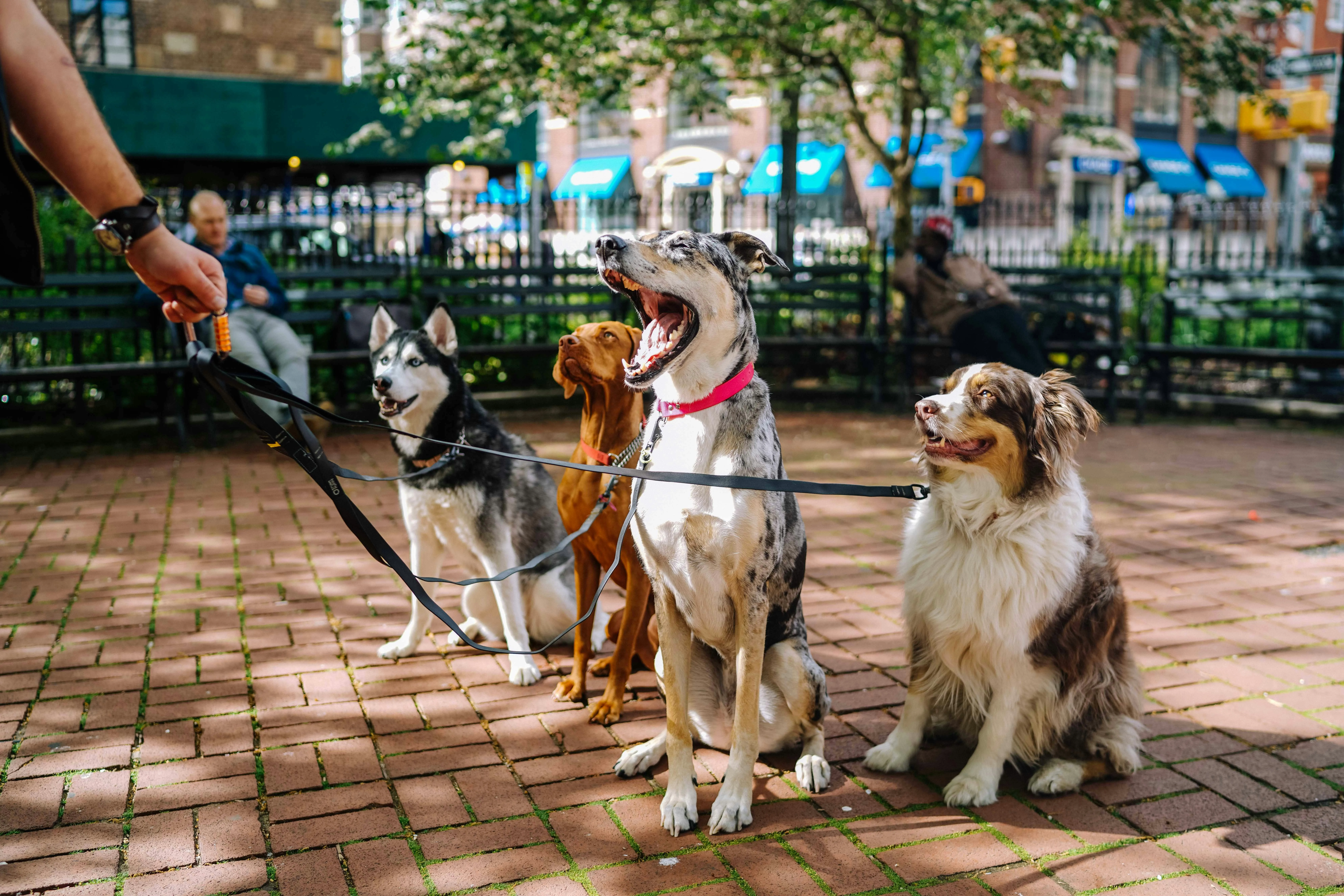
Your dog may sit when you ask at home, come when called from the backyard, and walk nicely through the living room. Then you step outside, and suddenly it seems like your dog has forgotten everything.
They pull toward a smell, stare at another dog, chase a squirrel, ignore their name, or become so distracted that even familiar commands seem to disappear.
If this sounds familiar, your dog may not actually be ignoring you. The bigger issue may be that your dog has learned the behavior in one environment but has not yet learned how to perform it around distractions.
This is where a professional Dog Training Service VA can make a meaningful difference. Effective training is not only about teaching a dog commands. It is about helping the dog understand those commands in different environments, around different distractions, and during everyday situations.
For dogs that struggle to listen outside the home, the goal is to turn basic obedience into reliable real-world behavior.
Why Does My Dog Listen at Home but Not Outside?
This is one of the most common questions dog owners ask.
The answer is often simpler than it seems.
Your home is familiar.
Your dog knows the sounds, smells, people, rooms, boundaries, and routine. There may be relatively few distractions competing for your dog's attention.
Outside is completely different.
Your dog may encounter:
- Other dogs
- People
- Cars
- Birds
- Squirrels
- New smells
- Loud noises
- Children
- Bicycles
- Other animals
- Unfamiliar environments
Each of these can compete with the owner's voice.
A dog that has learned "sit" in a quiet living room has not necessarily learned that "sit" means the same thing when another dog is walking nearby.
That distinction is extremely important.
Dogs Do Not Automatically Generalize Training
One of the biggest misconceptions about dog training is that once a dog learns a command, they automatically know how to perform it everywhere.
Dogs do not always generalize behavior that way.
Imagine teaching your dog to sit in the kitchen.
You say "sit."
Your dog sits.
You reward the behavior.
After enough repetitions, your dog understands what the cue means in that particular situation.
Now take the dog to a busy park.
The environment is completely different. Your dog smells unfamiliar scents, sees people walking, hears traffic, notices other dogs, and has many new things to process.
Your dog may understand the command but still struggle to perform it under those conditions.
This is why Dog Training Service VA programs should include real-world distractions rather than relying entirely on controlled indoor environments.
Distractions Can Be More Powerful Than Your Voice
When a dog ignores you outside, it can feel frustrating.
You may think:
"Why won't my dog listen? They know this command."
But consider the competition.
Your voice is one sound among many.
A squirrel is moving.
Another dog is approaching.
There is an unfamiliar smell on the ground.
A person is walking past.
A vehicle is making noise.
For some dogs, these distractions are extremely rewarding.
The solution is not necessarily to repeat the command louder.
Instead, training should gradually teach the dog that listening to the owner is still valuable even when something interesting is happening.
Professional Dog Training Helps Build Focus
A professional Dog Training Service VA can help owners work on focus in a structured way.
The first goal is not necessarily perfect obedience in the busiest environment.
Instead, training can progress through manageable levels of distraction.
For example:
Quiet room → yard → quiet outdoor area → neighborhood → busier location
This allows the dog to practice responding successfully before moving to a more challenging environment.
If the dog struggles at one level, the trainer can reduce the distraction and build the behavior again.
This gradual approach helps prevent the dog from becoming overwhelmed.
Start With a Strong Foundation at Home
Although the problem happens outside, the solution often begins at home.
Your dog should have a good understanding of basic cues before you expect reliable behavior in difficult environments.
Useful foundation behaviors may include:
- Sit
- Down
- Stay
- Come
- Place
- Heel or loose-leash walking
- Name recognition
- Attention to the handler
The objective is not to collect commands.
The objective is to build communication between the dog and the owner.
When your dog understands that paying attention to you leads to something positive or rewarding, you have a foundation to build on.
Move Training Into the Backyard
Once your dog is responding reliably inside the house, the next step can be the backyard or another familiar outdoor area.
This introduces new smells, sounds, movement, and environmental stimulation without immediately placing the dog in a highly distracting public environment.
Practice simple behaviors such as:
- Responding to their name
- Looking toward you
- Sitting
- Waiting
- Coming when called
- Walking calmly
Keep sessions manageable.
If your dog becomes too distracted to respond, the environment may be too difficult at that moment.
That is not failure.
It is information.
The trainer can use that information to adjust the next training step.
Gradually Increase the Level of Distraction
Good training does not require taking a dog directly from a quiet house to a crowded park.
Instead, difficulty can increase gradually.
For example, you might start by training near a quiet street.
Once your dog can focus there, you can move closer to an area with more activity.
Later, you might practice around people, dogs, or other distractions.
The process should be based on the individual dog's ability to remain engaged.
A dog that succeeds at one level is ready for a slightly greater challenge.
A dog that repeatedly fails may need an easier environment.
This is one area where professional guidance can be especially valuable.
Why Repeating Commands Can Make Things Worse
When a dog does not respond, many owners naturally repeat themselves.
"Come."
"Come."
"Come!"
"Come here!"
The dog continues sniffing.
Repeated commands can create a pattern where the dog learns that the first command does not necessarily require a response.
Instead of repeating a cue over and over, professional training can focus on creating a clear association between the cue and the expected behavior.
The dog learns that when the owner gives a particular signal, something meaningful is expected.
Your Dog May Need Better Motivation
Dogs have different motivations.
Some are highly motivated by food.
Others prefer toys, praise, movement, affection, or access to something they want.
Effective training takes the individual dog into account.
If your dog is more interested in sniffing the ground than taking a treat, the trainer may need to adjust how rewards are used.
The goal is to make engagement with the owner meaningful even when the environment contains distractions.
Over time, the dog can learn that checking in with the owner is part of the outdoor experience.
Leash Walking Is More Than Just Stopping Pulling
Dogs that struggle to listen outside often also struggle with leash behavior.
A dog may pull toward another dog, rush toward a smell, stop suddenly, or repeatedly change direction.
Loose-leash walking is not simply about preventing pulling.
It can teach the dog how to move with a handler and pay attention to changes in direction.
A professional Dog Training Service VA can help owners understand how to build better leash communication instead of simply correcting pulling whenever it happens.
The goal is a dog that can walk with the owner while remaining aware of the environment.
Recall Is Especially Important Outside the Home
One of the most important outdoor skills is coming when called.
A dog that responds perfectly inside the house may struggle outside because the environment provides much stronger distractions.
For that reason, recall should be built gradually.
Do not assume that because your dog comes running across the kitchen when called, they will automatically come when chasing something interesting outside.
Professional training can help establish a stronger recall foundation and teach owners how to practice it safely.
Until recall is reliable, appropriate leash or long-line management is important in unsecured areas.
Some Dogs Become Overwhelmed Outside
Not every dog that fails to listen outside is simply distracted.
Some dogs become overwhelmed.
A new environment can create uncertainty, nervousness, or fear.
Signs may include:
- Freezing
- Hiding behind the owner
- Excessive scanning
- Refusing food
- Pulling away
- Barking
- Lunging
- Excessive panting
- Avoiding eye contact
- Trying to escape
These behaviors require a different approach from a dog that simply wants to chase squirrels.
This is why understanding the reason behind the behavior is so important.
A qualified professional can help distinguish between distraction, excitement, frustration, and fear.
New Environments Require New Skills
Dogs may behave differently in different places.
Your dog might be calm at home but nervous at a veterinary clinic.
They might walk nicely around your neighborhood but become distracted in a new park.
They may respond well to you in a quiet field but struggle near traffic.
A good Dog Training Service VA program should help dogs gradually experience different environments.
This can help build confidence and improve the dog's ability to transfer learned behaviors from one location to another.
A Practical Example
Consider a dog named Cooper.
At home, Cooper responds well to "sit," "down," and "come."
His owner believes he is well trained.
During neighborhood walks, however, Cooper pulls toward other dogs and completely ignores his recall.
Instead of assuming Cooper is stubborn, a trainer evaluates his behavior.
The trainer discovers that Cooper has learned the commands primarily in quiet indoor environments.
The next step is not to immediately practice recall beside a busy dog park.
Instead, Cooper practices attention and recall in progressively more distracting environments.
The owner learns how to reward attention, manage distance from distractions, and recognize when Cooper is becoming too stimulated to respond effectively.
With consistent practice, Cooper begins to understand that the same communication applies outside the house.
The goal is not perfection overnight.
The goal is gradual reliability.
How Owners Can Support Training at Home
Professional training works best when owners continue the process.
You do not need to conduct long training sessions every day.
Short, consistent practice can be more useful.
Try incorporating training into everyday activities:
- Ask for a sit before opening the door.
- Practice attention during walks.
- Reward calm behavior around distractions.
- Practice short recalls in safe areas.
- Change walking routes occasionally.
- Practice commands in different rooms.
- Gradually introduce new environments.
These small repetitions help your dog understand that training is not limited to one room or one location.
Don't Make Every Walk a Training Test
Outdoor walks should not always feel like an obedience examination.
Dogs need opportunities to sniff, explore, move, and enjoy their environment.
Sniffing can provide mental stimulation and allow dogs to gather information about their surroundings.
A balanced walk can include both structured training and appropriate freedom.
For example, you may practice loose-leash walking for part of the walk and then allow your dog time to explore safely.
This can help prevent every outdoor experience from becoming a constant battle for control.
Consistency Between Family Members Matters
If one family member allows the dog to pull toward every interesting object while another expects perfect leash behavior, the dog receives mixed signals.
Everyone who regularly handles the dog should understand the basic expectations.
Consistency can include:
- Using the same verbal cues
- Reinforcing desired behavior
- Managing distractions appropriately
- Avoiding repeated commands
- Following the same basic walking rules
Dogs learn from patterns.
Clear and consistent communication makes those patterns easier to understand.
When Should You Consider Professional Dog Training?
Professional help may be worthwhile if:
- Your dog completely ignores commands outdoors.
- Your dog pulls strongly on the leash.
- Your dog cannot focus around other dogs.
- Your dog runs toward people or animals.
- Your recall is unreliable.
- Your dog becomes overwhelmed in unfamiliar places.
- You feel frustrated or unsure how to progress.
- Your current training works only inside the home.
A professional Dog Training Service VA can help identify where the training breaks down and create a progression that fits your dog's ability.
Instead of simply telling you to "practice more," a trainer can help determine what needs to change.
What to Look for in a Dog Training Service in Virginia
When choosing a Dog Training Service in Virginia, look for a trainer who understands that dogs need to generalize their skills.
Ask about:
- Real-world training
- Distraction training
- Leash manners
- Recall
- Impulse control
- Individual training plans
- Owner education
- Follow-up support
- Training philosophy
- Experience with nervous or reactive dogs
A good training program should teach both the dog and the owner.
You should leave training with a better understanding of why your dog behaves a certain way and what you can do to support better behavior.
Final Thoughts
If your dog listens perfectly at home but struggles outside, it does not necessarily mean the training has failed.
Your dog may simply need help transferring those learned behaviors into environments where there are more distractions, unfamiliar sounds, interesting smells, people, animals, and movement.
A professional Dog Training Service VA can help bridge that gap.
With a strong foundation, gradual exposure to distractions, consistent communication, appropriate rewards, and regular practice, dogs can learn that listening to their owners matters beyond the walls of the home.
The goal is not to make your dog ignore the world around them.
The goal is to teach your dog how to experience that world while still being able to listen, respond, and make good choices.
That is what turns basic obedience into practical everyday training.