Finding a Place You Can Actually Trust With Your Best Friend
There's a moment every dog owner knows well. You're standing at the front door of a boarding kennel, your dog's lead in one hand, their overnight bag in the other, and you're wondering - is this really going to be okay?
Maybe you're heading overseas for two weeks. Maybe it's a long weekend away for a family wedding. Whatever the reason, leaving your dog behind is genuinely hard. Not in a dramatic way, but in that quiet, nagging way that sits at the back of your mind for the entire trip. You find yourself checking your phone for updates. You wonder if they're eating. You hope they're not crying at the gate.
I've worked in pet care for over fifteen years, and I can tell you honestly that this feeling never really goes away - and nor should it. It means you care. But I can also tell you that when you find the right facility, that background worry settles into something much more manageable. You still think about your dog. You just stop worrying about them.
That's what great dog boarding should do. It shouldn't just keep your dog alive and fed. It should genuinely look after them - as a living, feeling creature with routines, preferences, anxieties, and joy.
In West Auckland, the options for dog boarding have grown significantly over recent years. The area's mix of suburban families, rural properties, and lifestyle blocks means there's a real demand for quality pet care, and the facilities available reflect that. But not all kennels are created equal, and knowing what to look for - and what to ask - makes an enormous difference.
Let me walk you through everything you actually need to know.
What Is Dog Boarding, Really?
It sounds like a simple question, but the answer matters more than most people realise.
At its most basic, dog boarding is a temporary home for your dog while you're away. Your dog stays at a facility, usually overnight or for multiple nights, and is cared for by staff in your absence. They're fed, exercised, kept safe, and returned to you when you're back.
But that's the bare minimum. Good boarding is a lot more than that.
Think about what your dog's daily life looks like at home. They probably wake up at a similar time each morning. They have a favourite spot to sleep. They get fed at roughly the same times each day. They go for walks, they play, they curl up next to you on the couch. They know your moods, your routines, your voice.
When a dog goes into a boarding kennel, all of that changes at once. New smells, new sounds, new people, new sleeping arrangements. For confident, sociable dogs, this can actually be quite exciting. For more anxious or sensitive dogs, it can be overwhelming - at least at first.
A good boarding kennel understands this transition. It doesn't just process dogs like packages. It actively works to help each dog settle, feel secure, and find their rhythm within the new environment.
That distinction - between a kennel that manages dogs and one that genuinely cares for them - is the single most important thing to identify when you're choosing where to leave your pet.
The Real Concerns Dog Owners Have (And Why They're Worth Taking Seriously)
When I talk to dog owners who are using boarding kennels for the first time, the concerns they raise are remarkably consistent. Let me go through the most common ones, because understanding these will help you ask the right questions when you're visiting facilities in West Auckland.
"What if my dog is anxious or stressed?"
This is by far the most common worry, and it's completely valid. Dogs experience stress, and being placed in an unfamiliar environment without their people is a genuine stressor - especially for dogs who haven't been socialised widely or who have separation anxiety.
The question isn't whether your dog will feel some stress. They probably will, at least initially. The question is whether the staff are equipped to recognise it, respond to it appropriately, and help your dog through it.
What does that look like in practice? It might mean a staff member spending extra time sitting quietly with a nervous dog, rather than forcing interaction. It might mean giving an anxious dog a quieter sleeping area away from boisterous neighbours. It might mean maintaining a consistent feeding schedule so the dog has predictable anchors in their day.
When you're visiting a kennel, ask them directly: What do you do when a dog is struggling to settle? Their answer will tell you a lot. You want to hear specifics, not generalities.
"Is the facility clean and safe?"
Again, valid - and worth looking at carefully, not just hearing assurances about.
When you visit a kennel, use your senses. Does it smell reasonably clean? Some dog smell is inevitable; that's just reality. But a strong ammonia smell or the odour of old waste that hasn't been cleaned is a red flag. Look at the runs, the sleeping areas, the food and water bowls. Are the surfaces clean? Is there fresh water available?
Safety matters just as much. Are enclosures securely fenced? Are there double-gate systems so a dog can't bolt when a gate is opened? Is the perimeter of the property secure? These aren't alarmist questions - they're practical ones. Dogs have escaped from poorly designed facilities before, with devastating consequences. A well-run kennel will have thought through all of these scenarios.
"Will my dog get enough exercise and stimulation?"
Dogs need to move. A dog that spends an entire week cooped up in a run without adequate exercise is going to be frustrated, anxious, and physically uncomfortable. Worse, some dogs develop problematic behaviours when they're under-stimulated - obsessive pacing, excessive barking, even self-harm like chewing at their own paws.
Find out what the exercise routine actually looks like at the kennel you're considering. How long are the exercise sessions? Are they individual or group-based? Who supervises them? Are there spaces to run freely, or is it restricted to leashed walks? For high-energy breeds especially, this matters enormously.
"Will anyone actually notice if something is wrong?"
This question cuts to the heart of supervision. Accidents happen. Dogs get sick. Occasionally dogs eat something they shouldn't, or they develop a hot spot, or they show signs of a health issue that needs attention.
The question is whether there's someone present who will notice, who knows what normal looks like for that dog, and who has the knowledge to act appropriately.
Good kennels have staff ratios that allow for genuine observation. They keep notes on each dog. They communicate with owners when something changes. They have a vet relationship and know when to use it.
What Makes West Auckland Unique for Dog Boarding
West Auckland has a particular character that shapes what people look for in dog boarding here.
It's a region of contrasts - from the dense suburban streets of Henderson and Massey to the leafy hills of Titirangi and the open farmland further west. Dog owners here tend to have outdoor-oriented dogs. Working breeds, large breeds, dogs that are used to space and fresh air. The idea of parking such a dog in a small urban kennel for a week doesn't sit well with many West Auckland owners, and understandably so.
There's also a strong community culture here. People know their neighbours, their local businesses, their local vets. Reputation matters in a way that's different from more transient urban environments. When someone recommends a boarding kennel in West Auckland, that recommendation carries real weight.
That's why word-of-mouth still drives so much of the decision-making for pet care in this part of Auckland. Dog owners talk to each other at the park, through community Facebook groups, at the local vet. If a facility is doing things right - or doing things badly - people hear about it.
What to Look for When Visiting a Kennel
Before you book anywhere, I'd strongly encourage you to visit in person. Any reputable kennel will welcome this. If a facility is reluctant to show you around or gives you reasons why you can't see the actual boarding areas, that's a red flag. Walk away.
Here's what to look at during your visit:
The physical environment. Are the runs an appropriate size for the dogs staying in them? Is there shelter from both sun and rain? Is there appropriate bedding? Is the fencing in good repair?
The staff. How do they interact with the dogs that are already there? Do they speak to them calmly? Do the dogs seem comfortable with them? Are they genuinely engaged, or does it feel like they're going through the motions?
Cleanliness. As I mentioned earlier - use your nose as well as your eyes. It should be clean. Not sterile, not odourless, but genuinely clean.
The process. What information do they ask you for? A good kennel will want to know your dog's feeding routine, any medical history, their temperament, their triggers, their quirks. If they just want to know when to expect drop-off, that's a sign they're not particularly interested in the individual dog.
Communication. How do they handle updates while your dog is there? Do they send photos or messages? Do they have a way for you to reach them if you're worried?
The Importance of a Pre-Stay Visit
Many good kennels in West Auckland offer - or even require - a trial stay or at least a meet-and-greet before your dog's first full boarding experience. This is genuinely valuable.
A short introductory visit helps your dog build a positive first impression of the facility before the stress of a full stay. They get to sniff around, meet the staff, maybe have a short supervised play session. When they come back for the real thing, it's not completely unknown territory.
For anxious dogs especially, this step can make a significant difference to how they cope during the actual stay. I'd go as far as saying it's one of the most overlooked aspects of preparing a dog for boarding, and I always recommend it to new clients.
Introducing K9 Heaven: A Facility Worth Knowing About
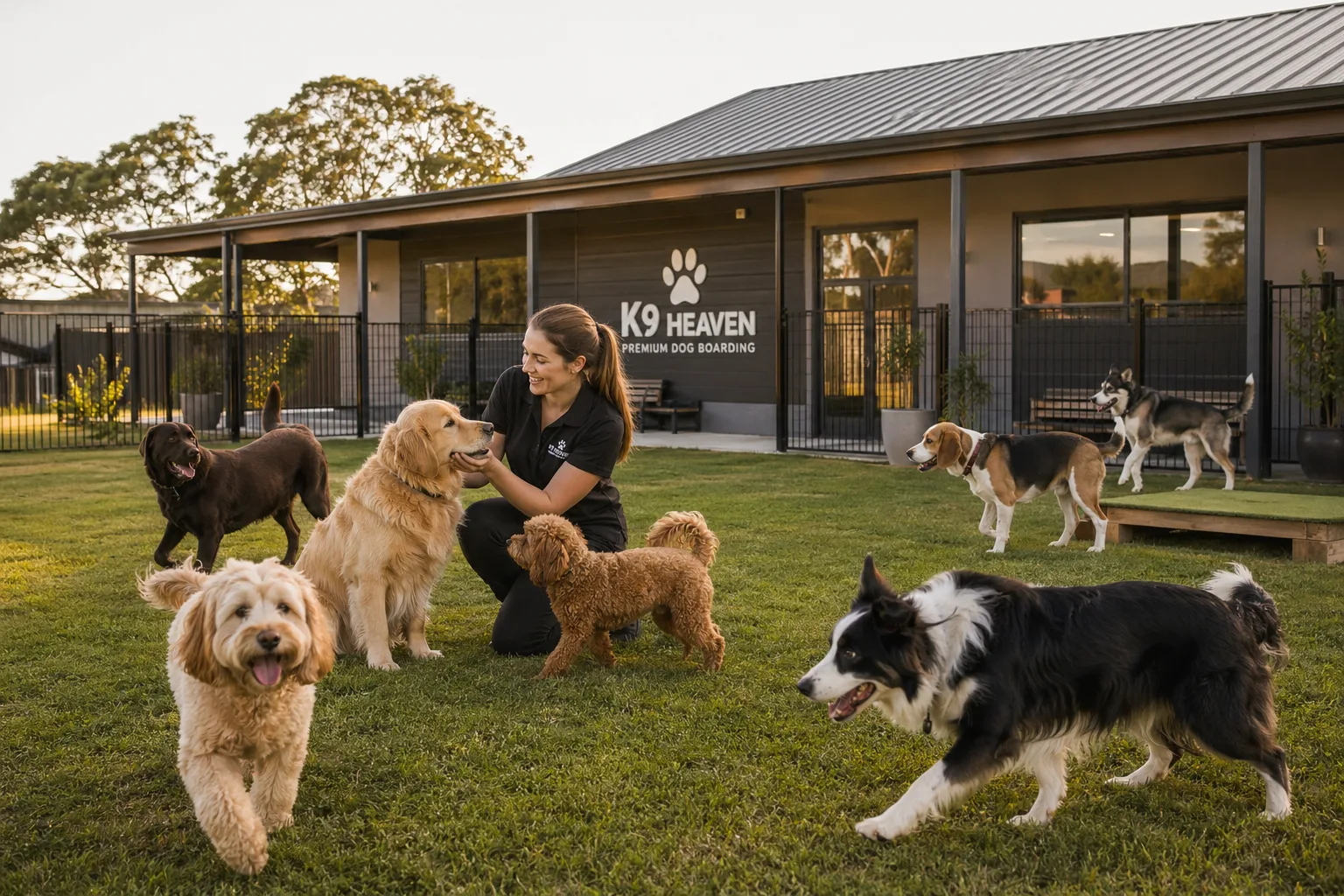
In the context of Dog Boarding Kennels West Auckland, one facility that consistently comes up in conversations among local dog owners is K9 Heaven. It's the kind of place that earns its reputation through genuine care rather than glossy marketing.
What distinguishes K9 Heaven from more generic boarding facilities is the attention to individual dogs. This isn't a place that treats boarding as a numbers game. The focus is on making each dog feel comfortable, safe, and genuinely looked after - which is exactly what most dog owners are hoping to find, even if they don't always know how to articulate it.
The facility is well set up for the kinds of dogs that West Auckland owners tend to have - dogs that need space, exercise, and human connection. The staff are experienced, and there's a genuine care culture that you tend to feel when you walk in, rather than something that has to be explained to you.
If you're beginning your search for boarding options in the area, K9 Heaven is a solid starting point - not because of any claims they make about themselves, but because of what dog owners in the community consistently say about their experiences there.
Managing the Emotional Side of Boarding - For You and Your Dog
Let's be honest about something that often goes unacknowledged: the emotional experience of boarding is hard on the owner too. We're deeply bonded to our dogs, and leaving them in someone else's care taps into a primal protectiveness that doesn't switch off just because you're boarding a plane.
A few things that genuinely help:
Do your homework ahead of time. The anxiety of not knowing is much harder to manage than the confidence of having chosen well. If you've visited the facility, met the staff, asked your questions, and felt good about what you found - trust that. You don't need to second-guess a well-informed decision.
Leave something familiar. Many kennels will allow you to bring an item of clothing or a familiar blanket for your dog. The scent of home is genuinely comforting for dogs and can help them settle in a new environment. Ask the kennel if this is okay.
Brief goodbyes. This sounds counterintuitive, but lingering drawn-out goodbyes often make things harder for dogs, not easier. They pick up on your emotional state. A calm, upbeat handover - followed by you actually leaving - tends to be better for the dog's transition than a tearful ten-minute goodbye at the gate.
Stay in touch appropriately. It's completely reasonable to ask for a photo or a quick update after your dog's first night. Most good kennels are happy to send one. Just try not to seek constant reassurance if the news you receive is consistently positive - at some point, trust has to do some of the work.
Questions to Ask Before You Book
Here's a practical checklist of questions worth asking any boarding facility before you commit:
- What is the ratio of staff to dogs?
- How are dogs supervised at night?
- What is the feeding routine, and can you accommodate my dog's specific diet?
- How do you handle a dog that is struggling to settle?
- What is your process if a dog becomes unwell?
- Which vet do you use, and how quickly can you reach them?
- Are dogs ever left unsupervised during group play?
- What vaccinations or health requirements do you have?
- Can I bring my dog's own bedding or food?
- How do you communicate with owners during the stay?
The answers to these questions will give you a much clearer picture of whether a kennel operates at the standard you're looking for. Don't be embarrassed to ask them - any reputable facility will expect these questions and be happy to answer them.
A Final Word Before You Book
Choosing where to leave your dog is one of the more significant decisions you'll make as a pet owner. It's not just a logistical task. It matters because your dog matters, and the quality of care they receive while you're away has a real impact on their wellbeing.
The good news is that the dog boarding landscape in West Auckland has some genuinely good options. Facilities that take their work seriously, that invest in their staff and their environments, and that understand what dogs actually need - not just what the minimum standard requires.
Do your research. Visit in person. Ask your questions. Trust your gut when you walk in - if the place feels right and the staff feel genuinely engaged with the animals, that usually reflects what the experience will actually be like for your dog.
And when you find the right place, let yourself relax. Your dog is in good hands. That's the whole point.