Invisalign has taken the orthodontic world by storm with its nearly invisible, removable aligners. But does Invisalign fix overbites and crowded teeth effectively? If you're considering clear aligners to correct dental imperfections, this guide explores whether Invisalign is the right treatment for your smile transformation. Let’s dive deep into the mechanics, results, limitations, and benefits of Invisalign for overbites and crowded teeth.
What Is Invisalign and How Does It Work?
Invisalign is a modern orthodontic treatment using a series of custom-made, clear plastic aligners that gradually move teeth into their desired positions. Unlike traditional braces, there are no metal brackets or wires. Instead, patients wear smooth, comfortable trays molded to fit their unique dental structures.
Invisalign treatment starts with a 3D scan of your teeth, which is used to create a custom treatment plan. Every one to two weeks, you switch to a new set of aligners, each one shifting your teeth slightly until the final alignment is achieved.
Understanding Overbites and Crowded Teeth
Before determining if Invisalign is the right fix, it’s crucial to understand the issues at hand:
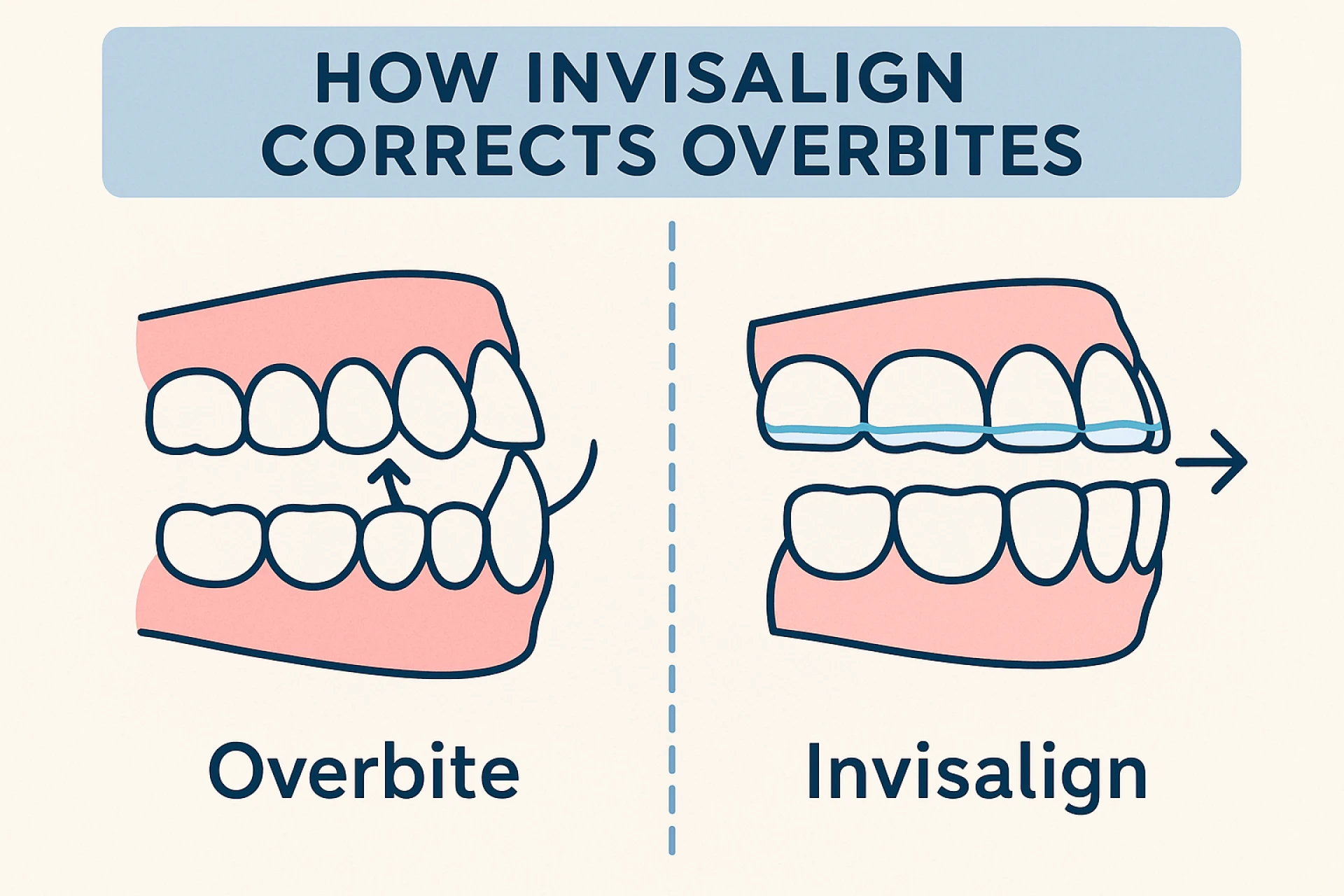
- Overbite: When the upper front teeth excessively overlap the lower front teeth. While a small overbite is normal, a pronounced one can cause speech issues, tooth wear, and jaw pain.
- Crowded teeth occur when there is insufficient space in the mouth for teeth to align properly, leading to overlapping, twisting, or displacement.
Both conditions can range from mild to severe and often coexist.
Can Invisalign Correct Overbites?
Yes, Invisalign can fix overbites, especially mild to moderate cases. Using SmartForce® attachments (tiny tooth-colored dots placed on teeth), Invisalign applies targeted pressure to move teeth and align the jaw properly. These attachments help shift the upper and lower arches into a healthier relationship.
For severe overbites, Invisalign may be used in conjunction with other treatments like elastics or, in rare cases, surgical intervention. Recent innovations in Invisalign technology have significantly improved its ability to correct bite issues once thought only manageable with braces.
Is Invisalign Effective for Crowded Teeth?
Absolutely. Invisalign is especially effective for mild to moderate crowding. The clear aligners gently create space by shifting teeth into better positions. Over time, this leads to a more uniform and aesthetically pleasing smile.
In more complex crowding scenarios, your orthodontist may recommend interproximal reduction (IPR)— a technique where small amounts of enamel are shaved off between teeth to create room for proper alignment.
Ideal Candidates for Invisalign Treatment
Invisalign isn’t a one-size-fits-all solution. You're likely a good candidate if:
- You have a mild to moderate overbite or teeth crowding
- You’re disciplined enough to wear aligners for 20–22 hours/day
- You want a more discreet alternative to braces
- You have healthy gums and teeth
Not sure where you stand? An orthodontist’s evaluation is the only way to know for sure.
How Long Does Invisalign Take for Overbites and Crowded Teeth?
Treatment duration depends on the severity of your case. Typically:
- Mild cases: 6–12 months
- Moderate cases: 12–18 months
- Severe cases: 18–24+ months (may require combination therapy)
Consistency is key—wearing your aligners as instructed can significantly reduce overall treatment time.
What Are the Benefits of Using Invisalign?
Here’s why so many people prefer Invisalign:
- Discreet appearance
- No food restrictions
- Improved oral hygiene
- Less frequent office visits
- Fewer emergencies (no broken wires)
It’s orthodontics, reimagined.
What to Expect During Invisalign Treatment
- Initial consultation
- 3D imaging and treatment planning
- Receiving and wearing aligners
- Routine check-ups every 6–8 weeks
- Retention phase (post-treatment retainers)
It’s a straightforward journey with consistent support from your provider.
How to Care for Invisalign Aligners
Keeping your aligners clean is essential for both hygiene and aesthetics:
- Rinse every time you remove them
- Clean with a soft toothbrush (no toothpaste!)
- Use Invisalign cleaning crystals weekly
- Store them in the case when not in use
Avoid hot water—it can warp the plastic.
Does Invisalign Require Lifestyle Changes?
A few adjustments, yes. You’ll need to:
- Remove aligners before eating or drinking anything (except water)
- Brush and floss after meals
- Wear aligners for 20–22 hours a day
But the benefits of a straighter smile are well worth the effort.
Invisalign and Teenagers: A Good Match?
Invisalign Teen is specifically designed for younger patients. Features include:
- Compliance indicators (blue dots that fade with wear)
- Replacement aligners (just in case)
- Adaptability for growing jaws
With proper motivation and monitoring, teens can see great results.
What to Ask Your Orthodontist Before Starting Invisalign
- Am I a good candidate?
- How long will my treatment take?
- What happens if I lose an aligner?
- Are there any additional costs?
- How often will I need check-ups?
Asking the right questions sets realistic expectations.
Does Invisalign Fix Overbites and Crowded Teeth?
Yes, Invisalign effectively fixes both overbites and crowded teeth in many patients. With advanced technology, expert planning, and your commitment, a straighter, healthier smile is within reach. It’s important to consult with the best Invisalign provider to assess your specific condition and create a tailored treatment plan.
FAQs
Can Invisalign fix a severe overbite?
It depends. Invisalign can address many severe cases, often in combination with other tools like elastics or surgery.
Do crowded teeth get worse with age?
Yes, they can. That’s why early intervention with treatments like Invisalign can be so beneficial.
Is Invisalign faster than braces for overbites?
Not necessarily. Treatment times are similar and depend on the complexity of your case and your adherence to wearing the aligners.
Can I eat with Invisalign on?
No. Always remove aligners before eating or drinking anything besides water to avoid staining and warping.
Will I need a retainer after Invisalign?
Yes, retainers are essential to maintaining your new alignment long-term.
How often do I need to visit my dentist during Invisalign treatment?
Every 6–8 weeks is typical, though it may vary based on your progress and provider.