
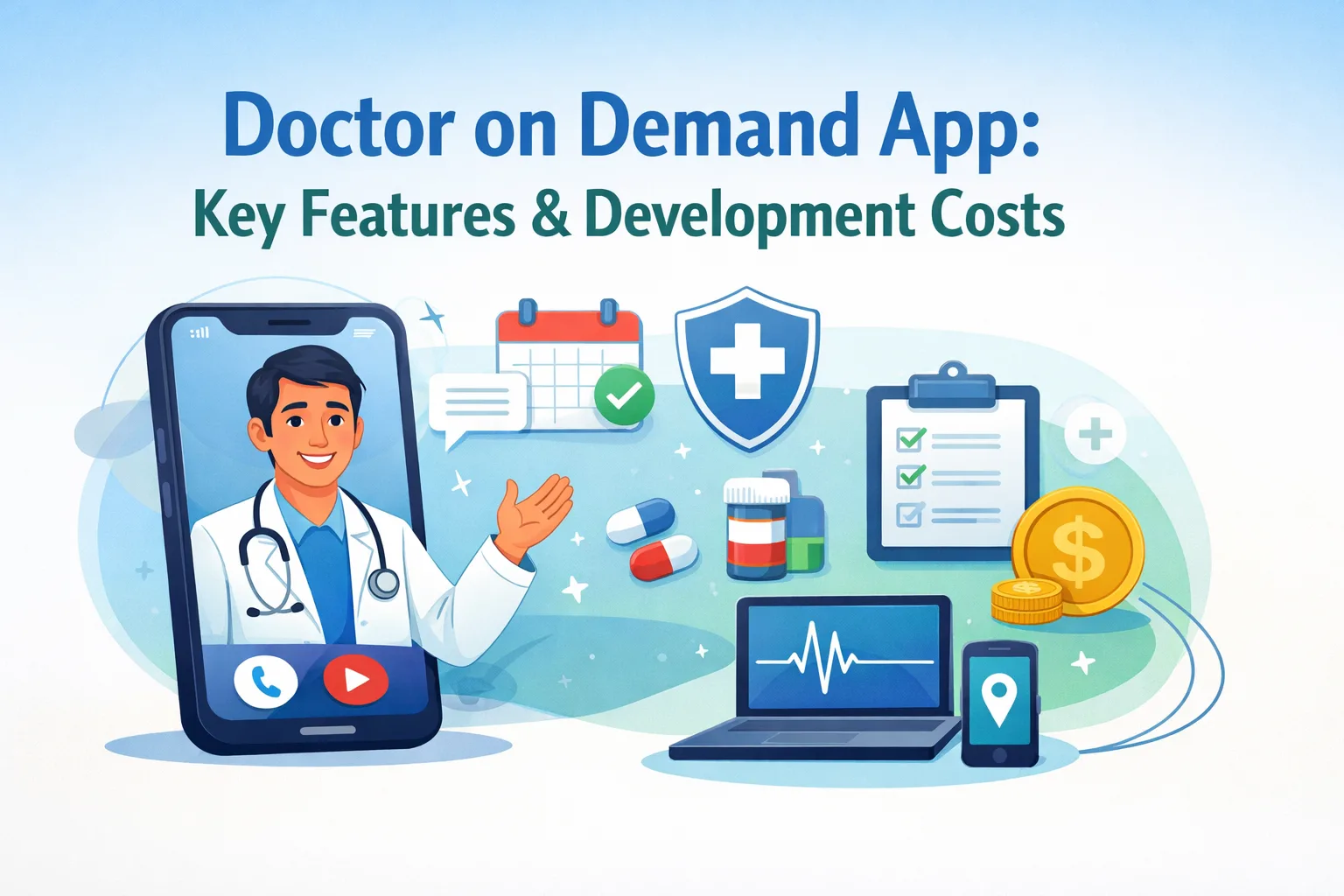
The healthcare industry is undergoing a digital revolution, and telemedicine is at the very heart of it. With millions of patients now preferring remote consultations over in-person visits, the demand for on-demand doctor apps has surged dramatically. Whether you are a healthcare startup or an established hospital network, investing in doctor on demand app development solutions could be your most strategic move yet. This article explores the must-have features of such apps and breaks down what you can expect in terms of doctor on demand app development cost.
What Is a Doctor on Demand App?
A doctor on demand app is a digital platform that connects patients with licensed medical professionals in real time — through video calls, chat, or audio consultations — without requiring a physical visit. Think of it as having a doctor available in your pocket, 24 hours a day, 7 days a week.
These apps gained explosive traction during the COVID-19 pandemic and have since become a permanent fixture in the healthcare ecosystem. From diagnosing common illnesses to managing chronic conditions and mental health, doctor on demand platforms serve a wide variety of medical needs.
Key Features of a Doctor on Demand App
Building a robust and user-friendly doctor on demand app requires careful planning around features that serve both patients and healthcare providers. Here are the core features every such platform must include.
User Registration and Profile Management Patients and doctors should be able to create secure profiles. For patients, this includes personal details, insurance information, and medical history. For doctors, it includes credentials, specializations, license verification, and availability schedules. A seamless onboarding experience builds trust right from the start.
Appointment Booking and Scheduling An intuitive scheduling system allows patients to browse available doctors by specialty, view their calendars, and book appointments — either for immediate consultations or future slots. Real-time availability updates are essential for preventing double bookings and improving user satisfaction.
Video, Audio, and Chat Consultations The heart of any doctor on demand app is its communication infrastructure. High-definition video calling, crystal-clear audio, and secure in-app messaging allow doctors to conduct thorough consultations remotely. Integration with WebRTC or similar real-time communication protocols is typically required to power this functionality.
Electronic Health Records (EHR) Integration Connecting with EHR systems allows doctors to access a patient's full medical history during a consultation. This ensures accurate diagnosis and treatment while eliminating redundant paperwork. Compliance with standards such as HL7 and FHIR is crucial here.
Prescription Management After a consultation, doctors should be able to issue digital prescriptions directly through the app. These can be shared with the patient and sent electronically to nearby pharmacies. E-prescriptions reduce errors and streamline the medication fulfillment process for patients.
In-App Payment Gateway A secure and flexible payment system is non-negotiable. Patients should be able to pay for consultations, view invoices, and manage insurance claims all within the app. Support for multiple payment methods — credit/debit cards, UPI, digital wallets — broadens accessibility.
Push Notifications and Reminders Automated reminders for upcoming appointments, prescription refills, and follow-up consultations significantly reduce no-shows and improve patient engagement. Notifications also keep users informed about doctor availability changes or test results.
Ratings and Reviews Allowing patients to rate and review their experience with individual doctors builds transparency and helps new users choose the right provider. This feature also incentivizes healthcare professionals to maintain high service standards.
Admin Dashboard Behind the scenes, administrators need robust tools to manage users, monitor consultations, review analytics, handle compliance, and resolve disputes. A well-designed admin panel is essential for operational efficiency.
Multi-Language and Accessibility Support To serve diverse populations, top-tier doctor on demand app development solutions incorporate multi-language support and accessibility features such as text-to-speech and adjustable font sizes. This makes healthcare more inclusive and widely adoptable.
Doctor on Demand App Development Cost
Understanding the doctor on demand app development cost is essential for planning your budget realistically. The total cost depends on several variables including the complexity of features, the technology stack, geographic location of the development team, and the platform — iOS, Android, or both. Here is a practical breakdown of what different tiers of development look like in terms of cost and timeline.
Basic App — $5,000 to $8,000 — 4 to 5 Weeks A basic doctor on demand app covers the essentials needed to get your platform up and running. This includes user registration, a simple appointment booking system, basic video or chat consultation, and a standard payment gateway. It is the ideal starting point for startups and small clinics looking to enter the telemedicine space quickly without heavy upfront investment. The development timeline for this tier is typically 4 to 5 weeks, making it the fastest route to a market-ready product.
Medium App — $10,000 to $15,000 — 5 to 8 Weeks A mid-level doctor on demand app goes a step further with more refined features such as EHR integration, prescription management, multi-specialty doctor listings, push notifications, and an admin dashboard for platform management. This tier is well-suited for growing clinics, multi-doctor practices, and healthcare businesses that need more than just the basics but are not yet ready for a full enterprise-scale build. Development at this level typically takes 5 to 8 weeks depending on the scope of integrations and design requirements.
Advanced Feature App — $15,000 and Above — 8 to 12 Weeks A fully featured, enterprise-grade doctor on demand app includes everything from the lower tiers plus advanced capabilities such as AI-powered symptom checkers, deep EHR and insurance API integrations, multi-language support, real-time analytics, HIPAA compliance architecture, and a highly customized UI/UX experience. This tier is best suited for large hospital networks, health-tech companies, and organizations planning to scale nationally or globally. The development timeline for an advanced app generally ranges from 8 to 12 weeks, though highly complex builds may extend further.
Factors That Influence Development Cost
Beyond the tier you choose, several additional elements directly affect your total investment. Building for both iOS and Android simultaneously adds cost compared to launching on a single platform first. The sophistication of UI/UX design, the need for regulatory compliance certifications such as HIPAA or GDPR, and the integration of third-party tools like pharmacy APIs, insurance networks, and lab report systems all contribute to the final figure.
AI capabilities — such as an intelligent symptom checker or automated triage chatbot — are increasingly popular additions that add both user value and development complexity. Similarly, cloud infrastructure, ongoing server maintenance, security audits, and post-launch support typically add 15 to 20 percent of the initial development cost on an annual basis and should be factored into your long-term budget.
Choosing the right development partner also plays a major role. Teams specializing in doctor on demand app development solutions with proven telemedicine experience can deliver better outcomes in less time, reducing costly revisions and compliance-related rework down the line.
Conclusion
The future of healthcare is digital, and doctor on demand apps are leading that transformation. From seamless video consultations and digital prescriptions to smart scheduling and integrated payment systems, these platforms offer tremendous value to patients and providers alike. Whether you start with a basic build at $5,000 to $8,000 or invest in an advanced platform at $15,000 and above, the return in terms of patient reach, operational efficiency, and brand positioning is undeniable. With the right doctor on demand app development solutions partner, you can build a platform that is not only technologically sound but also compliant, scalable, and ready to serve the healthcare demands of tomorrow.