By Dr. Bachan Singh, Fertility Specialist & Reproductive Medicine Consultant, Bachan IVF
Will my IVF baby look like me? Of everything couples ask us before treatment, this one comes up most often, and it is asked more quietly than the rest. What sits underneath it is a wish to feel bound to the child, to know they are unmistakably yours. The answer, in most cases, is reassuring. IVF leaves genetics exactly where it found them. Once you see how inheritance actually operates, a worry that a great many parents-to-be carry around without mentioning tends to lift.
Does IVF Change a Baby's Genetics?
Here is the simplest and most important point. IVF is a method of conception. It is not an alteration to your child's DNA. An egg and sperm meet inside the body in natural conception. In IVF they meet in a laboratory. After fertilisation has happened, the biology runs identically either way.
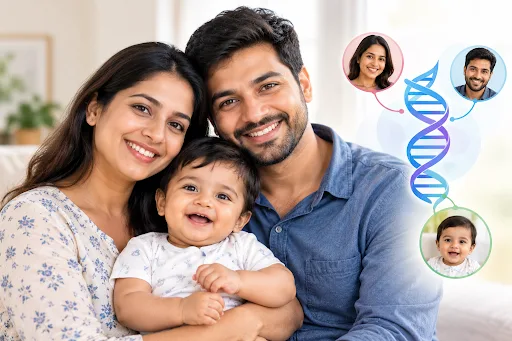
An IVF baby created from a couple's own egg and sperm is genetically identical in every meaningful way to a naturally conceived child. Half the child's DNA comes from each biological parent, exactly as it would have done otherwise. All IVF does is help that meeting take place.
How Is Physical Resemblance Actually Decided?
Appearance comes out of the genes handed down by both parents. Most genes arrive in two copies, one from either side, and the way those copies combine settles eye colour, hair type, height, facial features and the rest of it.
Some genes are dominant, some recessive. That is why a child can strongly favour one parent around the eyes and look nothing like them around the jaw. As one explanation puts it, a baby might inherit their mother's smile but their father's height. The shuffle is random, and its randomness is precisely why two siblings with the same parents can look so unalike.
Why Do Some IVF Babies Look More Like One Parent?
When a baby seems to favour one parent, what you are seeing is which genes won the tug-of-war. Dominant genes override recessive ones, and so more of one parent's visible traits come through than the other's.
Does that only happen with IVF? Not remotely. It happens in every child ever born, and it is entirely normal. What people tend to forget is that it does not hold still either. Babies' faces move around a great deal across the first few years, and a newborn who is the image of their mother may well grow into their father's face later on, or into a grandparent's, as the random combination finishes sorting itself out.
What Happens When Donor Eggs or Sperm Are Used?
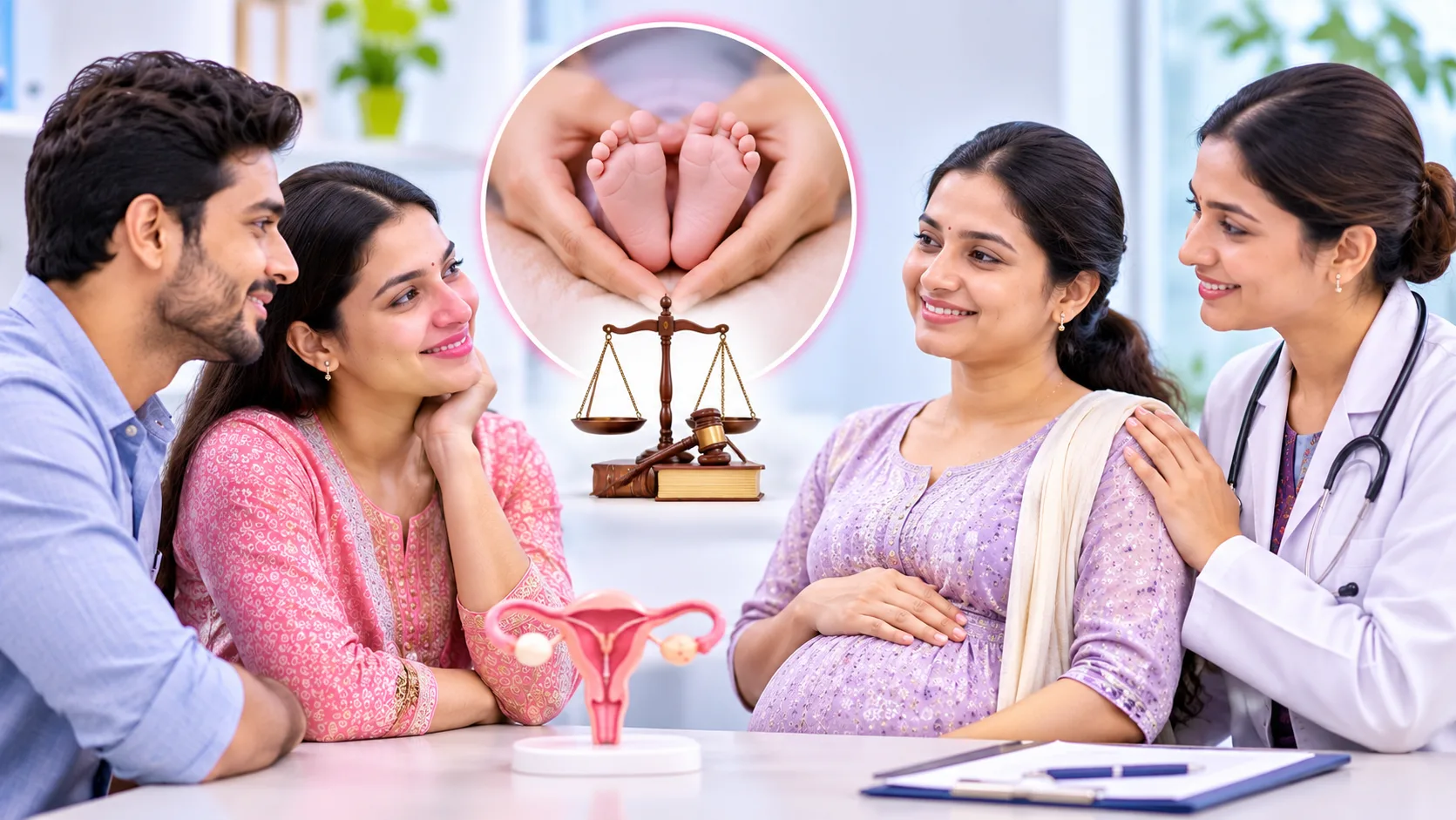
Here the genetics really does change, and this is the part we take most care to explain properly. A couple using their own egg and sperm passes on their own material, both of them. Bring in a donor egg or donor sperm and the child's DNA comes from that donor rather than from the intended parent on that side.
In practical terms:
- With a donor egg, genes come from the donor and from the intended father, where his sperm is used
- With donor sperm, genes come from the donor and from the intended mother, where her egg is used
Does that rule resemblance out? It does not. Inheritance is a good deal messier than the arithmetic suggests, and children routinely share features with an intended parent, or with an aunt or a grandparent further out, in ways nobody in the family saw coming. Plenty of parents also choose a donor whose physical characteristics resemble their own, which lifts the odds of a family likeness considerably.
Is There More to Resemblance Than Genes?
There is, and it is the part of this I find most worth saying. Resemblance runs on biology, certainly, and it also runs on perception and on environment. Families see familiar faces in a baby because they are looking for them. Children absorb expressions, gestures, habits of movement and turns of phrase from whoever is raising them.
Give that a few years and a family likeness builds that owes nothing at all to DNA. A child frowns like their father because they have watched him frown. They laugh like their mother for the same reason. Love and daily closeness do a great deal of this work, and genetics does not get all the credit.
The Reassuring Truth About IVF and Resemblance
So, do IVF babies look like their parents? Where a couple uses their own egg and sperm, yes, in exactly the way any naturally conceived child does. IVF changes where fertilisation happens. It leaves the rules of heredity untouched. Where donors are involved, resemblance follows the donor's genes, though a family likeness still has a way of turning up in places nobody expected.
If you are exploring parenthood and looking for the best IVF centre in Srinagar, our team at Bachan IVF is here to answer your questions with honesty and warmth, so you can move forward with clarity and confidence.
This article is for general educational purposes and is not a substitute for personalised medical advice from your fertility specialist or a genetic counsellor.