When your glasses break or bend, finding the right eyeglass repair solution becomes a priority. Frames are not just functional accessories; they are essential tools for clear vision and daily comfort. Whether the damage is minor or severe, many people face a common question: should you fix the frames yourself or seek professional restoration? Understanding the differences between do-it-yourself methods and expert services can help you make a smart and cost-effective decision.
Understanding Frame Damage
Glasses frames experience daily stress. They are opened and closed multiple times a day, carried in bags, exposed to heat, and occasionally dropped. Over time, wear and tear can lead to:
- Loose hinges
- Bent temples
- Cracked plastic
- Broken bridges
- Missing screws
- Misaligned frames
Some problems appear minor at first but can quickly worsen if handled incorrectly. Before choosing a repair method, it is important to assess the severity of the damage and the material of the frame.
Common Materials Used in Frames
Different materials require different repair approaches. The most common types include:
Plastic Frames
Plastic frames are lightweight and stylish but can crack under pressure. Acetate frames can sometimes be fused or bonded, while injection-molded plastic is more difficult to restore properly.
Metal Frames
Metal frames, including stainless steel and aluminum, can bend out of shape. In some cases, they can be adjusted back carefully. However, repeated bending weakens the structure.
Titanium Frames
Titanium is strong and lightweight, but it requires specialized tools and welding techniques. Attempting to fix titanium without experience can cause permanent damage.
Rimless and Semi-Rimless Frames
These designs rely on screws and tension for stability. A minor mistake can affect lens alignment and compromise vision quality.
Understanding your frame material is the first step in deciding between DIY and professional restoration.
DIY Frame Restoration: Pros and Cons
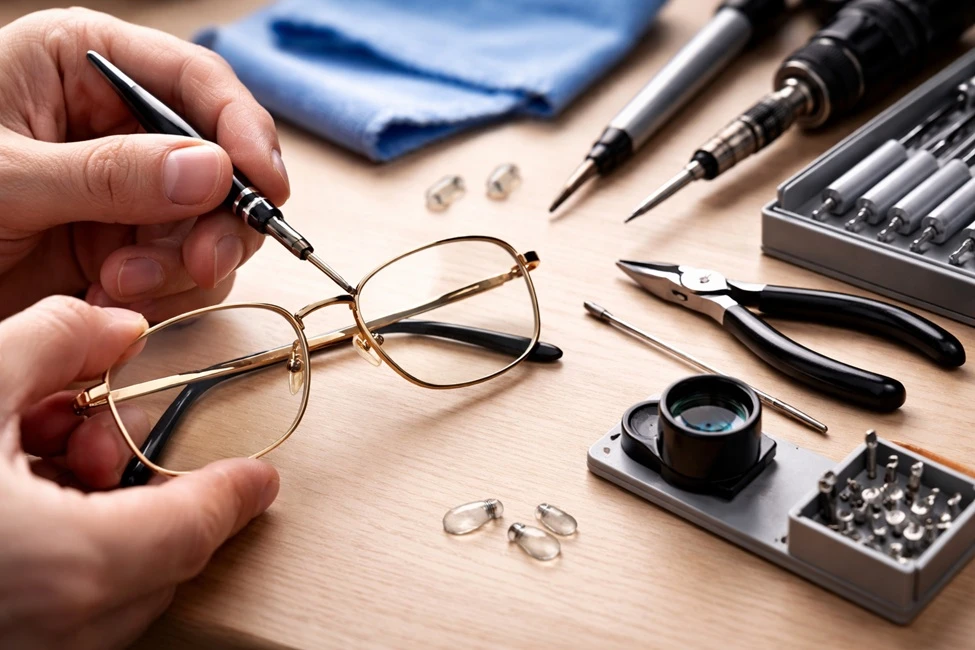
Many people consider fixing their glasses at home, especially for small issues. Hardware stores and online retailers sell repair kits that include mini screwdrivers, replacement screws, nose pads, and adhesives.
Advantages of DIY Repairs
DIY restoration offers convenience and immediate action. If a screw falls out or a hinge loosens, a simple tightening can restore function quickly. Repair kits are affordable and easy to carry. For very minor adjustments, this method can work well.
Another advantage is cost savings. Minor fixes can be done without paying service fees or shipping costs.
Limitations of DIY Repairs
While small adjustments are manageable, complex issues often exceed basic tools and knowledge. Using glue on a cracked bridge may provide temporary stability, but it rarely restores full strength. Excess adhesive can damage the frame finish or interfere with lens positioning.
Improper bending of metal frames can create stress fractures. Heating plastic frames incorrectly may warp them permanently. In addition, incorrect alignment can affect comfort and visual clarity.
DIY solutions are best for temporary fixes or very minor issues. They are rarely ideal for structural damage.
Risks of Improper Home Fixes
Restoring frames requires precision. Even slight misalignment can cause discomfort, headaches, or uneven pressure on the nose and ears.
Here are common risks associated with home repairs:
- Permanent weakening of frame material
- Cosmetic damage such as visible glue marks
- Lens misalignment affecting vision
- Reduced durability after repeated bending
- Voiding manufacturer warranties
A small mistake can turn a repairable frame into one that must be replaced entirely.
Professional Frame Restoration: What to Expect
Professional services use specialized tools, advanced techniques, and trained technicians to restore damaged glasses. Experts understand the structural integrity of different materials and apply methods that preserve both function and appearance.
Advanced Equipment and Techniques
Professionals may use micro-welding tools for metal frames, precision alignment instruments, ultrasonic cleaning machines, and polishing systems. These tools allow for accurate restoration without compromising durability.
For plastic frames, experts can bond and refinish surfaces so that cracks become nearly invisible. Hinges can be replaced or reinforced rather than temporarily secured.
Structural Integrity and Longevity
One of the main benefits of professional restoration is durability. Instead of applying surface-level fixes, technicians reinforce weak areas and ensure proper alignment. This approach extends the life of the glasses and prevents recurring problems.
Improved Comfort and Fit
Professional adjustment ensures that temples sit evenly and that nose pads distribute weight properly. Proper alignment improves both comfort and vision performance.
Cost Comparison: DIY vs Professional Service
Cost is often a deciding factor. DIY kits are inexpensive, usually ranging from a few dollars to around twenty dollars. However, if the repair fails, you may end up purchasing new frames, which can cost significantly more.
Professional restoration may cost more upfront, but it can save money in the long term by preventing the need for replacement. High-quality or designer frames especially benefit from expert care.
When evaluating cost, consider:
- Frame value
- Severity of damage
- Risk of further damage
- Replacement price
If the glasses are expensive or have sentimental value, professional service is often the wiser investment.
When DIY Makes Sense
There are situations where home repair is reasonable:
- Tightening a loose screw
- Replacing a nose pad
- Minor cleaning and maintenance
- Temporary fix before professional service
In these cases, basic tools can be helpful and safe when used carefully.
When Professional Restoration Is the Better Choice
Professional restoration is recommended for:
- Broken bridges
- Cracked or snapped frames
- Complex hinge damage
- Titanium frame issues
- Significant misalignment
- Valuable designer eyewear
Attempting to fix these problems at home often leads to more extensive damage.
The Role of Experience and Skill
Repairing frames is a technical skill that requires training and experience. Technicians learn how different materials respond to pressure, heat, and bonding agents. They also understand optical alignment principles, which are critical for maintaining visual accuracy.
Experience allows professionals to diagnose hidden weaknesses and reinforce them before they cause additional problems.
Nationwide Expert Service You Can Trust
For individuals seeking reliable and high-quality restoration, Eyeglass Repair USA offers expert glasses repair services nationwide. Their skilled technicians have extensive experience handling plastic, metal, titanium, rimless, and designer frames. The company uses advanced tools and precise methods to restore structural integrity while maintaining the original appearance of the eyewear. Customers across the country rely on their consistent workmanship, attention to detail, and dependable turnaround times.
Final Thoughts
Choosing between DIY and professional frame restoration depends on the type and extent of the damage. Minor adjustments can often be handled at home with care. However, structural cracks, broken bridges, and complex materials require expert attention to ensure durability and proper alignment.
Glasses are essential for daily life. Investing in proper restoration protects your vision, comfort, and long-term savings. Before attempting a repair, evaluate the risks carefully and consider whether professional expertise may provide a more secure and lasting solution.