What can the undigested remains of a bird's meal reveal about the complexities of ecological systems? For biology educators, dissecting owl pellets offers more than a hands-on activity—it presents a scientifically rich opportunity to examine trophic relationships and ecosystem structure in a tangible, observable way. Through careful dissection and analysis using an owl pellet dissection chart, students can gain direct insight into predator-prey interactions, feeding behaviour, and the flow of energy through food webs.
Blades Biological, one of the UK’s most trusted online biology lab suppliers, offers professionally sourced materials to support rigorous science instruction. With their high-quality owl pellets, dissection mats, and prey identification charts, educators can confidently introduce students to the biological concepts underpinning ecosystem dynamics.
This article explains how dissecting owl pellets can be used to analyse prey composition, trophic levels, and food web interactions. It also highlights the role of tools like dissection mats and anatomical charts in facilitating accurate and meaningful analysis.
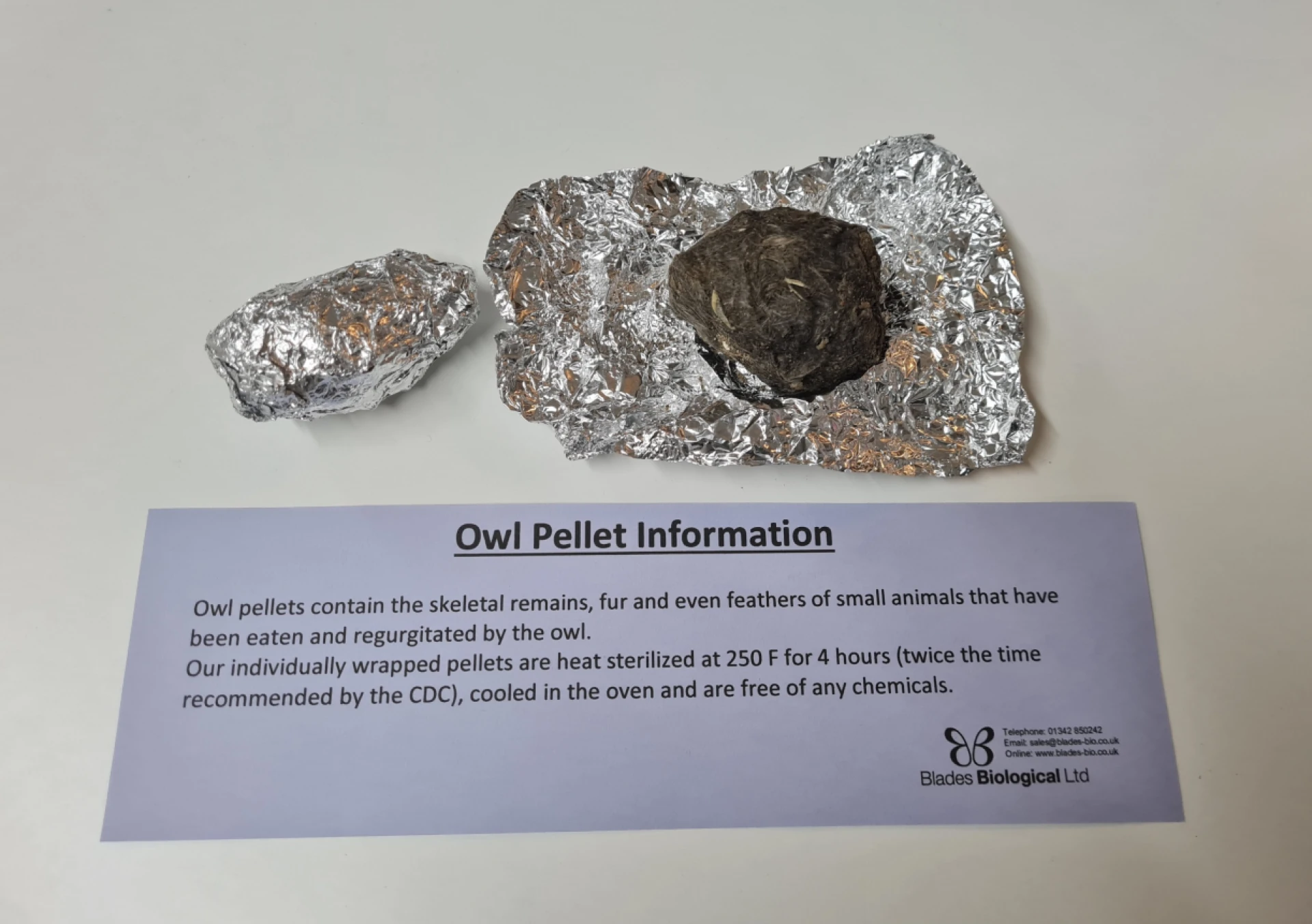
Owls are raptors that consume their prey whole. While digestible material is processed in the stomach, indigestible components—bones, fur, feathers, and exoskeletons—are compacted into pellets and regurgitated. These pellets, when examined in a lab setting, allow students to:
· Identify specific prey organisms.
· Examine predator-prey dynamics.
· Map trophic interactions within a local ecosystem.
· Discuss ecological concepts such as energy transfer and nutrient cycling.
By dissecting owl pellets, students are not merely observing—they are actively participating in the scientific method. Each pellet contains concrete data, enabling inference, classification, and critical thinking grounded in real biological evidence.
Dissecting owl pellets gives learners access to an immediate example of a tertiary consumer (the owl) and its prey (typically primary or secondary consumers). The analysis process helps clarify the vertical structure of trophic levels:
· Primary Producers – These include plants and algae, forming the base of the food web.
· Primary Consumers – Herbivores, like insects and small rodents, feed on producers.
· Secondary Consumers – Carnivorous or omnivorous prey such as shrews and small birds.
· Tertiary Consumers – Owls, as apex predators in many systems, occupy this level.
Owl pellet dissection offers a rare opportunity to reverse-engineer this structure by examining what has been consumed. For example, the presence of field vole skulls and beetle exoskeletons can inform the construction of a local food web, demonstrating how different organisms are interconnected.
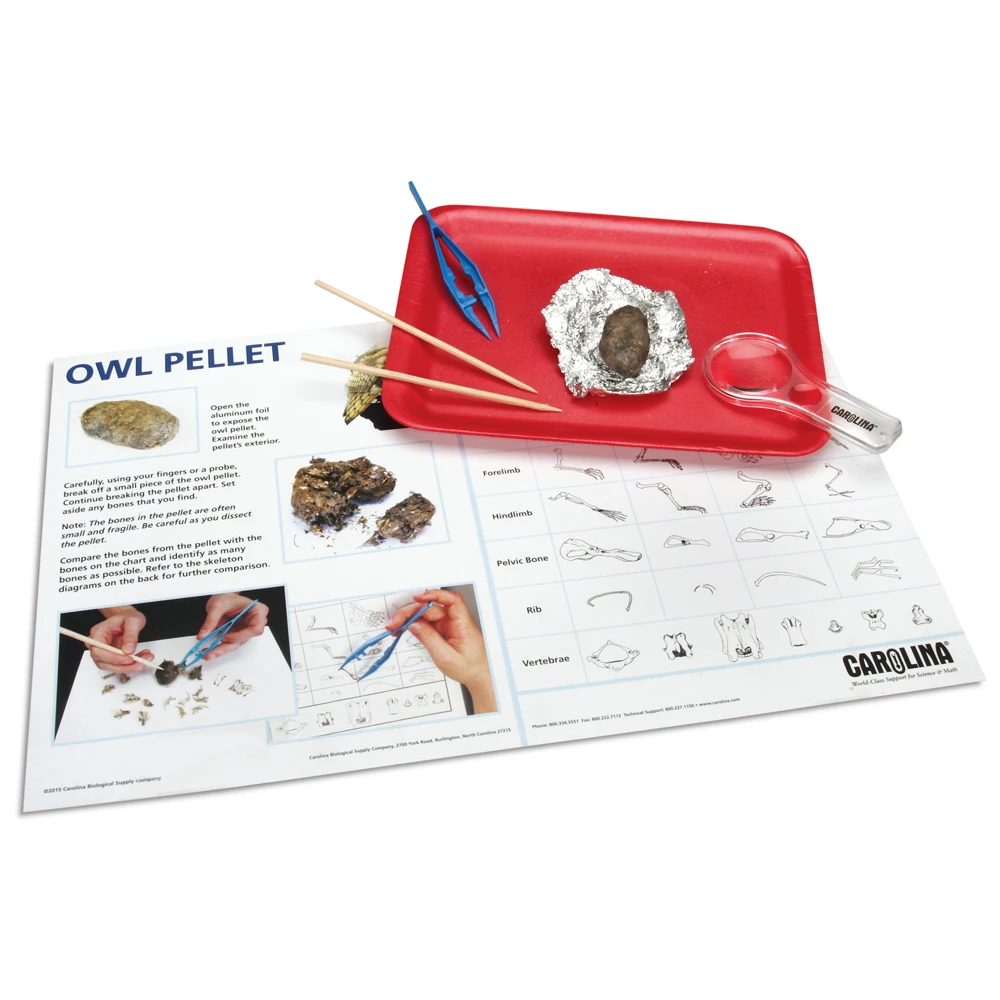
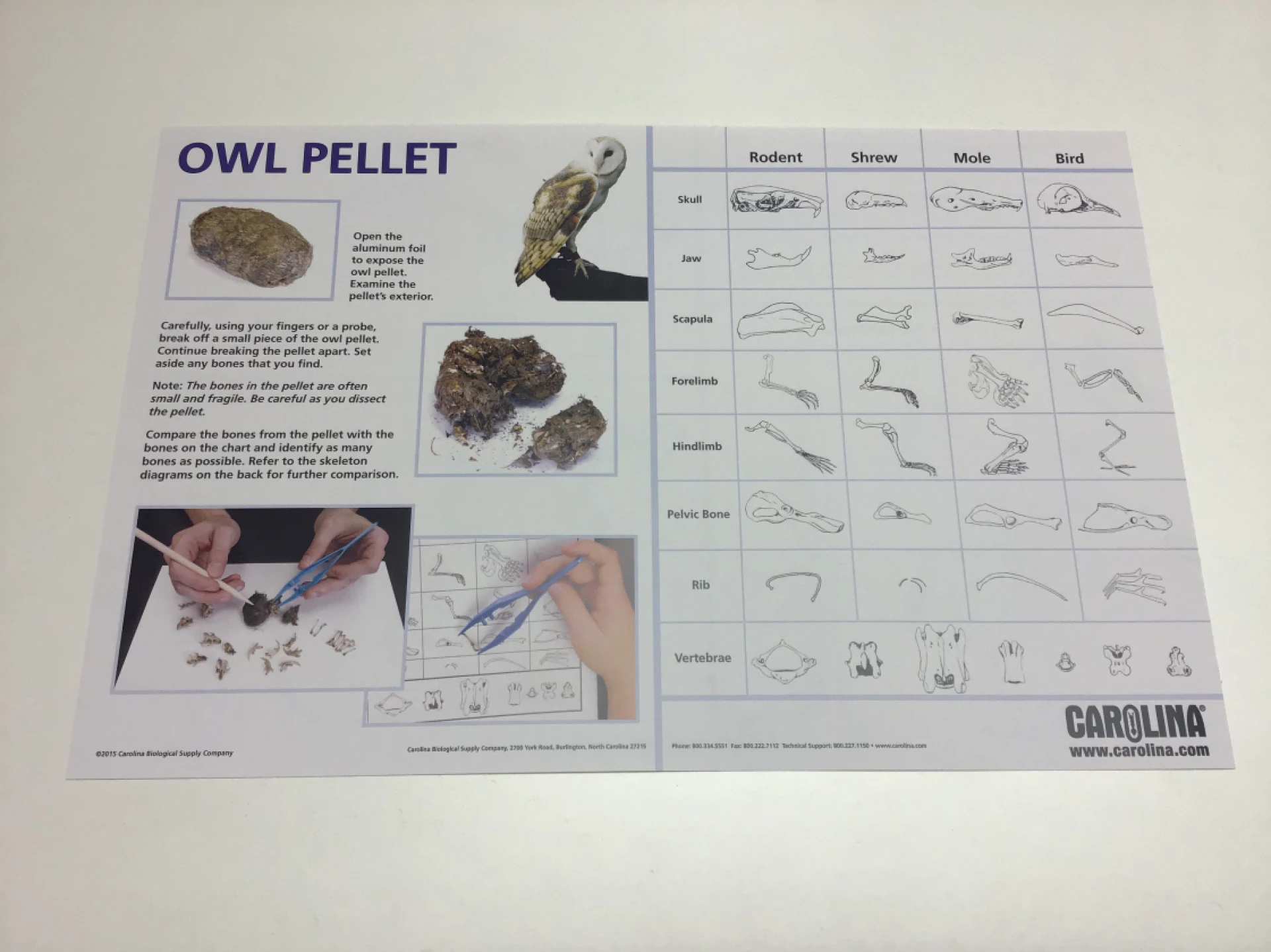
For consistent and replicable results, precision tools are essential. Dissection mats specifically designed for owl pellets provide clearly marked spaces for bone separation, classification, and comparison. These mats ensure that bones are not misplaced or misidentified during the process.
Prey identification charts serve as visual references, allowing students to match real bones to accurate anatomical drawings. This reinforces anatomical knowledge while promoting correct classification. Charts often include detailed diagrams of:
· Rodent skulls and mandibles
· Avian skeletal fragments
· Insect carapaces and leg structures
· Common mammalian vertebrae and ribs
These visual aids support the scientific rigour of the exercise, ensuring students remain focused on structural analysis rather than speculative interpretation.
By examining multiple owl pellets over time or from different geographic sources, educators can introduce discussions about habitat variation and biodiversity. Differences in prey species composition may point to:
· Seasonal shifts in food availability
· Local species abundance or decline
· Habitat disruption or restoration efforts
· Changes in owl foraging behaviour
Such observations open up pathways to discuss broader ecological concerns like population dynamics, species interdependence, and the influence of environmental change on predator-prey relationships.
Owl pellet dissection aligns well with national curriculum standards in biology. It addresses key areas such as:
· Ecosystem structure and function
· Scientific observation and classification
· Use of evidence in biological argumentation
· Human impacts on ecological balance
Assessment opportunities include bone sorting tasks, prey identification worksheets, food web diagrams, and group discussions synthesising the ecological implications of their findings.
For educators seeking meaningful, evidence-based ways to introduce ecological systems, few resources are available compared to the dissection of owl pellets. Each pellet functions as a biological record of feeding behaviour and environmental conditions, making it a valuable teaching tool. However, effective instruction requires reliable materials.
Blades Biological supplies high-grade owl pellets for sale, along with specialised owl pellet kits and accurate prey identification charts. As one of the leading UK distributors of preserved specimens—including exclusive access to Carolina Biological's catalogue—they are trusted by educators who are committed to quality. Their preserved teaching materials, dissection tools, and live cultures (excluding mammals and amphibians) are rigorously selected to meet academic and research standards.
Browse owl pellets online and order scientific materials that support your biology curriculum. Their comprehensive product range ensures you have the resources needed to teach science with precision and confidence.