
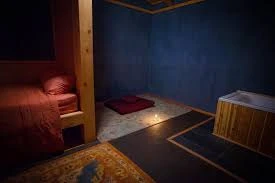
Introduction: Stepping Into Stillness
In our fast-paced, overstimulated world, moments of deep stillness are rare. A dark room experience offers a powerful opportunity to disconnect from external distractions and reconnect with your inner self. By immersing yourself in total darkness, you allow the mind and body to slow down, creating space for reflection, healing, and self-discovery. This practice, rooted in ancient traditions, is now being embraced as a transformative modern wellness experience.
What Is a Dark Room Experience?
A dark room experience involves spending a set period—ranging from a few hours to several days—in complete darkness. The room is designed to be entirely light-proof, with no windows or artificial lighting. Participants are often alone and remain in silence, with minimal interaction or disturbance. Meals are delivered discreetly, and the environment is tailored to support deep introspection.
The aim is not sensory deprivation but rather sensory withdrawal. By removing visual stimuli, the brain shifts its focus inward. Without light, the mind slows, and inner awareness rises to the surface.
The Psychological and Emotional Benefits
The absence of light can lead to profound psychological shifts. As your external vision fades, your inner vision sharpens. Many people report an increase in mental clarity, emotional breakthroughs, and an improved ability to focus. Common benefits include:
- Enhanced mindfulness: The lack of distraction encourages presence and stillness.
- Emotional release: With time and silence, long-buried emotions may surface and find resolution.
- Mental detox: Continuous stimulation is paused, giving the mind a much-needed rest.
Spending time in the dark can also regulate circadian rhythms and improve melatonin production, which supports restful sleep and mood balance.
Spiritual and Introspective Insights
Dark room experiences are often compared to meditation retreats, as both promote deep inner work. In some spiritual traditions, darkness is seen as a womb-like space—a place of rebirth and transformation. Monks and yogis have used dark retreats for centuries to achieve heightened states of awareness and enlightenment.
In the absence of light, your thoughts, emotions, and intuitions become more vivid. Some participants describe visions, heightened dreams, or a sense of timelessness. These inner experiences can offer clarity on life purpose, relationships, or personal challenges.
Preparing for the Experience
Before entering a dark room retreat, some preparation can enhance your experience:
- Develop a meditation practice: Familiarity with mindfulness will help calm the mind in the absence of visual input.
- Limit screen time: Reducing digital stimulation beforehand can make the transition smoother.
- Set intentions: Decide what you hope to gain—whether healing, rest, or self-understanding.
It’s also important to work with experienced facilitators, especially for multi-day retreats, as emotional and psychological challenges can arise during extended time in darkness.
Conclusion: Journey Into the Self
A dark room experience is more than just time spent in the absence of light. It’s a journey into the heart of your own consciousness. By turning off the external world, you open the door to inner realms that are often overlooked. Whether you seek emotional healing, mental clarity, or spiritual connection, the dark room offers a powerful space for transformation and renewal.