
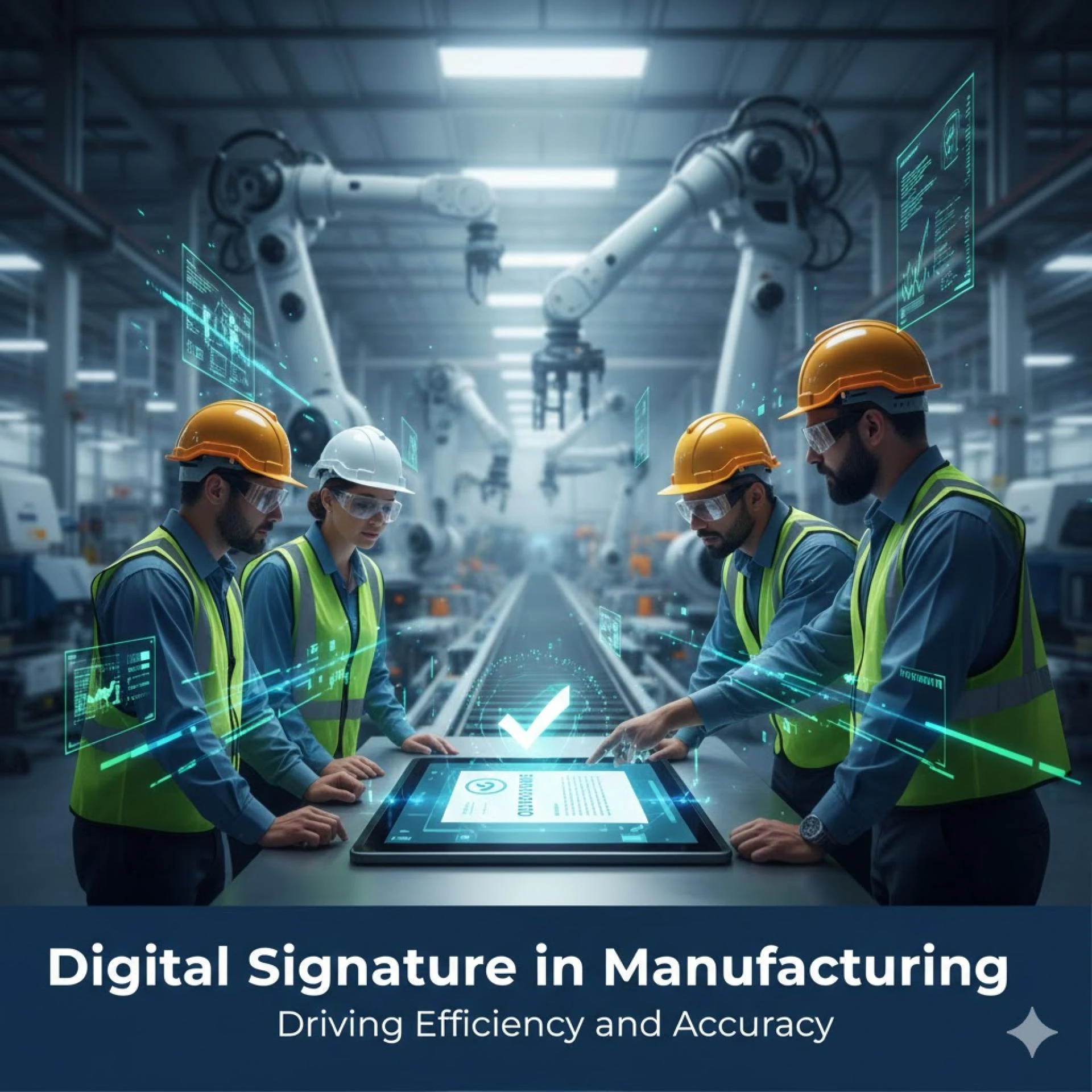
The manufacturing industry operates in a highly structured and time-sensitive environment where documentation plays a critical role. From supplier agreements and purchase orders to quality inspections and compliance records, manufacturers rely heavily on accurate and timely document approvals. A digital signature helps modernize these processes by replacing traditional paper-based workflows with secure and efficient digital alternatives.
Understanding Digital Signature for Manufacturing
A digital signature is a secure electronic method used to verify the authenticity and integrity of a digital document. It ensures that the document has not been altered after signing and confirms the identity of the signer. In manufacturing, a digital signature for manufacturing enables organizations to approve documents electronically while maintaining legal validity and data security.
Unlike manual signatures that require physical presence and paperwork handling, digital signatures allow documents to be signed remotely, reducing delays and operational friction across departments and supply chains.
Importance of Digital Signature in Manufacturing Operations
Manufacturing workflows often involve multiple stakeholders, including procurement teams, production managers, quality inspectors, and external vendors. Traditional signing methods can slow down approvals and create bottlenecks. Digital signatures streamline these workflows by enabling instant document sharing, signing, and tracking.
By using a digital signature, manufacturers can accelerate approval cycles, reduce manual errors, and ensure consistency in document handling. This is especially useful in fast-moving environments where delays can directly impact production timelines.
Key Use Cases in Manufacturing
Digital signatures are widely used across various manufacturing processes, such as:
- Supplier and vendor contracts
- Purchase orders and invoices
- Quality assurance and inspection reports
- Compliance and regulatory documents
- Internal approvals and policy acknowledgements
Each signed document includes a timestamp and verification details, creating a reliable audit trail that improves transparency and accountability.
Benefits of Digital Signature for Manufacturing
One of the main advantages of a digital signature for manufacturing is improved operational efficiency. Digital workflows eliminate the need for printing, scanning, and storing physical documents, reducing administrative costs and paper dependency.
Security is another major benefit. Digital signatures use encryption and authentication mechanisms to protect sensitive manufacturing data from unauthorized access or tampering. This is particularly important for industries that must comply with strict quality and regulatory standards.
Additionally, digital signatures support better collaboration. Teams across different locations can review and sign documents in real time, ensuring smoother coordination between internal departments and external partners.
The Shift Toward Digital Manufacturing Documentation
As manufacturing continues to adopt digital transformation strategies, digital signatures have become an essential component of modern document management. They support faster decision-making, reduce errors, and enhance document security—all while enabling a more agile and responsive manufacturing environment.
Incorporating digital signatures into manufacturing workflows helps organizations stay competitive, compliant, and efficient in an increasingly digital industrial landscape.