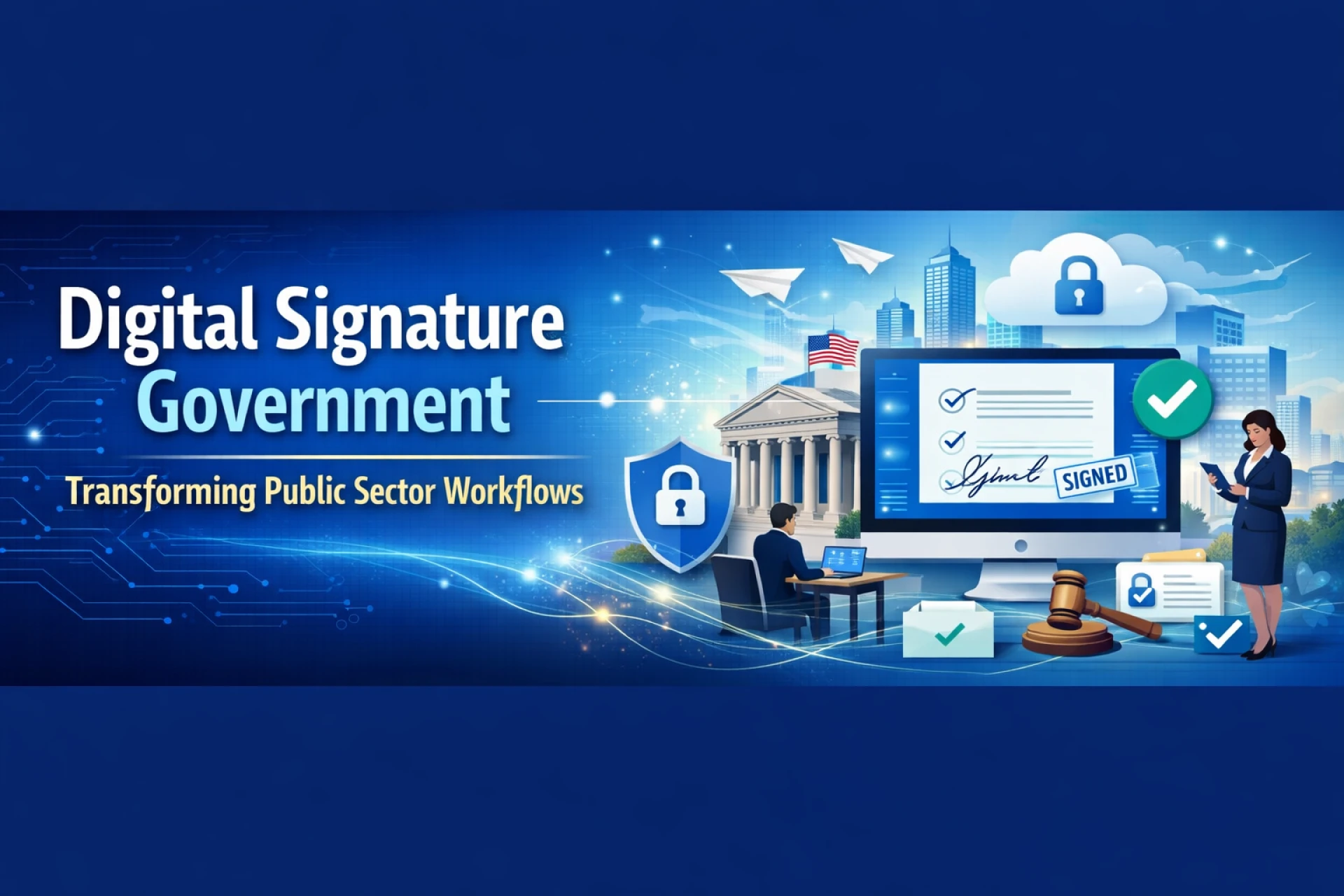
Government institutions handle a massive volume of documents daily—citizen applications, approvals, contracts, and internal files. Traditionally, these processes rely on paper-based workflows that are slow, complex, and difficult to manage. Today, adopting a digital signature government solution is helping public sector organizations become faster, more secure, and fully digital.
A digital signature is an encrypted and legally valid way of signing documents electronically. It verifies the identity of the signer and ensures that the document remains unchanged after signing, making it ideal for sensitive government operations.
Why Digital Signature Government is Essential
Government departments often involve multiple levels of approvals, documentation, and compliance checks. Paper-based systems can lead to delays, lost documents, and inefficiencies.
By implementing a digital signature government solution, departments can digitize workflows, reduce manual intervention, and ensure faster service delivery to citizens. Documents can be signed, verified, and shared instantly across departments without physical movement.
Key Benefits of Digital Signature in Government
1. Faster Approvals and Workflow EfficiencyDigital signatures eliminate manual processes like printing, scanning, and couriering documents. Files move instantly between departments, reducing delays in approvals and decision-making.
2. Legal Validity and ComplianceEvery digital signature is legally recognized and enforceable under applicable laws. Government documents signed digitally maintain full legal standing and are accepted during audits and regulatory checks.
3. Enhanced Security and Data ProtectionGovernment data is highly sensitive. Digital signatures use encryption, authentication, and secure access controls to ensure that documents remain protected and tamper-proof.
4. Transparency and AccountabilityDigital systems provide a complete audit trail, showing who signed the document, when it was signed, and the status of each step. This improves transparency and accountability across departments.
5. Reduced Paperwork and CostsA digital signature government approach minimizes the need for physical paperwork, reducing printing, storage, and administrative costs while supporting eco-friendly initiatives.
Common Use Cases of Digital Signature Government
Citizen Applications and ServicesCitizens can sign forms related to permits, licenses, and registrations online without visiting government offices, improving convenience and efficiency.
Interdepartmental ApprovalsGovernment files often require approvals from multiple officials. Digital signatures enable seamless online approvals, ensuring faster processing and reduced delays.
Contracts and AgreementsGovernment contracts with vendors, contractors, and partners can be securely signed and stored digitally, ensuring authenticity and legal validity.
Policy Documents and NoticesOfficial documents such as policies, circulars, and notices can be digitally signed and distributed securely with proper verification and audit trails.
HR and Employment DocumentsOffer letters, employment agreements, and internal HR documents can be signed digitally, helping government departments manage workforce documentation efficiently.
How Digital Signatures Work
A digital signature uses cryptographic technology, specifically public key infrastructure (PKI). When a document is signed, a unique encrypted code is created using the signer’s private key. This code is verified using a public key, ensuring authenticity and preventing tampering.
If any changes are made to the document after signing, the signature becomes invalid, ensuring complete document integrity.
Driving Digital Governance and e-Government Initiatives
Digital signatures play a critical role in supporting e-governance initiatives. Governments worldwide are moving toward digital platforms to improve citizen services, reduce bureaucracy, and increase operational efficiency.
With digital signature government solutions, public sector organizations can:
- Deliver faster services to citizens
- Improve transparency and trust
- Ensure secure digital communication
- Reduce administrative burden
These advantages align with the broader vision of digital transformation and smart governance.
Conclusion
The adoption of digital signature government solutions is transforming how public sector institutions operate. From improving efficiency and security to enabling paperless workflows, digital signatures are becoming a cornerstone of modern governance.
As governments continue to digitize their processes, implementing a reliable digital signature solution will be essential to delivering faster, more transparent, and citizen-friendly services.