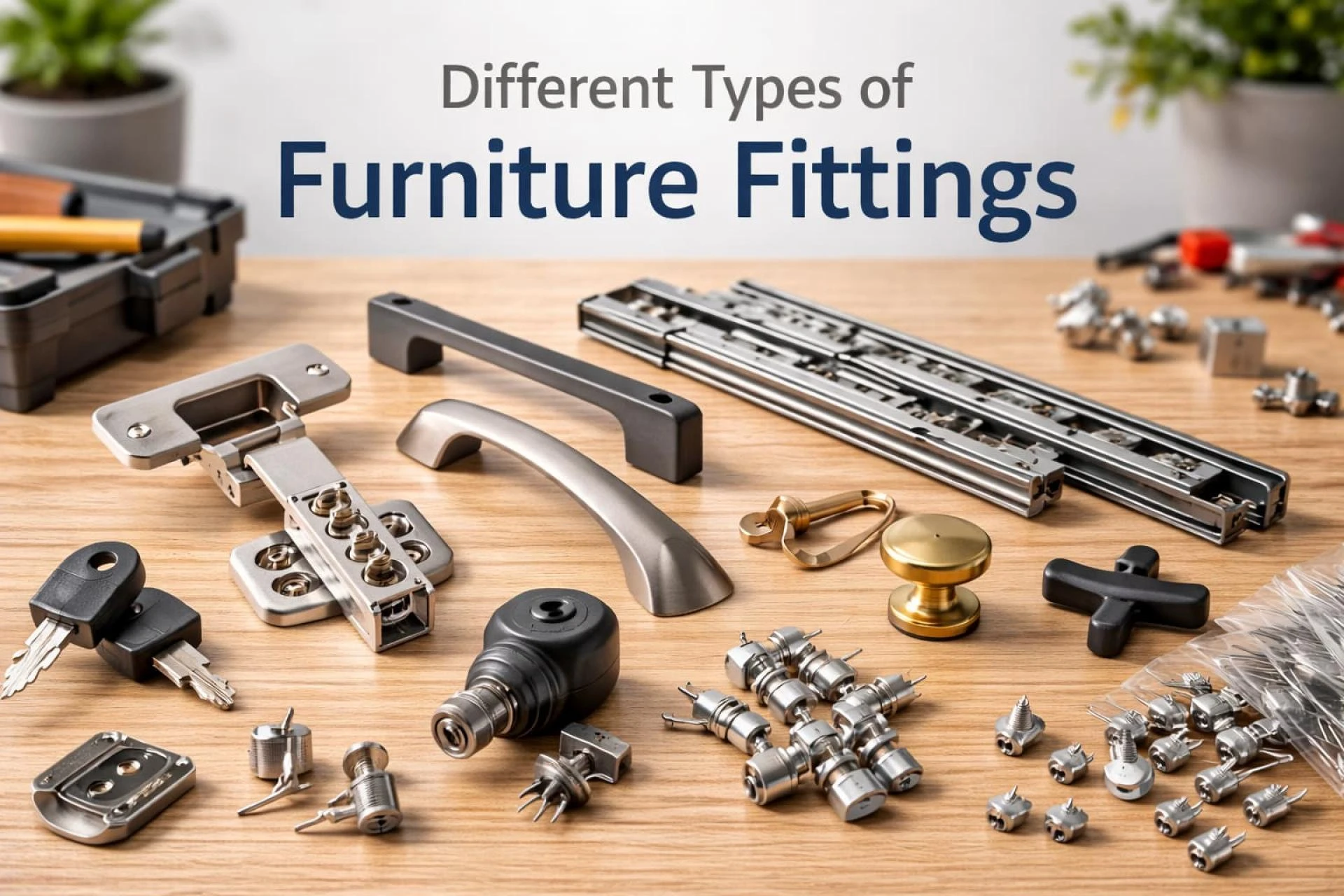
When we think about furniture, our attention usually goes to design, color, or material. But what truly determines how well a piece of furniture functions day after day is something most people overlook- furniture fittings. From how smoothly a cabinet door opens to how securely a wardrobe locks, fittings quietly do all the heavy lifting.
When you have a home, a new home, or even if you are purchasing new furniture, understanding how these fittings work will help keep you from wasting money, having headaches, and going through several costly repairs.
Let’s break it down in a simple, practical way.
1. Hinges – The Backbone of Doors and Cabinets
Hinges are among the most commonly used furniture fittings, yet they’re rarely noticed unless something goes wrong. They connect doors to cabinets, wardrobes, and cupboards, allowing smooth opening and closing.
Where they are used:
- Kitchen cabinets
- Wardrobes
- Bathroom vanities
- Storage units
Modern furniture often uses concealed hinges, which stay hidden when the door is closed and give a clean, premium look. Soft-close hinges are especially popular today because they prevent slamming and reduce wear over time.
If you’re buying furniture fittings online, always check hinge material and load capacity, these small details matter in daily use.
2. Drawer Runners – Smooth Movement Matters
Have you ever had difficulty opening or closing a drawer? The reason many drawers stick or make noise is typically due to low-quality drawer runners or drawer slides. Drawer slides determine how well your drawers open and close.
The types of drawer runners are as follows:
- Roller Slides - Basic use.
- Ball Bearing Slides - Smooth and durable.
- Soft Close Drawer Slides - Premium experience.
Drawer slides can be found in many different applications:
- Kitchen Drawers
- Office Furniture
- Underbed Storage Units
- Tool Cabinets
High-quality drawer slides are essential if you want long-term comfort. Many people searching for best furniture fittings specifically look for durable drawer channels that can handle daily use without sagging.
3. Furniture Cabinet Locks – Safety and Privacy
Furniture locks are not just for doors; instead, locks are an important safety measure for furniture as well. They provide an additional layer of security for an individuals’ personal effects (such as certificates and bank statements), as well as personal items (like watches) stored within cabinets within either shared residences (roommates) or offices (shared workspace).
Where are Furniture Locks Applied?
- Wardrobes
- office drawers
- night stands
- display cabinets
Furniture locks have advanced from the old-style cam locks to modern combinations of digital or magnetic locks, to meet the demands of the consumer.
4. Handles and Knobs – Function Meets Design
Knobs and Handles may appear to serve as decorative elements; however, they do have a primary purpose as functional hardware in use throughout the day by individuals. A poorly designed knob/handle could render even the most finely designed piece of furniture, uncomfortable to operate.
Applications:
- Kitchens (Cabinets)
- Wardrobes
- Drawers
- Entertainment Centre
Today the choices of furniture hardware are limitless, with many finishing options ranging from simple, flat, matte finished surfaces, to decorative finishes in various metals, as well as intricate art work that adds a personal touch. Appropriate hardware adds both function and aesthetics to any piece of furnishing.
5. Shelf Supports – Hidden but Essential
Shelf pins (or "Shelf Studs") hold the shelf securely in place, no matter how it is adjusted to fit (or set). Shelf pins are small, but very important to the stability of the shelf.
Shelf pin and concealed supports are the most commonly used types of shelf supports, as they both offer strength without compromising the appearance of the shelves. In addition, they are often used with:
- Bookshelves
- Kitchen Cabinets
- Wardrobe Cabinets
- Storage Racks
6. Connectors and Fasteners – Structural Strength
Furniture connectors are what keep everything together. These fittings are especially important in modular and knock-down furniture.
Common types include:
- Cam locks
- Dowel pins
- Corner brackets
Where they are used:
- Beds
- Wardrobes
- Tables
- Modular cabinets
Strong connectors ensure furniture remains sturdy even after repeated assembly and disassembly.
7. Soft-Close and Motion Fittings – Modern Comfort
Soft-close mechanisms and lift-up systems are now considered premium fittings, especially in kitchens.
Where they are used:
- Overhead cabinets
- Kitchen drawers
- Wardrobes
These fittings reduce noise, prevent damage, and add a smooth, luxurious feel to everyday use, one reason many homeowners look specifically for the best furniture fittings when upgrading interiors.
Why Choosing the Right Furniture Fittings Matters
Good furniture fittings:
- Improve durability
- Enhance daily comfort
- Reduce maintenance
- Increase furniture lifespan
Buying cheap or incompatible fittings often leads to frequent replacements and repairs. That’s why many homeowners now prefer to buy furniture fittings online from reliable platforms that offer verified quality and variety.
Final Thoughts
The small items that make up furniture fittings have a big impact. Hinges, locks, drawer slides, and connectors are all examples of fittings that help to provide functionality, safety and comfort to furniture; therefore, it is essential that each component be used in the right manner for the intended purpose.
When either planning to buy best furniture fittings or upgrading an item of furniture, selecting the best furniture fittings is not an additional cost but rather is a wise and long-term decision. Properly selected furniture fittings not only improve the function of your furniture today but also will provide years of dependable operation into the future.
Also read- Functional Hardware that Completes Your Bedroom Setup