
Rock excavation is a challenging and laborious process. The strength of each rock is also different. But the project deadline stays the same. That is why contractors often use heavy-duty machines like excavators or dozers.
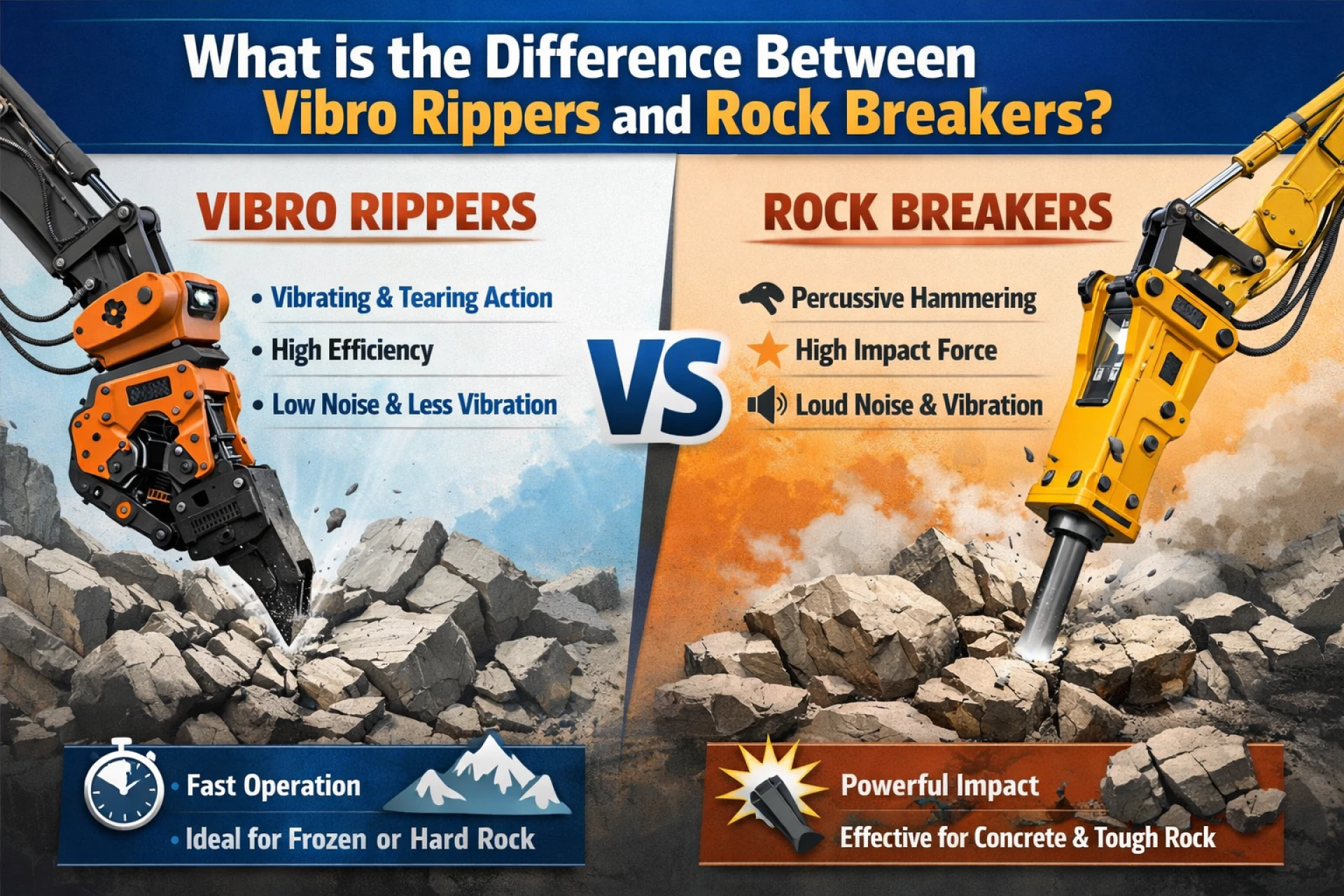
Different types of dozers and excavator attachments are used for breaking rocks, for instance, Vibro ripper and rock breakers. Both are designed to break hard material. However, how these two attachments work is completely different. So, new operators often find it confusing to choose between these two.
This article explains the difference between vibro rippers and rock breakers to help operators and decision-makers choose the right attachment for the job.
Understanding vibro ripper
These excavator attachments are reliable for a wide range of tasks. They operate using high-frequency vibrations that transmit energy directly into the material. Instead of hitting the surface, the tool generates internal stress. This stress forms micro-fractures within the rock. As the operation continues, the fractures expand and weaken the material.
Vibro rippers are used for soft to medium-hard rock. This include:
- Limestone,
- Shale,
- Sandstone, and
- Weathered rock layers.
Vibro rippers are also used in frozen soil. However, they may not perform well if the surface is extremely hard.
Understanding rock breaker
Rock breakers are excavator attachments that use impact energy to break material. The attachments are powered by hydraulic fuel. The fuel creates pressure that moves the piston, which then strikes the chisel tools repeatedly. The blows are powerful, which causes a fracture in the rock. Rock breakers are used for both primary and secondary rock breaking. They can also break down oversized boulders and reinforced concrete. They are widely used in:
- Demolition,
- Quarrying, and
- Confined excavation zones.
However, the high-impact force from these excavator attachments often transfers the vibration back into the machine. This can increase wear on components like pins or bushings.
Vibro ripper vs Rock breaker: Which one to choose?
Workfields vary. So, what contractors and fleet owners need to understand is how these machines work and why they are used. Let’s take a look:
Breaking Method and Energy Transfer
Vibro rippers use vibration and resonance. When operators use the excavator attachment, the energy spreads through the material. This causes cracks to form internally before surface separation.
Rock breakers are much different. They create high impact through heavy blows. The energy concentrates at the chisel tip, which fractures the surface through repeated blows.
Productivity and Fuel Consumption
Vibro rippers perform better in continuous excavation. Trenching and large-area cutting benefit from uninterrupted operation. Fuel use remains stable due to steady hydraulic demand.
Over time, rock breakers consume more fuel. Since the cycle is repeated, it increases hydraulic load and idle time between blows.
Noise, Dust, and Environmental Impact
Vibro rippers generate lower noise levels. Dust production is also reduced. This suits urban or environmentally sensitive sites.
Rock breakers are louder. Impact produces higher vibration and dust. Noise restrictions often limit operating hours in populated areas.
Operator Fatigue and Control
Vibro rippers provide smoother operation. Reduced vibration improves operator comfort. Tool control remains consistent during long shifts.
Rock breakers transmit vibration to the cab. Operator fatigue increases during extended breaking tasks. Precision depends heavily on operator skill.
When to Use a Vibro Ripper
Trenching and Controlled Excavation
Vibro rippers excel in trenching applications. They cut rock in a controlled manner. Trench walls remain cleaner and more stable.
This is useful for pipelines, cables, and drainage systems. Minimal overbreak reduces backfilling and material handling.
Continuous Rock Cutting Applications
Large foundation cuts and slope trimming benefit from vibro rippers. The attachment allows continuous forward movement. There is no need to reposition frequently. Productivity improves in long, uninterrupted excavation zones.
Application of Rock Breaker
Breaking Massive Boulders and Hard Rock
Rock breakers perform well on isolated, high-strength material. Large boulders and dense rock formations respond better to impact force. When vibration cannot penetrate deeply, direct hammering remains effective.
Demolition and Spot Breaking Tasks
Concrete structures require focused energy. Rock breakers deliver this efficiently. They are ideal for demolition and selective removal. They also suit confined areas where controlled point breaking is required.
Cost, Wear, and Long-Term Efficiency
Tool Life and Replacement Frequency
Vibro rippers experience lower mechanical shock. Tool wear occurs gradually. Component replacement cycles are longer.
Rock breakers face higher wear rates. Chisels and seals require frequent replacement. Maintenance intervals are shorter.
Operating Cost Over Time
Initial attachment cost does not define the total expense. Fuel usage, downtime, and spare parts matter more.
Vibro rippers often deliver lower long-term operating costs in suitable conditions. Rock breakers incur higher costs during continuous use.
Selection Factors Before Choosing Between the Two
Rock Hardness and Job Pattern
Layered and fractured rock favors vibration-based tools. Massive and dense rock favors impact tools.
Continuous excavation supports vibro rippers. Intermittent breaking supports rock breakers.
Site Restrictions and Compliance
Noise limits influence attachment choice. Urban sites benefit from quieter operation.
Vibration-sensitive structures also favor vibro rippers.
Excavator Size and Hydraulic Stability
Stable hydraulic systems support vibro rippers better. Machines with strong structural reinforcement handle breakers more effectively.
Matching attachment size to excavator capacity remains critical.
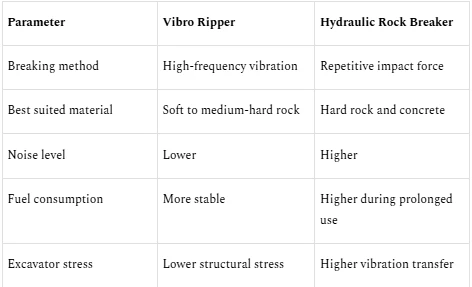
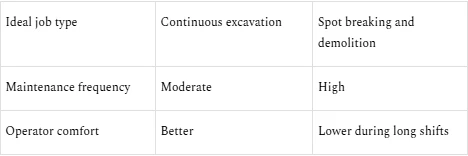
Let’s take a look at these two excavator attachments at a glance:
Final Thoughts
Vibro rippers and hydraulic rock breakers serve different purposes. Both can break rock. Their effectiveness depends on material type, job pattern, and site conditions. Vibro rippers suit continuous excavation in softer rock. They reduce noise, machine stress, and operating cost. Hydraulic rock breakers suit hard rock and demolition. They deliver concentrated force where vibration falls short.
The right choice improves productivity and reduces downtime. The wrong choice increases wear and fuel use. Understanding how each attachment works helps operators plan better. Matching the tool to the task remains the key to efficient excavation.