
Introduction
The IT industry is growing rapidly, and companies are continuously developing new applications and software products. To deliver these applications quickly and efficiently, organizations use modern development practices like DevOps.
DevOps has become one of the most popular and in-demand skills in the technology industry. Many companies are actively searching for professionals who can automate development, testing, and deployment processes.
However, beginners sometimes find it difficult to understand technical concepts when they are explained only in English. Because of this, a DevOps Course in Telugu is becoming very popular among students and job seekers.
Learning DevOps in Telugu helps beginners understand complex topics easily and develop the skills needed to build a successful career in the IT industry.
What is DevOps?
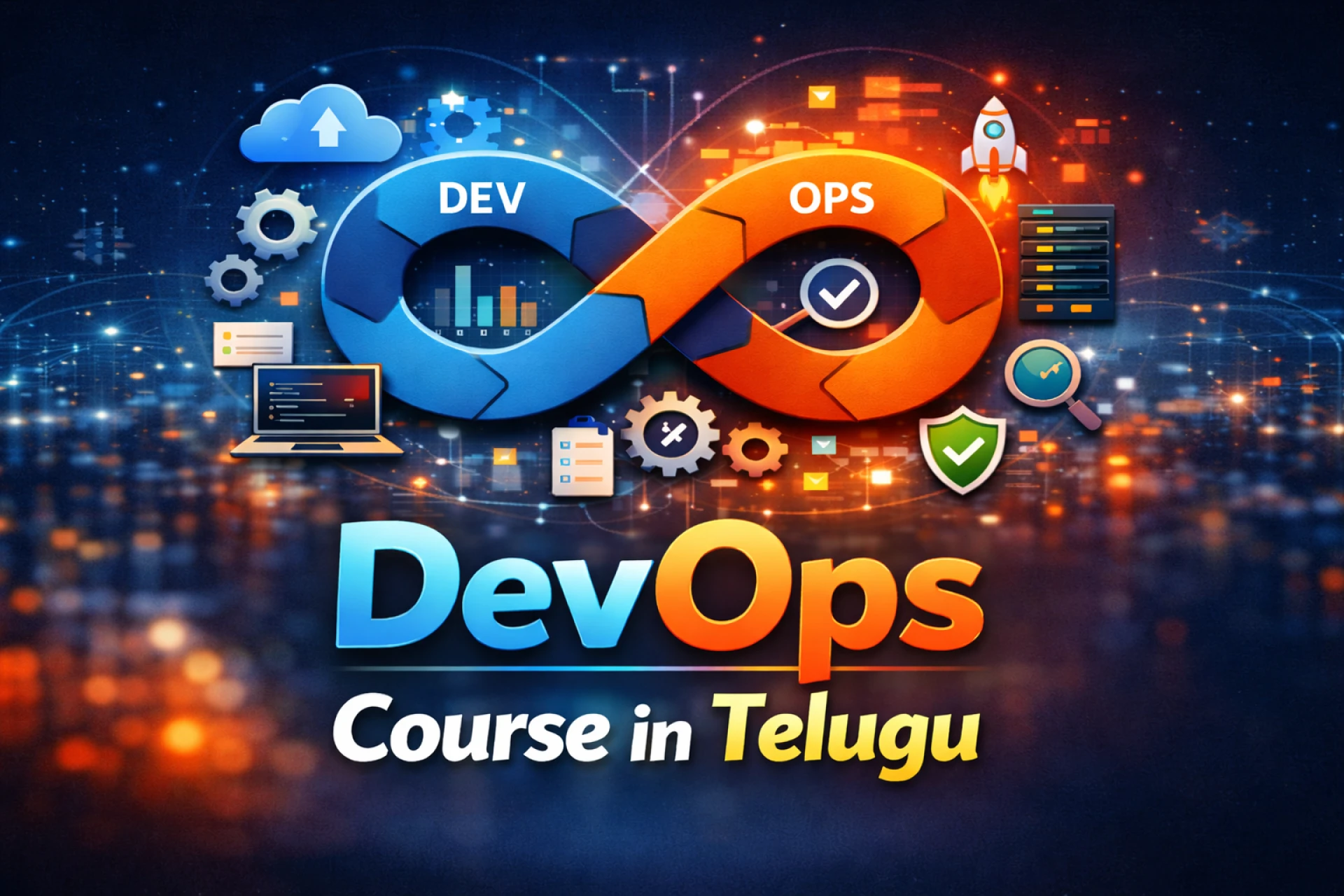
DevOps is a combination of Development and Operations. It is a set of practices that helps development teams and operations teams work together efficiently.
In traditional software development, developers write code and then pass it to operations teams for deployment. This process often creates delays and communication problems.
DevOps solves this issue by integrating development and operations processes and introducing automation throughout the software development lifecycle.
Important DevOps practices include:
- Continuous Integration (CI)
- Continuous Deployment (CD)
- Automation
- Monitoring
- Infrastructure as Code
These practices help companies deliver software faster and improve system reliability.
Why DevOps is Important in the IT Industry
DevOps has become an essential part of modern software development because it improves efficiency and productivity.
Faster Software Development
DevOps allows organizations to release software updates quickly through automated pipelines.
Better Collaboration
Developers and operations teams work together, improving communication and workflow.
Higher Software Quality
Continuous testing helps detect bugs early in the development process.
Improved System Performance
Monitoring tools help track system performance and prevent downtime.
Benefits of Learning DevOps Course in Telugu
Learning DevOps in Telugu offers several advantages for beginners.
Easy to Understand
Technical concepts explained in Telugu are easier for many students to understand.
Beginner Friendly
Students with little technical knowledge can learn DevOps concepts comfortably.
Increased Confidence
Learning in your native language improves confidence and learning speed.
Strong Technical Foundation
Understanding the basics clearly makes it easier to learn advanced DevOps tools.
DevOps Tools You Will Learn
A DevOps course usually includes training on several important tools used in real-world IT projects.
Linux
Linux is widely used in servers and cloud environments. DevOps engineers must know basic Linux commands and system administration.
Git and GitHub
Git helps developers manage code changes and collaborate with team members.
Jenkins
Jenkins is an automation tool used for continuous integration and deployment.
Docker
Docker allows developers to create containers that package applications with their dependencies.
Kubernetes
Kubernetes helps manage containerized applications and scale them efficiently.
Ansible
Ansible is used for configuration management and automation.
Terraform
Terraform helps manage infrastructure using code.
DevOps Learning Roadmap
If you want to become a DevOps engineer, it is important to follow a structured learning roadmap.
Step 1: Learn Linux Basics
Linux knowledge is essential for managing servers and applications.
Step 2: Learn Networking Concepts
Networking fundamentals such as IP address, DNS, and HTTP are important in DevOps.
Step 3: Learn Version Control
Git and GitHub help developers track code changes efficiently.
Step 4: Learn CI/CD Tools
Tools like Jenkins automate building, testing, and deploying applications.
Step 5: Learn Docker
Docker helps create containers that run applications consistently across environments.
Step 6: Learn Kubernetes
Kubernetes helps manage containerized applications at scale.
Step 7: Learn Cloud Platforms
Cloud platforms like AWS, Azure, and Google Cloud are widely used in DevOps environments.
Who Should Learn DevOps?
DevOps is suitable for many individuals interested in building a career in the IT industry.
Students
Engineering or degree students who want to start a career in technology.
Software Developers
Developers who want to learn automation and deployment practices.
System Administrators
Professionals managing servers who want to upgrade their skills.
Freshers
Anyone looking to enter the IT industry with high-demand technical skills.
Career Opportunities in DevOps
After completing a DevOps course, several career opportunities become available.
Popular DevOps job roles include:
- DevOps Engineer
- Cloud Engineer
- Automation Engineer
- Infrastructure Engineer
- Site Reliability Engineer
- Release Engineer
These roles are available in startups, product-based companies, and multinational organizations.
DevOps Salary in India
DevOps professionals earn attractive salaries because of the high demand for their skills.
Typical salary ranges include:
- Freshers: ₹4 LPA – ₹7 LPA
- Mid-Level Professionals: ₹8 LPA – ₹15 LPA
- Experienced Professionals: ₹20 LPA and above
With certifications and practical experience, professionals can earn even higher salaries.
Future Scope of DevOps
The future of DevOps looks extremely promising. As companies adopt cloud computing, automation, and microservices architecture, the demand for DevOps engineers will continue to grow.
Organizations require skilled professionals who can automate processes, manage infrastructure, and ensure reliable software delivery.
This makes DevOps one of the most promising and stable career paths in the IT industry.
Conclusion
A DevOps Course in Telugu is an excellent opportunity for students and professionals who want to start a career in the IT industry. Learning DevOps in Telugu helps beginners understand complex technical concepts easily and build a strong foundation.