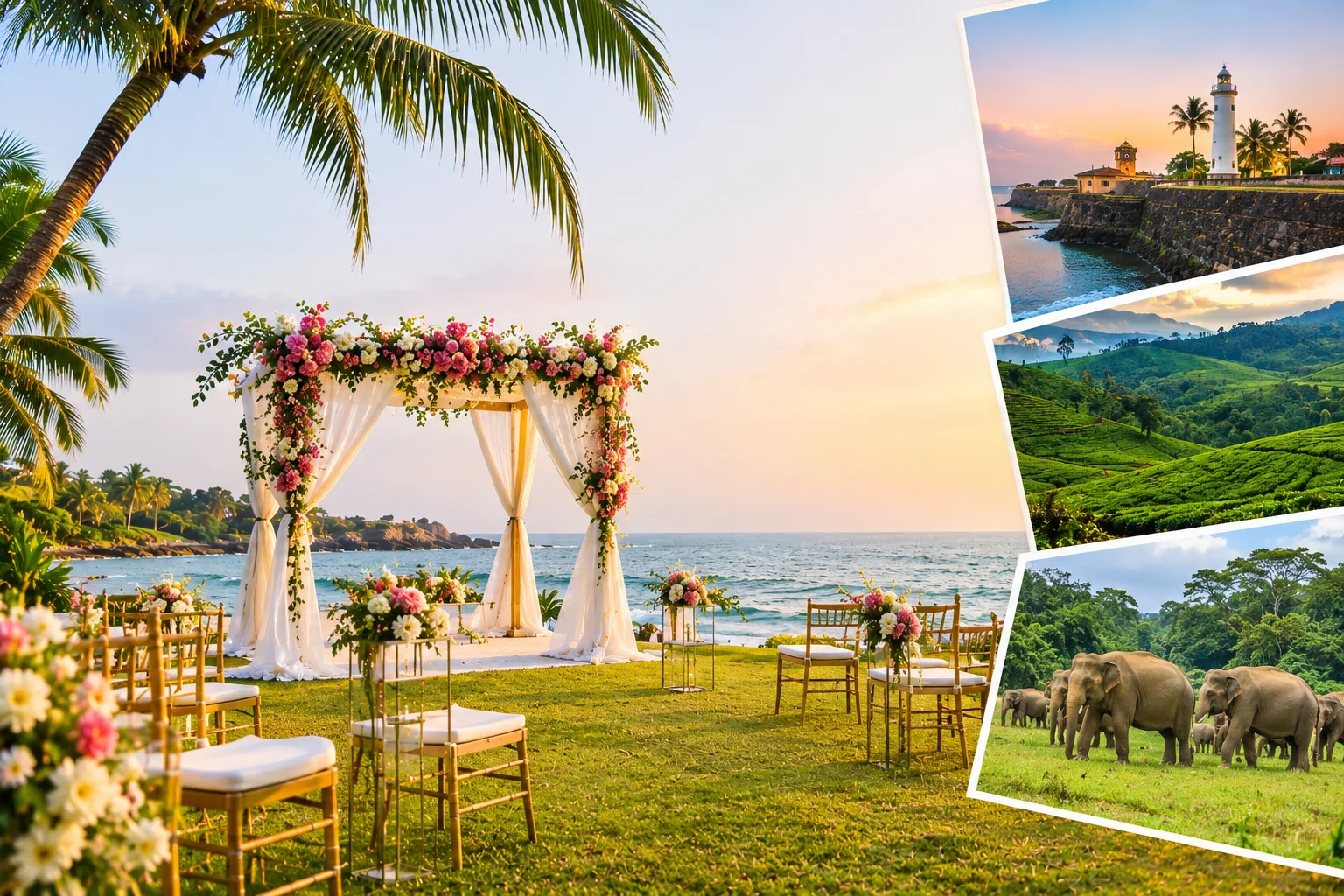
A Destination wedding in Sri Lanka can give guests far more than a ceremony. The island packs beaches, heritage towns, hills and wildlife into a compact space, so many families turn the celebration into a short holiday. That is a lovely idea, but it needs planning, because extra days add transport, rooms and decisions. This guide explains how to add sightseeing and downtime around the wedding without overloading the schedule or the budget.
Decide Whether to Extend the Stay
Start by asking who actually wants extra days. Some guests will happily stay a week, while others can spare only a long weekend. Couples also differ, since some want a quiet wedding followed by a honeymoon and others want to keep things short.
A simple survey in the invitation or RSVP shows how many guests plan to stay on. That number affects room blocks, transfers and the activities you offer, so it is worth collecting early.
Choose What Guests Want to See
Sri Lanka offers several kinds of experience within a small area. Heritage towns such as Galle and Kandy bring historic architecture and cultural sites. Coastal areas around Bentota, Kalutara, Weligama and Tangalle suit beach time and relaxed days. The hill country offers cooler air, tea estates and green landscapes, while wildlife parks suit guests who enjoy nature.
You do not need to cover everything. Offer two or three options and let guests choose, so nobody feels pushed into a long itinerary after already travelling a great distance.
Decide Before or After the Wedding
Most families find that sightseeing works better after the celebration. Before the wedding, guests are focused on functions, outfits and timings, and an early excursion can leave people tired. After the ceremony, everyone is relaxed, and the schedule has room to breathe.
A short, gentle activity before the wedding can still help, such as a local walk or an easy afternoon outing for early arrivals. Keep it optional and light, and avoid anything that could cause delays or exhaustion on the day before the main events.
Respect Travel Times
Most international guests land at Bandaranaike International Airport, and road journeys between regions can take longer than the map suggests. Negombo is the easiest area to reach from the airport, the coast around Bentota, Kalutara and Galle needs a longer drive, and hill country destinations involve the slowest roads.
Ask your hotel or an experienced planner for realistic travel estimates, and build rest into long transfers. A schedule that looks neat on paper can leave elders and children exhausted, so allow generous time and avoid tight connections.
Protect the Wedding Days
Keep the core wedding days free of excursions. Guests need time to rest, change and prepare for each function, and a long outing on the morning of the sangeet is rarely wise. Plan sightseeing on days with no functions, or after the farewell brunch.
If you offer optional activities, make clear that guests can skip them. A relaxed pool day or a quiet afternoon is also a valid choice, and many guests will prefer it after a busy few days.
Handle Rooms and Hotel Terms
Extra nights affect your room block. Ask the hotel whether guests can extend their stay at the same rate, whether availability changes after the wedding dates and how rooms are released. Rates for additional nights may differ from the wedding block, so request this in writing.
If guests move to a different region after the wedding, they will need separate bookings. Offer a short list of recommended places and let guests book themselves, or arrange group bookings if you want to keep the group together.
Look After Elders and Children
Older relatives and young children usually prefer shorter, calmer plans. Choose activities with easy access, shade and seating, and avoid long walks or early starts. Share a clear schedule so families can decide what suits them.
Provide a contact number for questions, and ask the hotel what support it can offer, such as vehicles with extra space or help with luggage.
Weather and Season
No single month suits the whole island, because coastal and inland conditions differ. Research the usual weather for each region you plan to visit, and confirm it with the venue or an experienced planner. Treat seasonal patterns as tendencies rather than promises, and keep a backup for outdoor plans.
Documents and Entry Requirements
Guests need valid passports and must meet the country's entry requirements. Rules can change, so confirm them on official government sources before sending invitations, and check what applies to children and elderly relatives. If guests plan to stay longer, remind them to check how long their permission allows them to remain.
Timing and Confirmation
For popular periods, begin eight to twelve months ahead. Share the wedding dates, and a draft of optional extra days, about six months before the event so guests can arrange leave and flights. Confirm room blocks, extended stays, transfers and activity bookings in writing, and read contracts for payment schedules and cancellation terms.
Quick Answers
Should sightseeing happen before or after the wedding?
After is usually easier, since guests are relaxed and the schedule is lighter.
Can guests extend their stay at the venue?
Often yes, but ask about rates and availability in writing.
How many activities should you offer?
Two or three options are usually enough.
How early should you begin planning?
Eight to twelve months ahead is a sensible window.
Final Thoughts
A wedding trip works best when it feels easy. Learn who wants extra days, offer a few simple choices, respect travel times and keep the wedding days protected. With those habits, the celebration and the holiday around it can both feel relaxed and memorable.