Decor at a destination wedding in Sri Lanka works best when it suits the climate, the venue and the local supply of materials. Sea breeze, humidity, heat and sudden rain all affect what stays upright and what wilts. Couples who plan around these conditions usually get a more elegant result at lower cost. This guide explains how to choose a style, source flowers, plan structures and brief a decorator.
How should the setting shape your decor style?
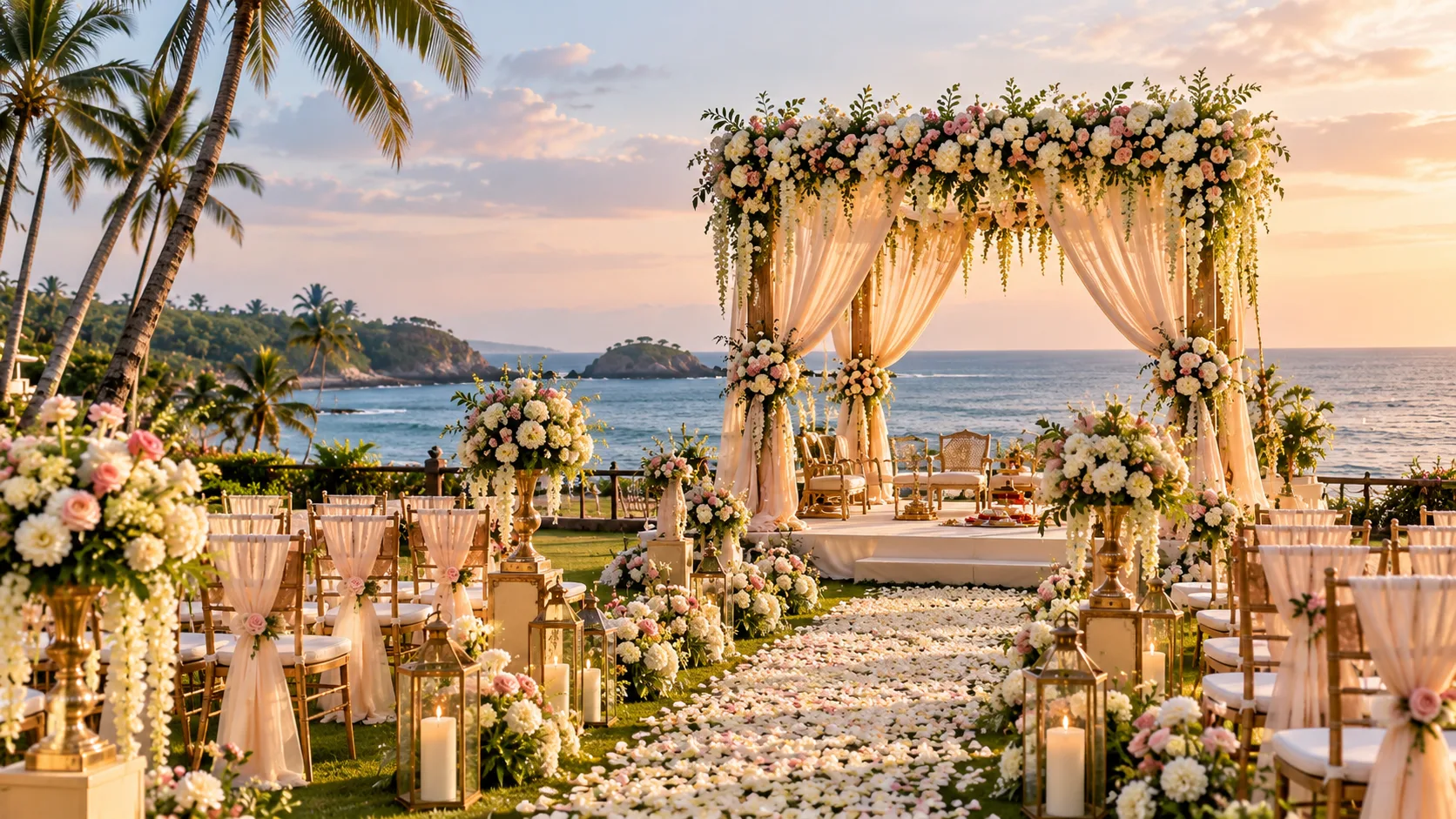
Start with the venue, not a Pinterest board. A beachfront lawn already has sea, sky and palms, so it needs less styling. A ballroom needs more work to feel warm. A heritage property with carved wood and verandas can look cluttered if you add heavy decor on top.
Visit the property, or ask for a detailed video, and list what already works. Then decide what the space lacks, such as softer lighting, colour or a focal point. Building decor around that gap is more effective than covering everything.
Which flowers are practical in Sri Lanka?
Flower availability changes by month and by region, so ask your decorator what grows or is easily sourced locally during your wedding dates. Orchids, jasmine, frangipani, marigolds, roses and tropical foliage are commonly available, though supply and quality vary by season. Imported flowers usually cost more and can arrive tired after travel.
Heat and humidity shorten the life of fresh flowers. Ask the decorator how they keep them fresh, for instance by storing them in cool rooms and installing them close to the event time. For ceremonies, many couples use a mix of fresh flowers, foliage and fabric, with some artificial elements in places that need to last several days.
What structures and installations suit outdoor venues?
Mandaps, arches, backdrops and hanging installations all need stability. Sea winds can topple tall or lightweight structures, and rain can damage fabric and paper.
Ask your decorator these questions:
- How are structures anchored on sand, grass or paved floors?
- Which materials hold up in humidity and light rain?
- What is the wind limit, and what is the plan if it is exceeded?
- Can the design be moved indoors quickly if the weather changes?
Low, wide arrangements are often safer and photograph well. Keep tall installations for indoor spaces or sheltered corners.
How do lighting and fabric change the look?
Lighting often does more than flowers. Warm string lights, lanterns, candles in protected holders and soft uplighting create atmosphere after sunset. Check that candles and open flames are allowed by the venue and are protected from wind.
Fabric draping softens hard architecture and gives shade for daytime functions. Choose breathable, lighter materials for outdoor use, since heavy fabric traps heat and can sag in humidity. Confirm that the fabric is fire-safe if used near lamps or ritual flames.
What permissions and venue rules apply?
Many venues have rules about what decorators can install. Ask whether you may drill, nail or hang items from ceilings and trees, whether confetti, petals and coloured powders are allowed, and whether outside decorators need approval or pay a fee. Some properties require damage deposits.
Protected beaches and heritage sites can have extra restrictions on structures and lighting, so confirm permissions early. Also ask about setup and dismantling times, since a venue may limit when decorators can enter the space.
How do you brief a decorator effectively?
A clear brief prevents misunderstandings and cost surprises. Include:
- Venue photographs and measurements for each function
- Your preferred colours, flowers and style references
- Ritual requirements, such as a mandap size or ceremonial layout
- A budget range and priorities
- Guest counts and seating layouts
- Weather backup requirements
Ask for itemised quotes with sketches or 3D previews, and confirm who handles delivery, setup, on-site repairs and removal.
How can you keep decor costs under control?
Decor can grow quickly. These choices help:
- Reuse decor across functions, such as moving ceremony flowers to the reception
- Focus on a few strong focal points instead of covering every surface
- Use local flowers and foliage in season
- Choose a simpler design that works with the natural setting
- Avoid last-minute changes, which often carry extra charges
What common decor mistakes should you avoid?
- Choosing a design before visiting or viewing the venue properly
- Using tall, lightweight structures on windy beaches
- Ignoring the weather backup for outdoor setups
- Relying on imported flowers that may not suit the climate
- Not checking venue rules on open flames, powders and installations
- Leaving final approvals until the last week
Frequently asked questions
Is it cheaper to bring decor from India?
Not always. Transport, customs and damage risk can outweigh savings, so compare with local sourcing.
Can fresh flowers last through a hot beach ceremony?
They can if stored well and installed close to event time, but heat shortens their life.
When should you hire a decorator?
Around six to nine months before the wedding, after the venue is confirmed.
Do you need a backup design for rain?
Yes. Every outdoor setup should have an indoor or covered alternative.
Final thoughts
Thoughtful decor at a destination wedding in Sri Lanka respects the climate, works with the setting and leaves room for weather changes. Visit the venue, choose locally available materials and brief your decorator clearly. To compare regions and venues before deciding on a style, explore the wedding destinations in Sri Lanka that suit your celebration.