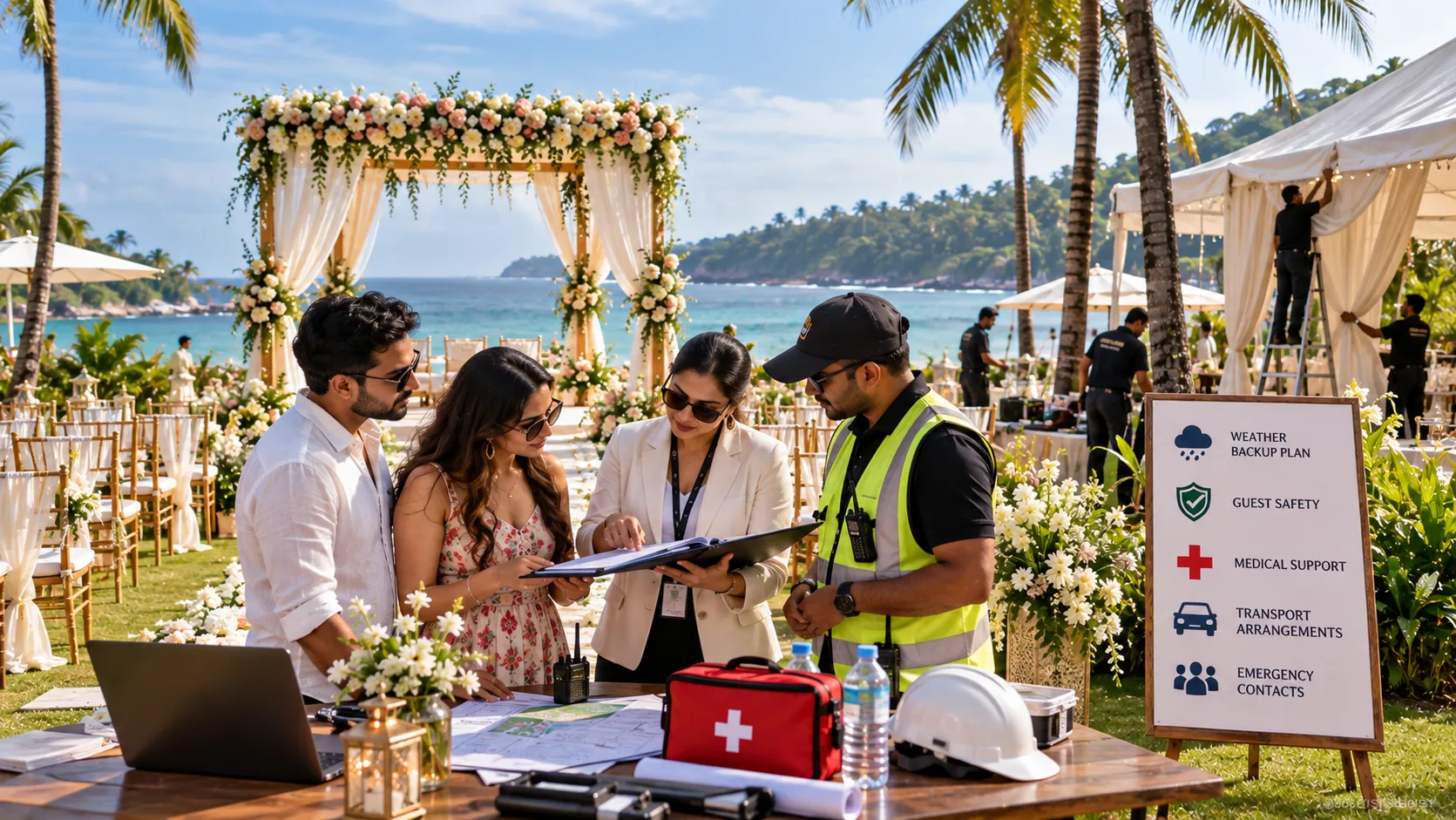
Health and safety planning is easy to overlook at a destination wedding in Sri Lanka, yet small problems such as heat exhaustion, stomach upsets or a lost passport can disrupt a multi day event. Most guests will be travelling away from their usual doctors and routines, and many will be elderly or very young. This guide covers the main areas to prepare for: health checks before travel, heat and water safety, food hygiene, insurance, emergency contacts and weather contingencies.
What health preparations should guests make before travelling?
Guests should speak to their own doctor or a travel health clinic several weeks before departure. Health advice for Sri Lanka, including recommended vaccinations and disease risks, can change, so check current guidance from official health authorities instead of relying on older articles.
Practical steps include:
- Carry enough regular medication for the whole trip plus a few extra days
- Keep medicines in original packaging, with a copy of the prescription
- Pack basic items such as pain relief, rehydration salts, antacids and plasters
- Note any allergies and chronic conditions on a card in the wallet
- Check whether any prescription is restricted or needs documentation when entering the country
Guests with serious health conditions should discuss travel suitability with their doctor before booking.
How do you manage heat and humidity?
Coastal Sri Lanka is warm and humid for most of the year, and outdoor functions can be tiring. Heat exhaustion is a real risk for older guests, children and anyone not used to the climate.
Reduce the risk with a few habits:
- Schedule outdoor ceremonies for cooler hours where rituals allow
- Provide shade, fans and seating at daytime functions
- Place water stations in visible spots and encourage regular drinking
- Suggest light clothing, hats and sunscreen in the travel guide
- Allow rest breaks between functions
Warning signs include dizziness, heavy sweating, headache, nausea and confusion. Guests showing these signs should move to a cool place, drink fluids and seek medical help if symptoms continue.
How can you reduce food and water risks?
Stomach upsets are among the most common travel complaints. Choose venues and caterers with good hygiene standards, and ask how food is stored, prepared and served, especially at large buffets and outdoor live counters.
Advise guests to drink bottled or properly treated water, and to be careful with ice, raw salads and unpeeled fruit when they are unsure of the source. Ask the caterer to label dishes for allergens and to keep hot food hot and cold food cold. If you hold a tasting, notice how the kitchen handles cleanliness and labelling.
What safety points matter near water?
Beach and pool weddings are popular, but water safety needs attention. Sea conditions can change, and currents and waves vary by region and season, so ask the venue about safe swimming areas and any warning flags. Do not assume that a calm looking beach is safe.
For children, assign adults to supervise, avoid alcohol related distractions near the water and keep pools fenced where possible. Check whether the resort has lifeguards or trained staff, and tell guests where swimming is not recommended.
Is travel insurance worth arranging?
Yes, especially for multi-day international trips. A good policy can cover medical costs, trip cancellation, delayed flights and lost baggage. Read the policy carefully, since coverage for pre-existing conditions, water sports and event cancellation differs between providers.
The couple may also consider event insurance, which can cover certain vendor failures or cancellations. Terms vary, so ask for the exact exclusions in writing.
Who do you contact in an emergency?
Prepare an emergency sheet and share it with the planner, family leads and venue staff. Include:
- Local emergency numbers for police, ambulance and fire
- Nearest hospitals and clinics, with addresses and phone numbers
- Venue manager and planner contact details
- Embassy or consulate contact details for guests who need them
- Insurance helpline numbers
- A designated family contact for each group of guests
Ask the venue whether a firstaid kit and trained staff are available on site, and how long ambulances typically take to arrive.
How should you protect documents and valuables?
Ask guests to carry copies of passports and tickets separately from the originals, and store digital copies securely. Use hotel safes for passports, spare cash and jewellery. The couple should arrange secure storage for wedding jewellery and outfits, and keep a list of valuables with photographs.
What contingency plans should every wedding have?
Weather is the most common disruption, so every outdoor function needs an indoor or covered alternative, with a clear person responsible for the decision to switch. Plan for power cuts too, by asking the venue about generators and lighting backups.
Other contingencies include delayed flights, lost luggage and last minute guest changes. Keep a buffer day before the main ceremony, a flexible rooming list and a short list of local shops and tailors for emergencies.
Frequently asked questions
Should every guest buy travel insurance?
It is strongly worth considering, particularly for older guests and those with medical conditions.
Do guests need vaccinations for Sri Lanka?
Requirements and recommendations vary, so check current advice from official health sources and a doctor.
Is tap water safe to drink?
Guests should generally stick to bottled or treated water, unless the venue confirms otherwise.
Who should hold the emergency contact sheet?
The planner, the venue manager and one trusted family member for each guest group.
Final thoughts
Good preparation lets everyone enjoy a destination wedding in Sri Lanka without avoidable stress. Encourage health checks before travel, plan for heat and water safety, confirm food hygiene and keep a clear emergency sheet. To compare regions and venues before you finalise your plans, explore the wedding destinations in Sri Lanka that suit your celebration.