When planning work at height—facade repairs, signage installation, roof maintenance, tree trimming, lighting replacement, or HVAC servicing—one of the most important decisions is whether to rent a truck-mounted boom lift (truck-mounted aerial platform / MEWP / AWP) with an operator or without an operator (self-operated rental).
Both options can be safe and cost-effective, but the better choice depends on your project complexity, site conditions, schedule, and your team’s competency. Below is a practical guide to help you decide.
1) What “With Operator” vs “Without Operator” Really Means
Renting with an operator usually means:
- The rental company supplies a trained operator to drive, set up, and operate the machine.
- You provide the work crew (installers/technicians) and materials, while the operator positions the platform as needed.
- The operator is responsible for correct setup, stabilizers/outriggers, basic function checks, and safe platform movement.
Renting without an operator (self-operated) usually means:
- You rent the machine only.
- Your team must provide a competent operator, perform pre-use checks, set up the machine properly, and operate it safely.
- You take more responsibility for safe operation, planning, and on-site control.
2) When Renting With an Operator Is the Better Choice
A) You don’t have a trained/competent operator
A truck-mounted boom lift is not “just a vehicle.” Setup, outrigger placement, leveling, envelope awareness, and wind judgment all matter—especially above 20–30 meters. If your team lacks proven competency, renting with an operator is usually the safest and most sensible option.
B) The jobsite is complex or risky
Choose “with operator” when you have:
- tight urban streets and traffic exposure,
- overhead hazards (trees, cables, signage frames),
- limited setup space,
- uneven ground or questionable surfaces,
- frequent repositioning along a street,
- wind-exposed areas or tall structures.
An experienced operator reduces the risk of poor setup and unsafe movements, and can spot hazards early.
C) You need speed and reliability
Professional operators are efficient at:
- positioning the truck correctly,
- deploying outriggers quickly and safely,
- moving the platform smoothly into the right working zone,
- keeping the workflow moving.
If your project is time-sensitive (night work, short closures, scheduled maintenance windows), “with operator” often saves more time than it costs.
D) You want clear accountability
With an operator provided by the rental company, responsibilities are usually clearer:
- equipment setup and operation are handled by the operator,
- your crew focuses on the task (installation/repair),
- fewer gray zones about “who did what” if something goes wrong.
3) When Renting Without an Operator Can Make Sense
A) Your team already has a competent operator
If you have a properly trained, experienced operator who routinely uses MEWPs and understands truck-mounted platforms, self-operated rental can be a good option.
B) Longer projects with daily use
For multi-day or multi-week work where the machine is used continuously, self-operation can reduce cost—if you can maintain safe operation standards throughout the project.
C) The site is controlled and predictable
Self-operation is more suitable when:
- access is easy and stable,
- the ground is level and known,
- the work is repetitive,
- traffic and public exposure are minimal.
Even then, strict discipline is required—routine checks, wind monitoring, and safe positioning.
Best practices and right checklist we have found is on the Destbul
4) The Hidden Cost Comparison (It’s Not Just the Daily Rate)
People often compare rental rates and stop there. A better comparison includes:
With operator you often reduce:
- setup and repositioning time,
- risk of downtime due to mistakes,
- likelihood of damage (and repair charges),
- risk of incidents that can stop the job or trigger liability.
Without operator can be cheaper on paper, but you may add:
- training costs and competency requirements,
- slower setup and positioning,
- higher risk of errors under pressure,
- more responsibility for safety documentation and supervision.
A single mistake—wrong outrigger placement, poor ground selection, unsafe movements near structures—can cost more than the operator fee.
5) Safety Considerations That Strongly Favor “With Operator”
Even when your team is skilled, these factors often tip the decision toward hiring an operator:
- High working heights (30m+): platform sway, wind impact, and precision positioning require experience.
- Public areas: pedestrians, traffic, and tight spaces demand professional control and quick decision-making.
- Complex lifts: “up and over” movements, restricted envelopes, and close-proximity work increase crush and collision risk.
- Frequent repositioning: repeated setup increases the chance of a single unsafe setup.
If any of these are present, “with operator” is generally the smarter safety choice.
6) Common Mistakes When Renting Without an Operator
If you choose self-operation, be aware of the most common failure points:
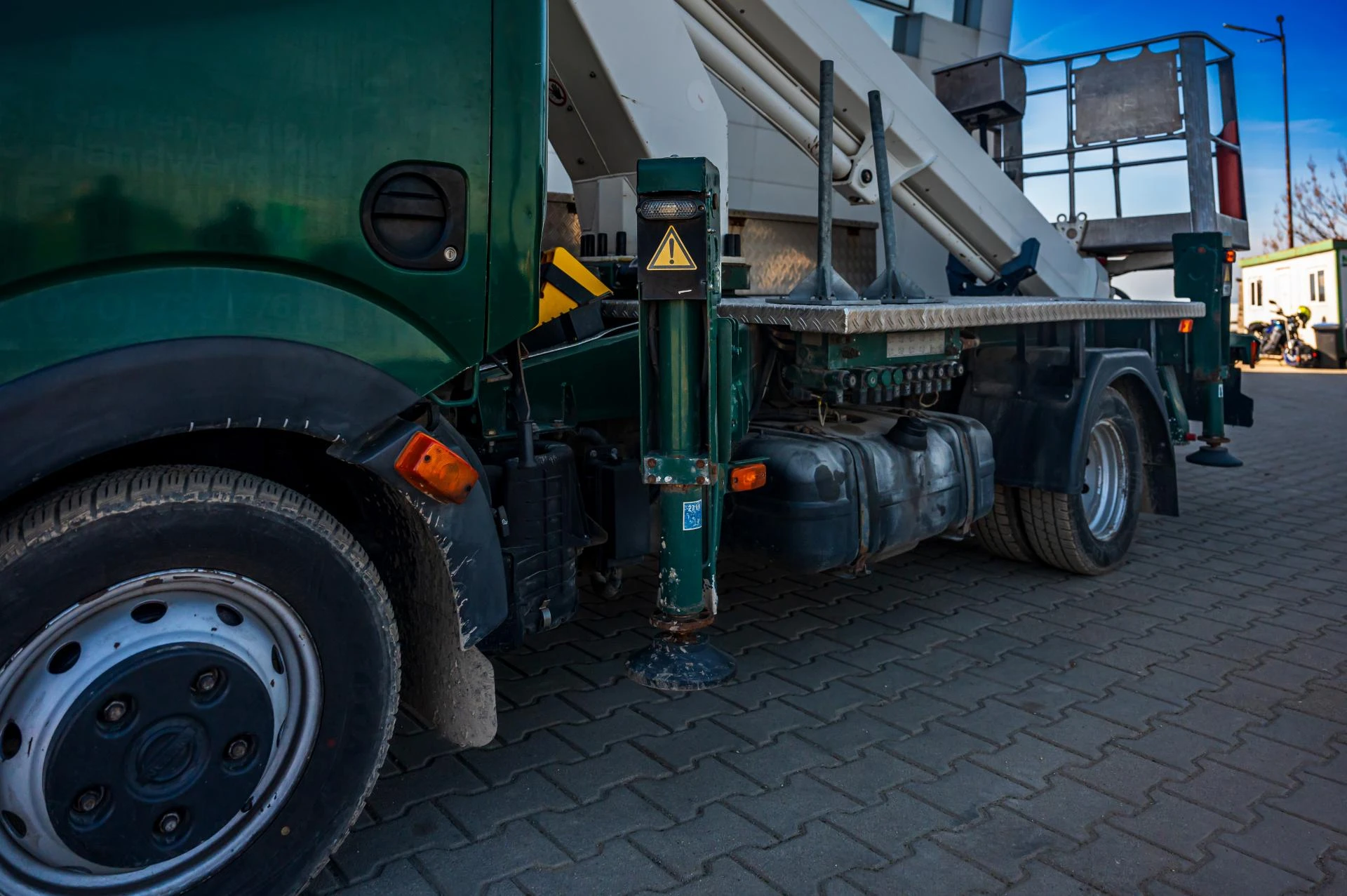
- Treating outriggers as optional
- Truck-mounted platforms depend on outriggers for stability. Incorrect placement or skipping pads can be dangerous.
- Ignoring ground conditions
- Soft shoulders, backfilled areas, hidden voids, and slopes are frequent causes of stability issues.
- Underestimating wind
- Wind at height is not the same as wind at ground level. Gusts and “sail effect” from panels can quickly change conditions.
- Poor communication between worker and operator
- Unclear commands and rushed repositioning lead to collisions and near-misses.
- No rescue plan
- If the platform gets stuck or the operator becomes incapacitated, you need a clear method for emergency descent.
These mistakes are far less likely when a dedicated professional operator is included.
7) A Practical Decision Checklist (Copy/Paste)
Choose WITH operator if:
- You don’t have a proven competent operator
- The job is 25–30m+ or wind-exposed
- The site is tight, urban, or involves traffic/public areas
- You need fast, reliable completion
- You want simpler accountability and fewer operational risks
Choose WITHOUT operator if:
- You have a competent operator with real MEWP experience
- The site is controlled, stable, and predictable
- The job is longer-term and cost efficiency matters
- You have strong safety supervision, procedures, and documentation
Conclusion
For most companies—especially when working in urban areas, at 30m+ heights, or under time pressure—renting a truck-mounted boom lift with an operator is the safer and often more cost-effective decision once you account for efficiency, reduced risk, and fewer costly mistakes.
Renting without an operator can make sense when you have verified internal competency and a controlled jobsite—but it requires strict discipline: pre-use inspections, correct outrigger setup, wind monitoring, clear communication, and a rescue plan.