Commercial storage systems play an increasingly important role in growing offices, but as storage needs increase, so does the importance of health and safety. Overcrowded storage can result in accidents, equipment damage, injuries, and serious non-compliance fines. Designing your storage space safely and efficiently will save time and prevent unnecessary accidents from happening.
Calculating load capacity and weight distribution
There are plenty of storage options for offices, but correctly calculating the weight capacity of your shelves is vital.
Steel shelving is manufactured to support heavy loads. For example, longspan designs have a load rating of up to 950kg UDL per pair of beams, depending on the system configuration. Modular storage shelving can usually support up to 250kg per shelf load, depending on the product, making it ideal for mid-duty office storage and archive applications.
Please note that if the weight is not evenly distributed on the shelf, point loads can put extra pressure on the shelving and could lead to bending. To prevent this:
- Follow the manufacturer's load rating per shelf
- Try to distribute the weight across a shelf evenly
- Store heavier items on lower shelves
- Never exceed the maximum load for each bay or beam
It’s also important to regularly check the condition of your storage racks. Steel can handle heavy usage, but like most materials, it will weaken over years of use. Look out for early signs of bending or structural damage to avoid sudden system failures.
Fire safety when using steel shelving in your office storage design
Fire safety should be considered when planning a storage system. Most office environments store paper records, packaging and even flammable electronics. All these products have the potential to cause damage in the event of fire. Office storage can prevent the spread of fire by using fire-resistant storage cabinets and shelves
Steel shelving units are non-combustible, meaning they are fire-resistant and will not contribute to fire damage. However, other factors must be considered when planning a fire-safe storage system, such as:
- Keeping equipment clear of fire exits, sprinklers and extinguishers
- Leaving enough space between shelving units for adequate airflow
- Where needed, using accessories such as mesh shelves or open frame shelving to allow ventilation
Steel shelving systems have been designed to meet workplace safety standards and can help you meet compliance requirements. Records, equipment, and even materials may require you to store them safely.
Mobile storage cabinets and controlled access storage systems can also improve safety in high-density storage areas by restricting aisle access. This helps avoid overcrowding and limits storage cabinet access to authorised employees only.
Ergonomics and positioning considerations
Offices can also be prone to work-related injuries if storage isn’t positioned correctly. Repetitive strain injuries and back pain are common in workplaces where employees must reach awkward places to retrieve items.
Steel shelving allows you to create an ergonomic storage environment by adjusting shelf heights and storage layout. Many steel shelves can be adjusted in 25mm increments to accommodate the goods stored on them. Consider taking the following steps to help workers by:
- Positioning shelves storing frequently used items between waist and shoulder height
- Storing heavier items in the middle of shelves
- Avoiding storing everyday use items below knee height
Each small adjustment can make it easier for employees to retrieve items without causing personal strain. Over time, this will lead to a happier workforce and higher productivity.
Properly positioning shelving can also prevent accidents. As with any workspace, trip hazards should be minimised. Allow enough space for employees to safely pass between shelving units and store heavy items on lower-level shelves to prevent them from falling.
Designing efficient storage layouts with safe access
Commercial storage doesn’t just have to be safe; it can be practical too. Position shelving on flat floor surfaces and fix it to the wall whenever possible to prevent accidents.
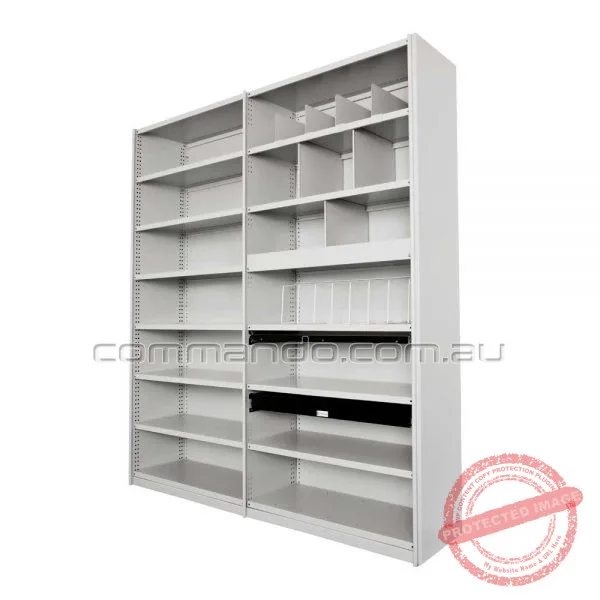
Modular storage cabinets are versatile and can be used to create single or double-sided shelving layouts. As your storage requirements change or grow, you can add more bays to your system. You can also use accessories like dividers, drawers, and storage bins to customise it further.
Think vertical. With steel storage cabinets, you can fit more into small spaces without sacrificing safety. Maximise space by utilising wall space and shelving height.
Maintaining your storage system
As with most fixtures and fittings, regular maintenance checks will help you identify potential hazards before they become accidents. Ensure your shelving continues to meet compliance standards with regular maintenance.
Run through a quick maintenance checklist when reviewing your system. Check bolts are tight, and beams and shelves are not damaged or bent. Verify your storage areas aren’t overloaded and give your shelves a good clean!
Businesses should also review their setup as their storage needs change and evolve. What was compliant yesterday may not be tomorrow.
Commercial shelving can be safe when correctly planned. Using steel storage cabinets and shelves can offer you heavy-duty strength with a variety of fire-safe options. Position units safely within easy reach and use ergonomic principles to reduce strain on your employees. Commercial steel storage has the strength to keep up with your business and the flexibility to adapt as your needs change.