
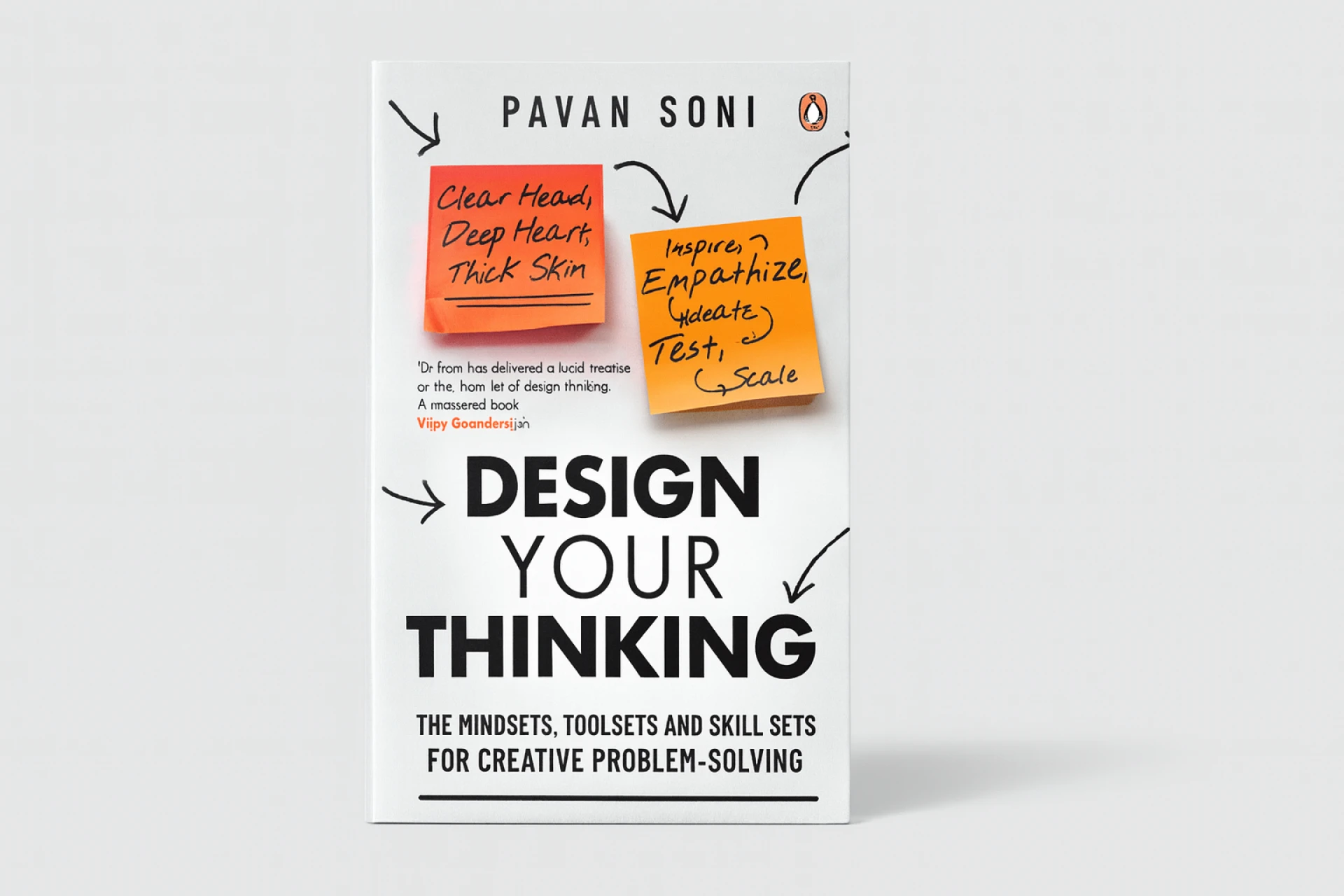
Every once in a while, you come across a book that doesn’t shout for your attention but leaves a lasting impression. Design Your Thinking by Pavan Soni is one such book. It doesn’t promise quick fixes or massive overnight changes. Instead, it invites you to take a step back, look at problems more patiently, and begin solving them by understanding the people behind them.
It’s not a flashy read, but it’s a wise one. The kind that makes you pause, reflect, and apply what you’ve just read to something happening in your own life or work. And that, in itself, is rare.
A Different Kind of Problem-Solving Book
Most books about problem-solving or innovation try to dazzle you with big words, frameworks, or success stories from tech giants. This one does something else entirely. It brings design thinking out of the boardroom and into your everyday world.
Pavan Soni doesn’t just talk about how design thinking works. He shows you how it feels. There’s a warmth in the way he explains things, whether he’s talking about a corporate transformation or a community-driven idea. You get the sense that this book was written by someone who has seen problems up close and genuinely cares about solving them well.
The heart of this book lies in one word: empathy. Not just as a principle, but as a way of life. And not the soft kind of empathy that gets tossed around in management speak. This is grounded, practical empathy. The kind that asks you to observe more, listen longer, and design better. All because you took the time to care.
Stories That Stick With You
One of the book’s strengths is how it mixes ideas with examples. There’s a story about Tanishq, the Indian jewellery brand, which turned its attention toward its artisans, not its customers, to improve its products and workplace. That shift in focus had a ripple effect, improving both morale and output. This example doesn’t feel inserted for effect. It fits perfectly into the larger message: when you understand people, you create better solutions.
Throughout the book, you’ll find stories from a mix of industries. Some are from companies we all know...Google, Amazon, BigBasket, Tata, and Oyo Rooms. Others are from less obvious places. But in each one, you’ll find a lesson in how a thoughtful process can lead to meaningful results.
These are not case studies filled with graphs and metrics. They’re stories told with purpose. You walk away not only knowing what happened but understanding why it worked...or why it didn’t.
The Power of Process, Without the Buzzwords
The book covers the core stages of design thinking: empathize, define, ideate, prototype, and test. But it doesn’t present them like rigid steps to follow. Instead, it treats them as parts of a mindset, things you move through with intention and curiosity.
This is not a formula. It’s more like a lens through which to view the world.
You’re encouraged to observe without judgment, to redefine problems by asking better questions, and to try things before perfecting them. Most importantly, you’re taught to see failure not as a roadblock, but as feedback. That idea alone makes this book worth reading.
There’s also something comforting in how the book acknowledges that design thinking isn’t always easy. It takes effort. It takes discipline. But it’s worth it! Because the result isn’t just a smarter solution. It’s a more human one.
More Than a Business Book
What surprised me most is how broad the scope of this book is. You could read it as a business guide and get plenty of value. But you could also read it as a personal development book, or a creative thinking companion, and still find something that speaks to you.
It’s written for anyone who deals with complexity — and that’s most of us. Whether you're a teacher figuring out how to reach your students better, a founder shaping your startup’s offering, or someone trying to redesign a broken process in your community, this book gives you the tools to begin.
There’s no assumption that you’re starting with perfect resources or a creative team. In fact, one of the key messages is that creativity often thrives when resources are limited. That message feels especially relevant now, when so many people and organizations are being asked to do more with less.
Design Thinking as a Way of Seeing
By the time you finish the book, something shifts. You start noticing things you used to ignore. You ask different questions. You become less quick to jump to solutions and more willing to understand the context first.
That shift might seem subtle, but it’s powerful.
Soni manages to create this shift without being preachy or overly academic. His writing is thoughtful and kind. He doesn’t try to impress the reader. He simply shares what he knows — with humility and clarity.
The book’s tone is part of its charm. It never feels like it’s trying too hard. There’s no performance here. Just insight, presented with care.
Designed to Be Used
Another thing I appreciated is how actionable the book is. There are frameworks, diagrams, and even a detailed appendix with commonly asked questions about design thinking. These resources aren’t filler. They’re useful. You’ll find yourself flipping back to them, especially when trying to apply the ideas in your own context.
Design Your Thinking by Pavan Soni is not the kind of book that you read once and shelve. It’s a reference. A resource. A quiet mentor you can come back to when things get messy and you’re unsure where to start.