A missing tooth does more than affect your smile — it can impact eating, speaking, and even cause surrounding teeth to shift over time. If left untreated, the gap can lead to changes in your bite, bone loss in the jaw, and oral health issues that become increasingly difficult to manage. The earlier a missing tooth is addressed, the better the outcome for your long-term dental health.
Fortunately, modern dentistry offers effective ways to restore missing teeth. Two of the most common solutions are dental implants and dental bridges. While both restore function and appearance, they work differently and suit different clinical situations. Understanding how each option works can help you make a more informed decision.
Here's a quick glimpse:
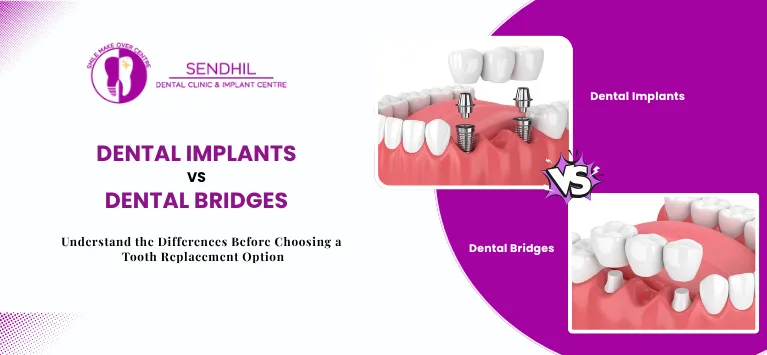
- Dental Implant — A small titanium fixture is placed into the jawbone, where it gradually bonds with the surrounding bone tissue. Once healed, a custom-made crown is attached on top, creating a replacement tooth that functions independently — just like a natural tooth root — without relying on adjacent teeth for support.
Dental Bridge — An artificial tooth is secured in place using the natural teeth on either side of the gap. It closes the space, restores chewing ability, improves appearance, and prevents neighbouring teeth from drifting out of position — all without involving a surgical procedure.
Both options have their own advantages depending on your oral health, budget, and treatment expectations.
When it comes to dental implants, the key benefit is that they function independently without affecting surrounding teeth. They replace the tooth root itself, help preserve the jawbone, and offer a long-term solution that closely replicates the feel and function of a natural tooth. Many patients prefer implants precisely because adjacent healthy teeth are left completely untouched.
Dental bridges, on the other hand, are a practical choice for patients who prefer a faster treatment timeline or a lower initial cost. They are particularly suitable when the teeth on either side of the gap already require crowns, making them a natural anchor for the bridge restoration.
The cost of each treatment varies depending on the number of teeth being replaced, the materials selected, and whether any additional procedures are required beforehand. A professional dental consultation is the best way to understand which option fits your condition and budget.
So which one is right for you? The answer depends on your bone health, treatment timeline, oral condition, and personal preference — and that's exactly what our latest blog covers in full detail.
Read the full blog to know which option suits you best:
👉 Dental Implants vs Dental Bridges – Sendhil Dental
📍 Sendhil Dental Clinic & Implant Centre, Chennai | 📞 +91-9600091767