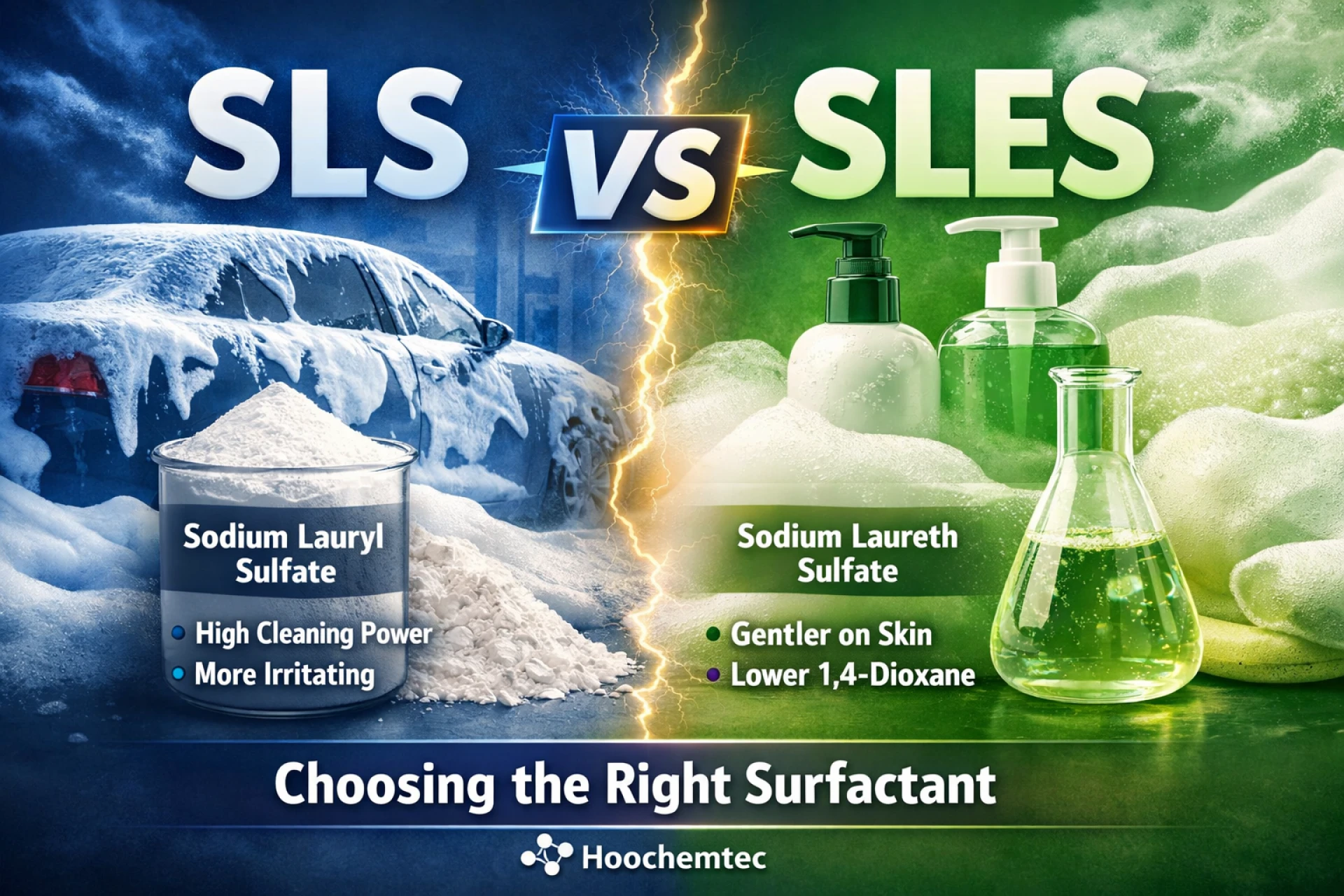
In the world of chemical formulation, surfactants are the unsung heroes that create the foam and cleaning power we rely on every day. However, for manufacturers and procurement managers, the debate between Sodium Lauryl Sulfate (SLS) and Sodium Laureth Sulfate (SLES) remains critical.
Choosing the right surfactant is not just about chemistry—it’s about balancing performance, cost-efficiency, and consumer safety. In this guide, we break down the fundamental differences between SLS and SLES to help you make an informed decision for your next project.
What Sets Them Apart? The Core Differences
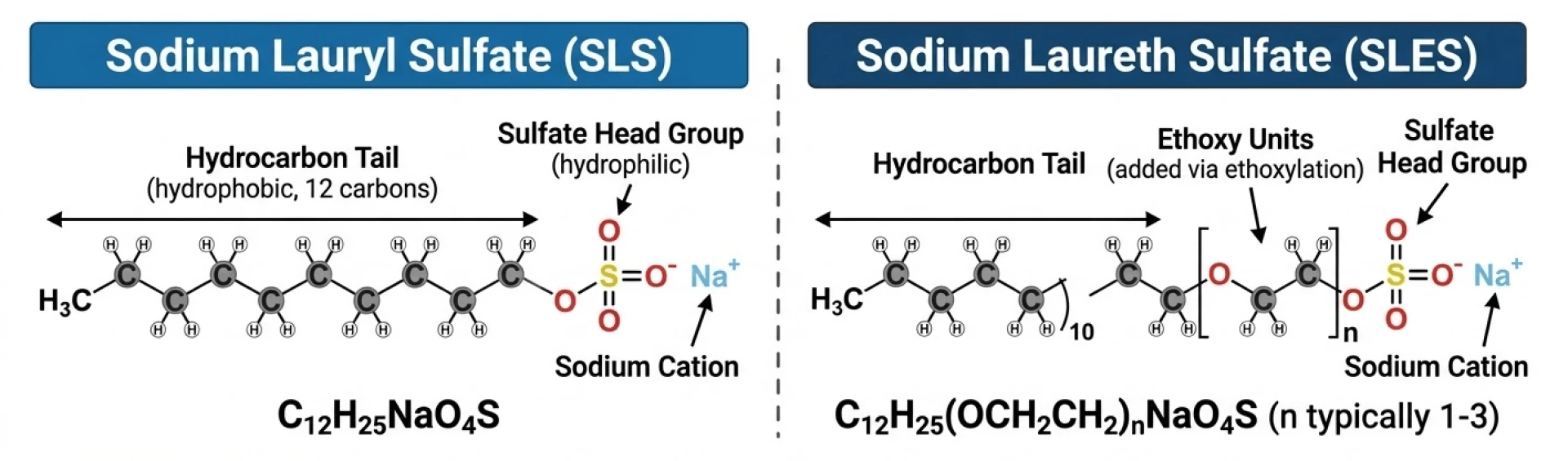
While their names sound similar, their chemical structures and production processes lead to very different characteristics:
- SLS (Sodium Lauryl Sulfate): Produced via sulfation, it is a powerhouse for grease removal and fast-acting "flash foam." It is highly effective but can be harsh on sensitive skin.
- SLES (Sodium Laureth Sulfate): This is the ethoxylated version of SLS. The extra processing step makes it significantly milder, making it the go-to choice for personal care products.
Industry Applications: Where to Use What?
Understanding the end-use is key to selecting your raw material.
- Industrial & Heavy-Duty Cleaning: If you are formulating car wash chemicals or engine degreasers, SLS is your best bet due to its aggressive cleaning profile and cost-effectiveness.
- Personal Care & Cosmetics: For shampoos, body washes, and facial cleansers, SLES is preferred. It provides a rich, creamy lather while maintaining a gentle touch on the skin barrier.
- The "Safety" Factor: SLES is generally considered safer for prolonged skin contact. However, it’s vital to monitor 1,4-Dioxane levels—a byproduct of ethoxylation that is strictly regulated in the EU and North America.
3 Procurement Tips for Global Buyers
If you are sourcing these chemicals internationally, keep these strategies in mind:
- Analyze Active Matter: Don't just look at the unit price. Calculate the cost based on active content (e.g., SLES 70% vs. SLS 95%).
- Check Compliance: Always request a Certificate of Analysis (CoA) to ensure 1,4-Dioxane levels meet your target market's regulations.
- Evaluate TCO (Total Cost of Ownership): Cheaper raw materials might require additional thickeners or stabilizers, raising the overall formula cost.
Conclusion
There is no "better" surfactant—only the "right" one for your specific application. Whether you prioritize the raw power of SLS or the consumer-friendly mildness of SLES, partnering with a reliable supplier like Hoo Chemtec ensures you get high-purity materials that meet global standards.
Get High-Quality SLS & SLES Samples
Email: [email protected]