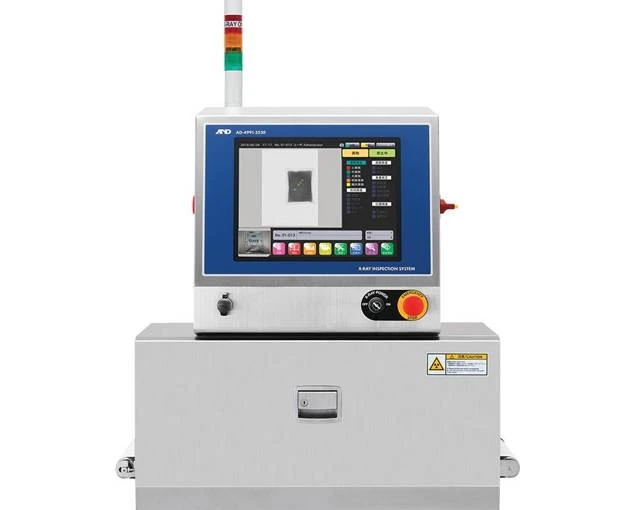
X-ray inspection systems have become a cornerstone of modern food safety, but their use is often surrounded by a cloud of misconceptions. The word "radiation" can be alarming, leading many to question the safety and efficacy of this technology. This article aims to pull back the curtain on food X-ray inspection, separating fact from fiction and highlighting why it is a vital tool for consumer protection.
Myth 1: X-rayed food becomes radioactive and is unsafe to eat.
This is the most pervasive and unfounded myth. The fear stems from a misunderstanding of how X-ray technology works.
The Reality: X-ray inspection is a form of electromagnetic radiation, similar to light and radio waves, but with a higher energy level. The key difference between a food X-ray and a radioactive material is that the X-ray is generated by a high-voltage tube and is shut off when not in use. It does not contain or emit a radioactive substance.
When food passes through an X-ray machine, the X-rays pass through the product. The energy is not retained or absorbed in a way that would make the food radioactive. Think of it like a medical X-ray of a person's chest—the patient does not become radioactive afterward. The levels of radiation used in food inspection are incredibly low, often millions of times less than the levels required for food irradiation (a separate process used to kill bacteria). In fact, the radiation dose a food item receives from an inspection system is negligible compared to the natural background radiation we are all exposed to every day from cosmic rays, soil, and even certain foods like bananas.
The U.S. Food and Drug Administration (FDA) and other global regulatory bodies have concluded that there are no known adverse effects from eating food that has been X-rayed by these "cabinet-type" systems.
Myth 2: X-ray inspection harms the nutritional value, flavor, and texture of food.
Concerns exist that the X-ray process might degrade the quality of food, making it less appealing or nutritious.
The Reality: Due to the extremely low dose and short exposure time (often less than a second), X-ray inspection has no measurable effect on a food product's flavor, texture, or nutritional value. The energy is simply not high enough to break down molecules or alter the food's chemical composition. Numerous studies and real-world applications have demonstrated that X-rayed food is indistinguishable in every way from food that has not been scanned.
This includes organic food. The process is so gentle that it does not compromise a product's organic status. The primary purpose is to find foreign objects, not to alter the food itself.
Myth 3: X-ray machines can only detect metal.
Many people confuse modern X-ray systems with traditional metal detectors.
The Reality: While metal detectors are a useful tool, they are limited to finding only metal contaminants (ferrous, non-ferrous, and stainless steel). X-ray inspection, on the other hand, operates on the principle of density. It detects objects that are significantly denser than the surrounding food product. This means X-ray machines can reliably find a much broader range of contaminants, including:
- Metal: Even small fragments that a metal detector might miss.
- Glass: A common and dangerous contaminant.
- Stones and ceramic: Found in products like nuts, grains, or vegetables.
- Calcified bone: A frequent issue in meat, poultry, and fish products.
- High-density plastics and rubber: Fragments from machinery.
Furthermore, X-ray systems have capabilities far beyond just contaminant detection. They can also perform quality checks such as:
- Counting products in a package.
- Verifying proper fill levels.
- Detecting missing or broken items.
- Inspecting the integrity of packaging seals.
This makes X-ray technology a comprehensive quality control solution, not just a safety measure.
Myth 4: X-ray systems are dangerous for production line workers.
Concerns about worker safety are natural, given the presence of X-ray technology.
The Reality: Industrial X-ray systems are designed as "closed cabinet" systems. The X-ray source and detector are fully enclosed within a lead-lined cabinet, which prevents radiation from escaping. The machine's design includes safety interlocks that immediately shut off the X-ray beam if a door is opened or if a product jams.
The regulations for radiation leakage from these machines are extremely strict and are monitored by government agencies. An operator working next to a well-maintained X-ray machine receives a radiation dose that is a fraction of the natural background radiation they would absorb just by walking outside. Safety training is an integral part of the installation process to ensure all personnel understand and follow proper procedures, making these systems safe for the workforce.
Myth 5: X-ray inspection is a replacement for good manufacturing practices.
Some might think that installing an X-ray machine means a manufacturer can be less vigilant about other safety protocols.
The Reality: X-ray inspection is a final and critical control point in the food production process. It is a powerful safety net, not a license to be careless. It works in tandem with other quality control measures, such as hazard analysis and good hygiene practices. The X-ray system's job is to catch what may have been missed—a stray bone fragment, a piece of glass from a broken jar, or a tiny metal shaving from a machine part. By identifying and removing these contaminants, it protects consumers and prevents costly product recalls and brand damage.
Conclusion
In conclusion, X-ray inspection technology is a sophisticated, safe, and highly effective tool that has revolutionized food safety. It is a testament to how science and engineering can be applied to protect public health on a massive scale. By understanding the facts and dispelling the myths, we can appreciate the vital role these systems play in ensuring the food on our tables is as safe as possible.