DDC Full Form Explained: How Direct Digital Control Powers Modern Building Automation
Modern buildings depend on reliable control systems to maintain indoor comfort, manage energy consumption, and keep essential equipment operating efficiently. Heating, ventilation, and air conditioning (HVAC) systems are among the most important services that require continuous monitoring and adjustment. One technology that makes this possible is Direct Digital Control, commonly known as DDC.
Understanding the DDC full form is a useful starting point for anyone exploring building automation. DDC is a digital control approach in which programmable controllers receive information from sensors, process that information using predefined logic, and regulate connected equipment. Instead of relying entirely on manual adjustments, building systems can respond automatically to changing operating conditions.
What Is the DDC Full Form?
The DDC full form is Direct Digital Control. It describes a method of controlling building equipment through digital controllers that process input signals and generate output commands.
A DDC controller can monitor parameters such as:
- Room and supply-air temperature
- Relative humidity
- Air pressure and differential pressure
- Water temperature
- Equipment operating status
- Airflow and other process conditions
The controller compares these measurements with programmed setpoints and control sequences. It then adjusts connected devices to maintain the required operating conditions.
For example, when the temperature in a conditioned space rises above its setpoint, the controller can respond by adjusting a cooling valve, fan speed, or damper position, depending on the system design.
How Does a Direct Digital Control System Work?
A typical DDC system follows a continuous process involving three main stages.
1. Input: Collecting Field Information
Sensors and monitoring devices measure conditions within the building. Their signals are connected to the controller's input points. These may include temperature sensors, humidity sensors, pressure transmitters, and equipment status contacts.
2. Processing: Applying Control Logic
The DDC controller reads the incoming signals and evaluates them against programmed setpoints, schedules, interlocks, and control sequences. Depending on the application, it may use on/off control, proportional control, or proportional-integral-derivative (PID) control.
3. Output: Controlling Equipment
After processing the information, the controller sends commands through its output points. These commands can operate control valves, dampers, relays, variable frequency drives, and other connected equipment.
This input-processing-output cycle repeats continuously, allowing the system to respond to changing building conditions.
What Is a DDC Panel and What Does It Contain?
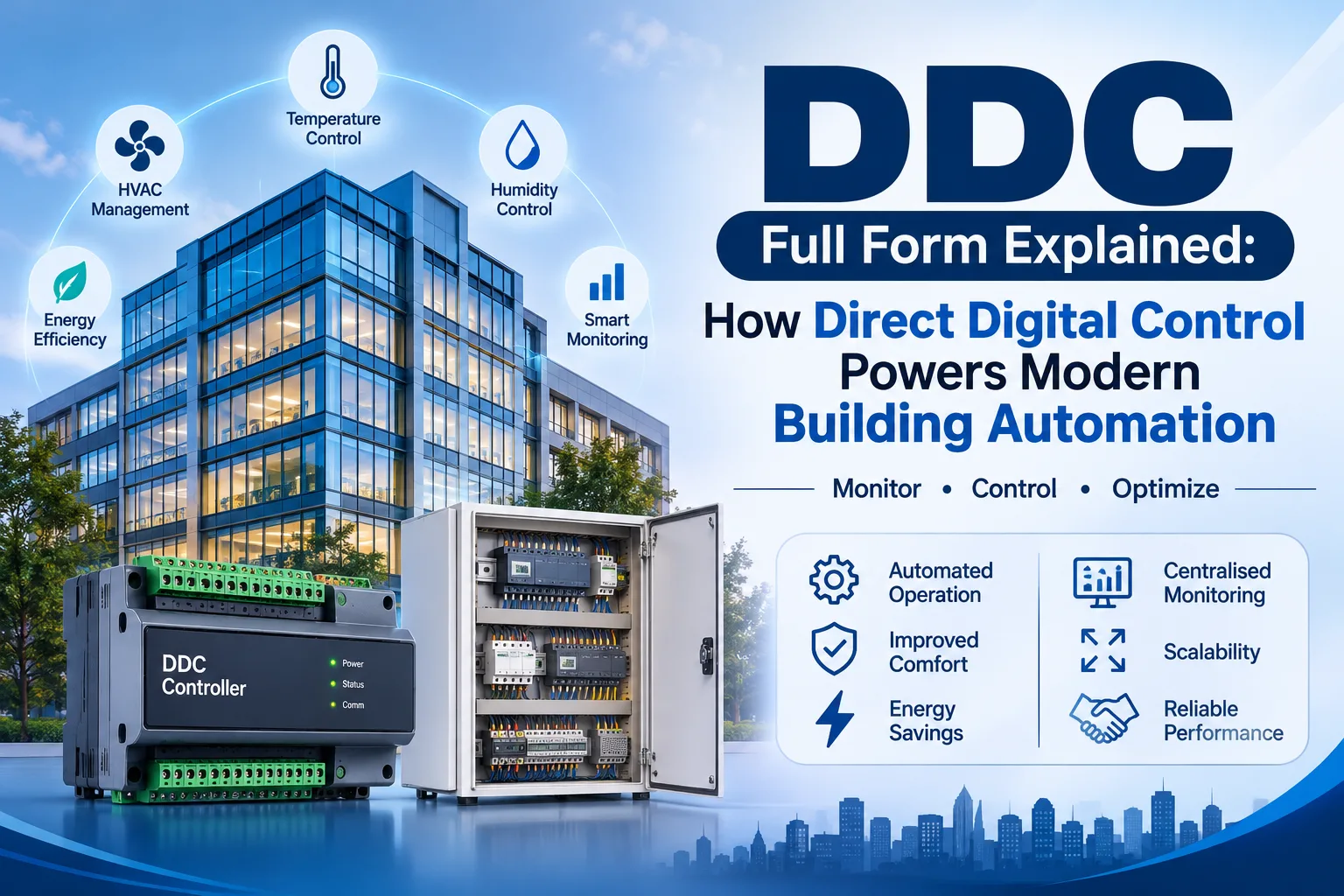
The term DDC panel full form is commonly used to describe a Direct Digital Control panel. It is an enclosure that houses the controller and supporting electrical and communication components used for building equipment control.
A typical DDC panel may contain:
- DDC controllers: Execute programmed control sequences.
- Input and output modules: Connect field sensors and controlled devices.
- Power supplies: Provide the required operating power to control components.
- Terminal blocks: Provide organised connections for field wiring.
- Protection devices: Help protect electrical circuits.
- Communication interfaces: Support data exchange with other controllers or building management systems.
The actual panel arrangement depends on the number of control points, equipment requirements, installation standards, and project specifications.
Where Are DDC Controllers Used?
DDC controllers are widely used in HVAC and building automation applications. Their role is to coordinate equipment operation according to the requirements of each system.
Common applications include:
Air Handling Units (AHUs): DDC controllers regulate supply-air temperature, fan operation, damper position, and other operating parameters.
Chiller Plants: Controllers can monitor temperatures, equipment status, and operating sequences to coordinate plant operation.
Fan Coil Units (FCUs): They help maintain room comfort by regulating fan speeds and heating or cooling valves.
Variable Air Volume (VAV) Systems: DDC control helps adjust airflow according to zone demand.
Pumping and Ventilation Systems: Controllers can manage pump operation, ventilation schedules, pressure conditions, and equipment interlocks.
These applications demonstrate how digital control can support consistent operation across different building services.
How Do DDC Controllers Communicate With a BMS?
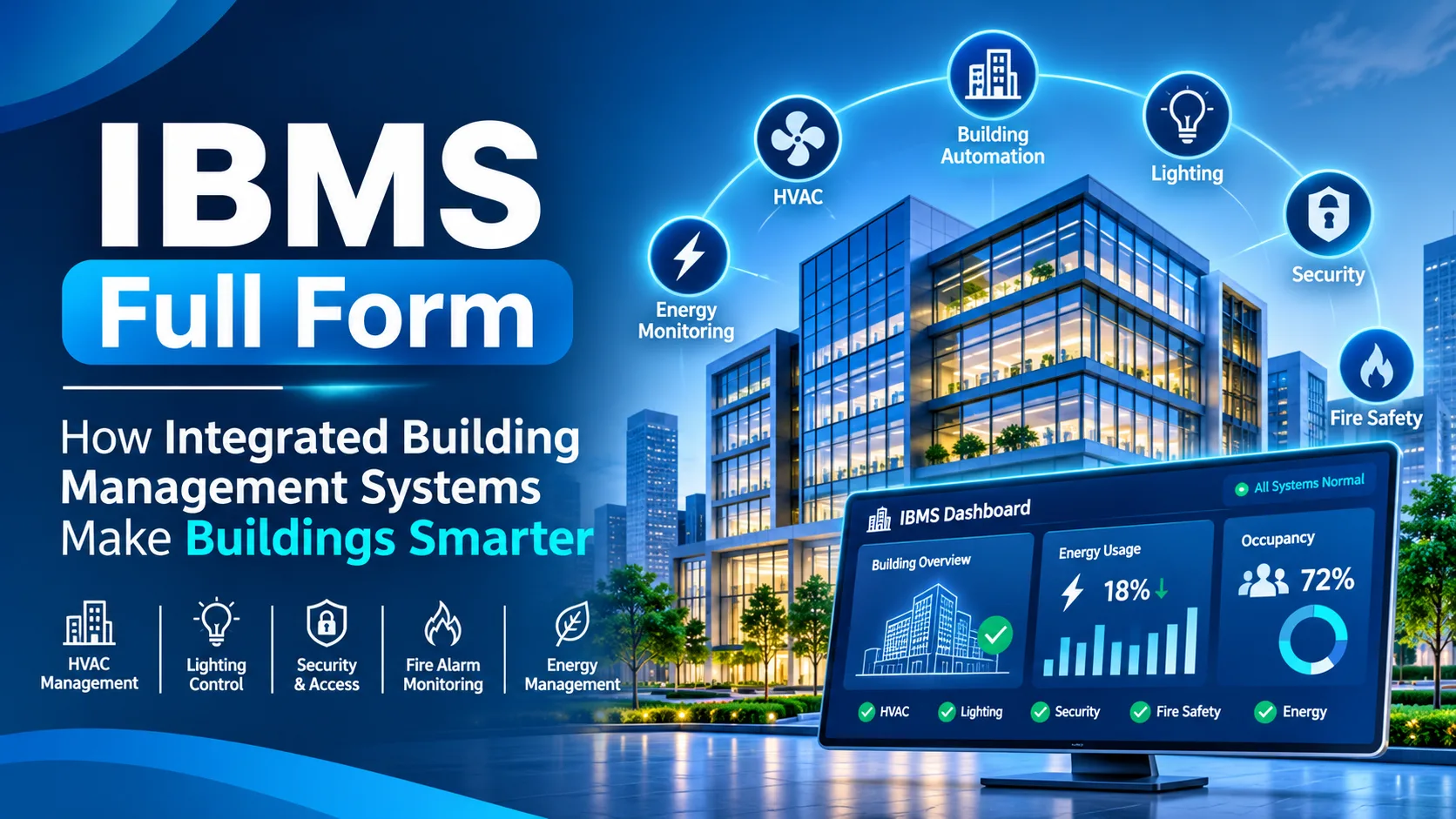
A DDC controller does not necessarily operate in isolation. In many building automation projects, controllers exchange information with a Building Management System (BMS) or a wider Integrated Building Management System (IBMS).
Communication protocols such as BACnet and Modbus are commonly used for this purpose. The supported protocol, network configuration, and device compatibility depend on the selected controller and system architecture.
Through network communication, operators can access information such as equipment status, sensor readings, alarms, operating schedules, and selected control parameters from a central monitoring interface.
This makes it easier to understand building performance and identify operating issues.
How to Select the Best DDC Controllers
Choosing the best DDC controllers requires more than comparing product specifications. The controller must suit the actual equipment, control sequence, communication requirements, and future expansion plans.
Consider these important factors:
1. Input and Output Capacity: Check whether the controller provides enough analogue and digital inputs and outputs for all required field devices.
2. Communication Support: Verify compatibility with the protocols required by the project, including BACnet or Modbus where applicable.
3. Programming Flexibility: Ensure the controller supports the required control logic, scheduling, alarms, and sequence configuration.
4. Integration Capability: Consider how easily it can communicate with existing BMS platforms and other automation devices.
5. Reliability and Serviceability: Review product documentation, technical support, maintenance requirements, and availability of replacement components.
6. Future Expansion: Select a solution that can accommodate planned changes without requiring unnecessary redesign.
Evaluating these factors helps engineers and facility managers choose controllers that meet both present and long-term building requirements.
Key Benefits of Direct Digital Control
A properly designed DDC system can provide several operational advantages:
- Automated operation: Reduces the need for repeated manual adjustments.
- Improved comfort: Helps maintain temperature and environmental conditions around configured setpoints.
- Better monitoring: Makes equipment information and operating conditions easier to access.
- Operational efficiency: Supports coordinated equipment operation based on actual demand.
- Centralised supervision: Allows integration with BMS platforms for monitoring and control.
- Scalability: Supports different building sizes and automation requirements when designed appropriately.
The results depend on correct engineering, commissioning, programming, equipment selection, and regular maintenance.
Conclusion
Direct Digital Control is a fundamental part of modern building automation. From understanding the DDC full form to selecting suitable controllers and designing a DDC panel, each element contributes to effective monitoring and control of building services.
By combining field sensors, programmable controllers, communication networks, and automated control sequences, DDC systems help buildings respond to changing operating conditions. For engineers, system integrators, and facility managers, understanding these fundamentals is an important step towards designing reliable and efficient building automation solutions.
For a more detailed explanation of Direct Digital Control, its components, and applications, explore EnSmart's technical guide:
http://ensmart.ai/blog/ddc-controller-full-form-direct-digital-control-explained