
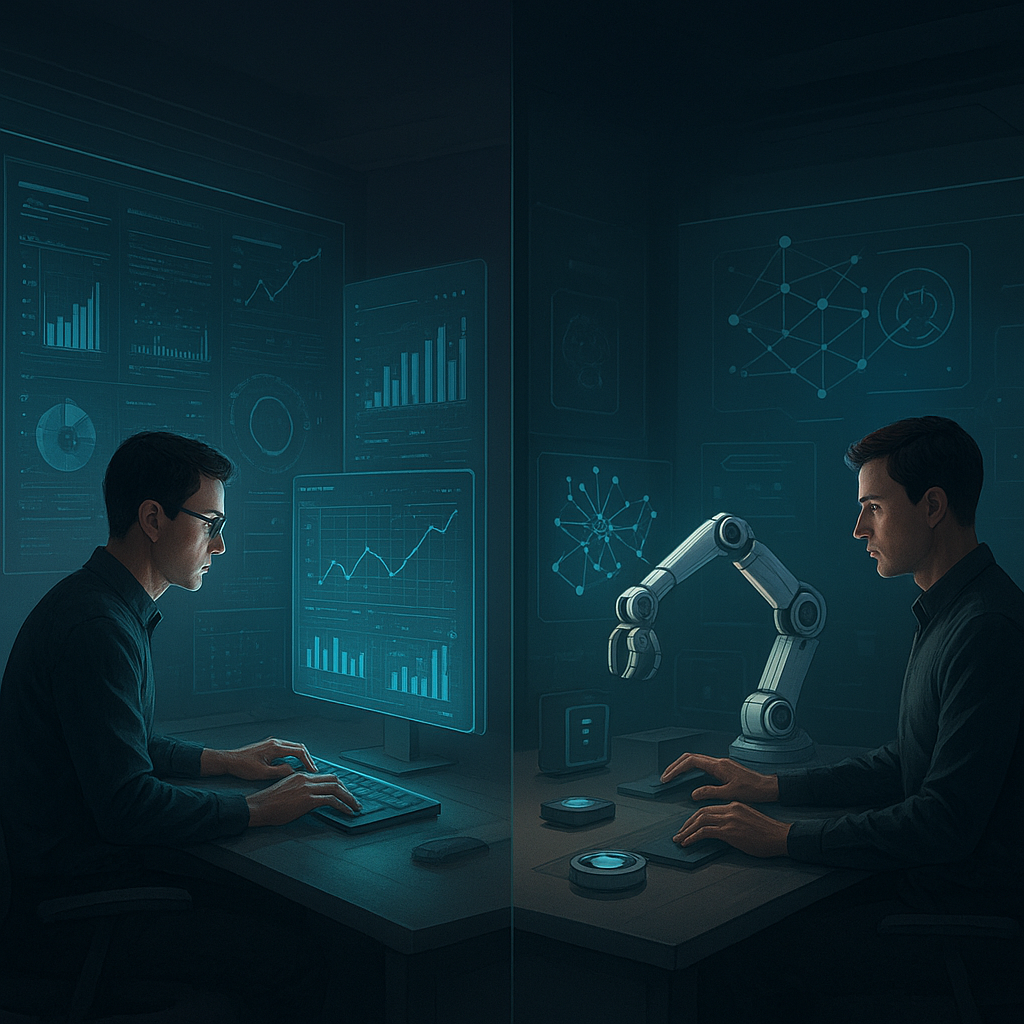
Opening the Debate: Why Distinguishing Data Science from AI Matters More Than Ever
In 2026, the digital economy thrives on technologies that transform raw data into actionable intelligence and automated decision-making. Yet, confusion persists around the terms data science and artificial intelligence (AI). Though often used interchangeably, these fields have diverged into distinct disciplines with unique methodologies, objectives, and career trajectories.
Consider this: A 2025 survey by the International Data Corporation (IDC) revealed that 62% of tech professionals mistakenly conflated AI with data science. This misunderstanding impacts hiring, project planning, and education. As enterprises pour more than $500 billion annually into AI and data-driven initiatives, clarifying these domains is crucial for both organizations and professionals aiming to carve meaningful careers.
"Understanding the nuances between data science and AI is no longer optional; it’s essential for strategic innovation and workforce development," says Dr. Elaine Chen, Chief Data Scientist at NexGen Analytics.
At the intersection of statistics, machine learning, and computer science, both fields overlap but serve different business and technological goals. This article will unpack their core differences, explore evolving career paths, and offer a guide to help aspirants and companies choose the right focus.
Tracing the Origins: How Data Science and AI Evolved into Distinct Domains
The roots of data science and AI stretch back decades, yet their trajectories have largely diverged since the early 2010s. Data science emerged from statistics and database management, driven by the explosion of digital data. Early pioneers like DJ Patil and Hilary Mason defined data science as the discipline of extracting insights from data through analysis, visualization, and predictive modeling.
Artificial intelligence, meanwhile, began as a computer science pursuit in the 1950s focused on replicating human cognitive functions. Classical AI research aimed at symbolic reasoning and expert systems. The revival of AI in the 2010s came with deep learning and neural networks, enabling machines to learn from vast datasets with minimal human intervention.
By 2020, data science had matured into a multidisciplinary field encompassing statistics, machine learning, data engineering, and domain expertise. AI, particularly machine learning and natural language processing, became a subfield emphasizing automation and autonomy.
Notably, the rise of big data, cloud computing, and advanced GPUs accelerated both fields. However, while data science focuses on understanding and interpreting complex datasets, AI prioritizes creating systems capable of performing tasks that typically require human intelligence.
"Data science answers the 'what' and 'why' in data, whereas AI strives to automate the 'how'," explains Professor Rajiv Malhotra, AI researcher at MIT.
Dissecting the Core Differences: Techniques, Goals, and Tools
To unpack the distinctions, it helps to analyze data science and AI across several dimensions:
- Primary Objective
- Data Science: Extract insights, identify patterns, and inform decision-making.
- Artificial Intelligence: Develop autonomous systems capable of perception, reasoning, and action.
- Methodologies
- Data Science: Statistical analysis, exploratory data analysis, hypothesis testing, predictive modeling.
- Artificial Intelligence: Machine learning algorithms, deep learning, reinforcement learning, knowledge representation.
- Data Handling
- Data Science: Emphasizes data cleaning, feature engineering, and interpretation.
- Artificial Intelligence: Focuses on training models that learn from data and generalize.
- Tools and Technologies
- Data Science: Python, R, SQL, Tableau, Jupyter notebooks.
- Artificial Intelligence: TensorFlow, PyTorch, ONNX, specialized AI chips.
- End Use Cases
- Data Science: Business intelligence dashboards, customer segmentation, churn prediction.
- Artificial Intelligence: Autonomous vehicles, conversational agents, real-time fraud detection.
While there is overlap—machine learning is integral to both—data scientists focus more on interpreting models and communicating findings, whereas AI engineers are tasked with building systems that perform tasks without continuous human input.
According to a 2026 report from the AI Workforce Institute, 74% of AI roles require advanced software engineering skills alongside expertise in neural networks, contrasting with data science roles that emphasize statistical rigor and domain knowledge.
Current Trends and Developments in 2026: Where Are These Fields Headed?
The landscape in 2026 reveals dynamic shifts shaping both disciplines:
- Integration of AI and Data Science: Businesses increasingly deploy hybrid teams where data scientists and AI engineers collaborate closely. This synergy accelerates model development and deployment.
- Rise of Explainable AI (XAI): Transparency in AI decisions has become a regulatory and ethical imperative, blending data science’s interpretability focus with AI’s automation.
- Automation of Data Science Tasks: AutoML tools and AI-driven data wrangling reduce manual effort, allowing data scientists to concentrate on complex analysis and strategy.
- Specialized Roles and Micro-Skills: New roles such as AI Ethics Officer and Data Storyteller have emerged, reflecting the fields’ maturation and diversification.
- Cloud-Native AI Platforms: Platforms like Google Vertex AI and AWS SageMaker have evolved, offering end-to-end solutions that blur the lines between data science and AI workflows.
These trends underscore the increasing interdependence of data science and AI, yet their core distinctions remain. TheOmniBuzz’s analysis of AI fundamentals highlights how AI continues to push boundaries in autonomy, while data science remains foundational for informed strategy.
Choosing Your Path: Career Insights and Industry Perspectives
For professionals deciding between data science and AI careers, understanding role expectations and market demand is vital. The 2026 Tech Careers Outlook by Gartner provides revealing insights:
- Demand and Salaries:
- Data Scientists: Median salary $140,000; demand steady with focus on analytics and business impact.
- AI Engineers: Median salary $160,000; demand surging in sectors like healthcare, finance, and autonomous systems.
- Skill Requirements:
- Data Science: Strong foundation in statistics, data visualization, SQL, and storytelling.
- AI: Proficiency in advanced programming, neural networks, reinforcement learning, and distributed computing.
- Career Progression:
- Data Scientists often transition to roles like Chief Data Officer or Analytics Manager.
- AI Engineers may advance to AI Architects, Research Scientists, or lead innovation labs.
Industry leaders emphasize that complementary skills enhance employability. For example, AI experts with data science acumen excel in interpreting model outputs, while data scientists versed in AI tools can build more sophisticated predictive systems.
"The future belongs to professionals who blend analytical rigor with AI fluency," notes Maria Gomez, VP of Talent Acquisition at CognitionX.
For those starting out, TheOmniBuzz’s guide on choosing between data science and AI careers offers practical advice on education paths, certifications, and portfolio building.
Looking Ahead: What to Watch in the Next Five Years
As AI and data science continue evolving, several developments merit close attention:
- Convergence of AI and Edge Computing: With the proliferation of IoT devices, AI models running on edge will require data science techniques for real-time analytics and model optimization.
- Regulatory Landscape: Stricter data privacy laws and AI governance frameworks will redefine how data scientists and AI engineers develop and deploy solutions.
- Human-Centered AI: Emphasis on ethical AI design will amplify roles focused on bias mitigation, fairness, and transparency.
- Democratization of AI and Data Science: No-code and low-code platforms will empower domain experts to leverage these technologies without deep technical expertise.
- Interdisciplinary Collaboration: Success in complex projects will depend more on cross-functional teams integrating AI, data science, UX design, and business strategy.
Professionals and organizations must adapt proactively to these shifts. Investing in continuous learning and fostering a culture of experimentation will be key competitive advantages.
"In five years, the line between data science and AI will blur further, but mastery of foundational principles will remain a differentiator," predicts Dr. Chen.
Case Studies: Real-World Applications Highlighting Distinct Roles
Examining practical examples clarifies how data science and AI complement each other in the field:
- Healthcare Diagnostics: At MedTech Solutions, data scientists analyze patient data to identify risk factors for chronic diseases. AI engineers develop deep learning models that automate image-based diagnostics, enabling faster detection of conditions like cancer.
- Financial Services: A leading bank employs data scientists to build credit scoring models using customer transaction data. Simultaneously, AI teams deploy reinforcement learning algorithms to optimize real-time fraud detection systems.
- Retail and E-Commerce: Data scientists segment customers for targeted marketing campaigns based on purchasing behavior. AI engineers create chatbots powered by natural language processing to enhance customer support.
These cases illustrate the distinct contributions of each discipline within integrated workflows. TheOmniBuzz’s recent feature on AI ethics and data governance explores similar themes in depth.
Conclusion: Making an Informed Choice Between Data Science and AI
Choosing between data science and artificial intelligence is less about selecting entirely separate worlds and more about aligning with specific interests and career goals. Data science appeals to those passionate about uncovering insights through statistical rigor and storytelling. AI attracts individuals eager to engineer intelligent systems that act autonomously and adaptively.
Both fields require strong analytical skills, programming proficiency, and a commitment to lifelong learning. As organizations increasingly rely on data and AI to drive innovation, professionals who bridge these domains will be in high demand.
For those navigating this decision, exploring foundational courses, engaging with community projects, and consulting resources like TheOmniBuzz can provide clarity and direction.
Ultimately, understanding the nuanced differences and evolving intersections between data science and AI empowers individuals to contribute meaningfully to the digital transformation shaping the future.