
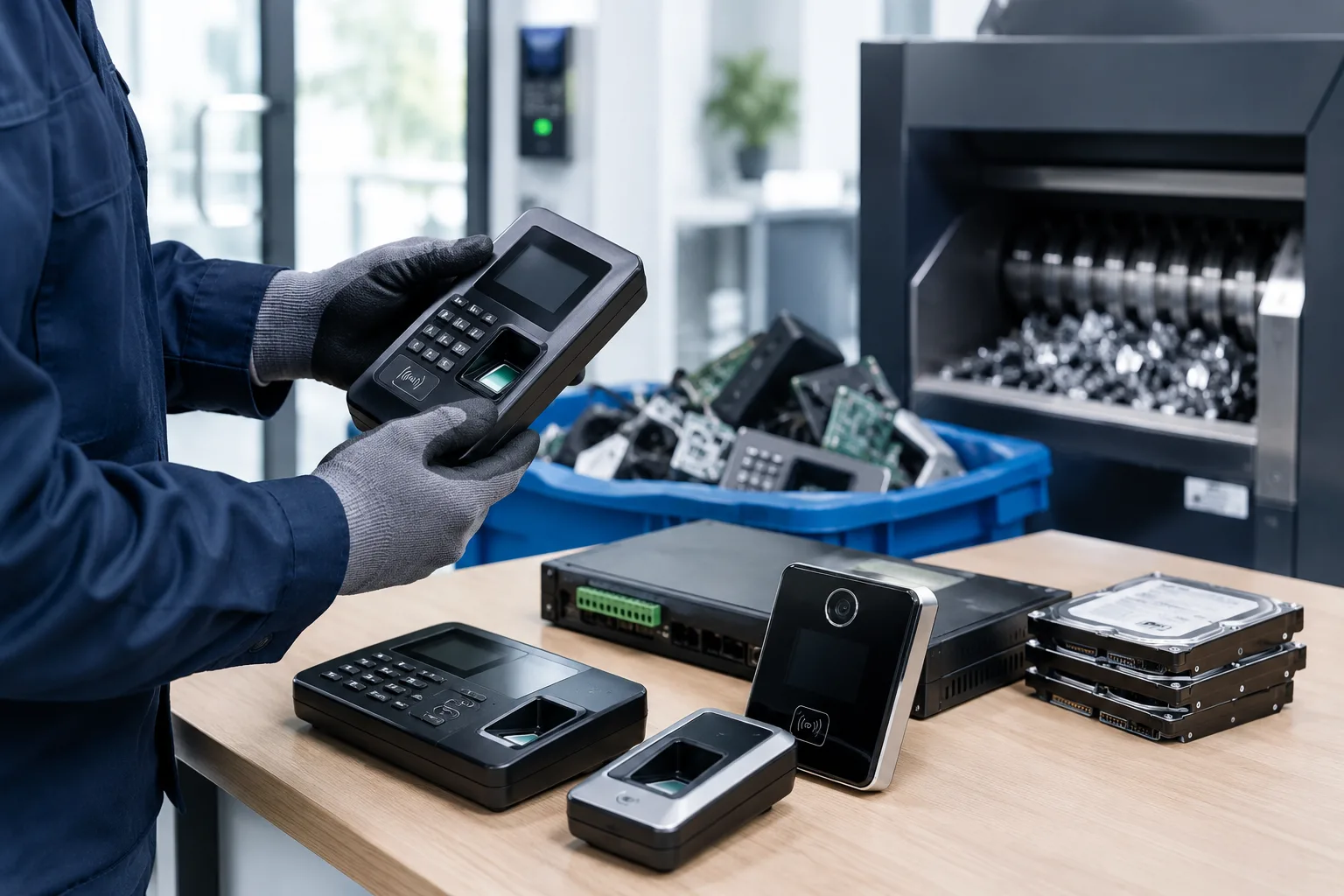
Modern businesses use biometric access control systems to protect offices, warehouses, data centers, healthcare facilities, and other restricted areas. Fingerprint scanners, facial recognition terminals, biometric readers, controllers, and connected workstations can all be part of these systems. When this equipment reaches the end of its useful life, simply removing it from the wall and sending it for electronics recycling may not be enough.
Retired biometric equipment can contain sensitive information, including biometric templates, user records, access histories, system configurations, and activity logs. NIST documentation on biometric access control systems identifies components such as biometric readers, controllers, servers, databases, user data, biometric templates, and access logs. This makes secure retirement an important part of an organization's technology disposal process.
Why Retired Biometric Systems Need Special Attention
Biometric information is different from an ordinary password because it is connected to an individual's physical characteristics. Depending on the system, stored information may include fingerprint or facial templates and records associated with authentication activity.
NIST's current guidance for identity systems emphasizes that organizations using biometrics should have clear practices for how biometric information is stored, protected, retained, and deleted.
This is why businesses should consider a professional Data Destruction Service when retiring biometric access control equipment. The objective is not simply to dispose of the physical device. The process should address any storage media and data that could remain inside the equipment.
What Can Be Stored in Biometric Access Equipment?
A biometric access control installation may include more than the scanner visible beside a door. Depending on its design, the system can contain:
- Fingerprint or facial biometric templates
- Employee or authorized-user records
- Access credentials and identifiers
- Entry and exit histories
- Door access logs
- System administrator activity
- Configuration information
- Network settings
- Internal storage or removable media
- Connected servers or databases
Some systems centralize this information on a server, while others may retain information locally on controllers or terminals. Therefore, a proper retirement process should begin by identifying where data is stored rather than assuming that the reader itself contains no sensitive information.
How a Data Destruction Service Can Support Secure Retirement
A professional Data Destruction Service can help businesses establish a controlled process for retiring data-bearing biometric equipment.
The first step is typically equipment identification and assessment. Each device can be evaluated to determine its type, storage capability, and relationship to the broader access control system.
Next comes data sanitization or destruction based on the sensitivity of the information, the technology involved, and the organization's approved procedures. NIST SP 800-88 Rev. 2, published in September 2025, defines media sanitization as a process intended to make access to target data infeasible for a given level of effort and recommends establishing an organizational sanitization program.
For equipment where secure sanitization cannot be reliably performed, physical destruction may be appropriate. NIST recognizes destruction as one possible sanitization outcome when other methods are unsuitable or cannot be effectively verified.
Don't Forget Connected Equipment
One common mistake during a biometric system upgrade is focusing only on the biometric reader. A complete retirement project may also involve controllers, access-control computers, servers, storage drives, backup devices, and other connected electronics.
For example, a company replacing an older fingerprint-based door-entry system might remove dozens of readers throughout its facility. However, the associated controller or server could contain years of access records. If those devices are simply placed in an electronics recycling container without addressing their stored information, the organization could overlook an important data-security risk.
A Data Destruction Service helps businesses incorporate these devices into the overall IT retirement and data-security workflow.
Data Destruction Before Electronics Recycling
Secure data handling should happen before retired biometric equipment enters the recycling stream whenever the equipment contains data-bearing components.
After appropriate data destruction or sanitization, remaining electronics can be evaluated for responsible recycling, recovery, reuse, or further processing. This approach helps separate two important objectives: protecting sensitive information and responsibly managing obsolete electronics.
For organizations handling large technology refresh projects, integrating data destruction with electronics recycling can also simplify asset tracking and provide a more structured retirement process.
Documentation and Accountability Matter
Businesses should also consider documentation when retiring biometric systems. A strong process can include equipment identification, asset tracking, sanitization or destruction records, and appropriate confirmation that the required process was completed.
This documentation can help internal IT, security, compliance, and facilities teams demonstrate that retired equipment was handled according to organizational procedures.
Choosing the Right Data Destruction Service
When selecting a Data Destruction Service for retired biometric access control systems, businesses should look beyond basic equipment disposal. Consider whether the provider can:
- Handle different types of electronic data-bearing equipment
- Follow documented data sanitization procedures
- Support physical destruction when required
- Maintain asset tracking and chain-of-custody practices
- Provide appropriate destruction or sanitization documentation
- Integrate secure data destruction with responsible electronics recycling
- Understand the sensitivity of biometric and access-control information
The right approach depends on the equipment, storage technology, sensitivity of the information, and the organization's internal security requirements.
Conclusion
Retiring biometric access control equipment requires more than disconnecting old scanners and replacing them with newer technology. Fingerprint readers, facial recognition terminals, controllers, servers, and related devices may contain or connect to sensitive biometric and access information.
Using a professional Data Destruction Service gives businesses a structured way to identify data-bearing equipment, apply appropriate sanitization or destruction methods, document the process, and then move eligible electronics into responsible recycling channels.
For organizations upgrading security systems, treating biometric equipment retirement as both a data-security and e-waste management process can help reduce unnecessary exposure while supporting a more responsible technology lifecycle.