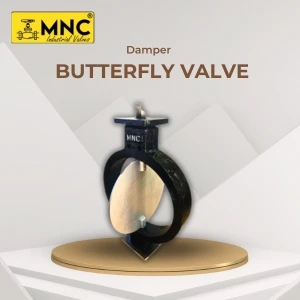
Manufacturers of damper butterfly valves in Ahmedabad are renowned for providing precisely developed flow control systems that combine strong construction, cutting-edge automation compatibility, and economical production capabilities for demanding industrial situations.
What is a Damper Butterfly Valve
In industrial systems, a damper butterfly valve is a quarter-turn flow control device that is used to isolate or regulate gas flow, airflow, or streams that are heavy with particulates. It uses a revolving disk inside a circular body that is fixed on a shaft. The disc pivots to change the flow rate or stop the passage entirely when the actuator rotates the shaft.
The applications for which these industrial damper valves are designed call for precise airflow modulation, little pressure drop, and dependable sealing in a range of operating circumstances. Fast operation and reliable performance in continuous-duty systems are guaranteed by their straightforward mechanical design.
Key Features
Durability
Manufactured from high-grade metals such as carbon steel, stainless steel, or alloy materials, these valves withstand vibration, thermal cycling, and mechanical stress common in heavy industry.
Corrosion Resistance
Protective coatings, specialized alloys, and precision finishing enable long service life even in corrosive or humid environments.
Flow Control Accuracy
Disc geometry and tight tolerances ensure stable throttling performance, making them suitable for precise airflow control valves in process plants.
Compact Design
Compared with other industrial valve types, butterfly designs occupy minimal installation space while delivering high flow capacity.
Low Maintenance
Fewer moving parts reduce wear points, minimizing downtime and maintenance costs across long operational cycles.
Industrial Applications
In a variety of industries where regulated gas or air flow is vital, damper butterfly valves are indispensable parts. They are used in air duct and flue gas systems in power plants. They are essential for managing dust and controlling combustion air in steel and cement facilities. They are used in chemical processing plants to control the flow of gases and vapors.
These valves help manage emissions and ventilation in oil and gas operations. They are integrated into HVAC systems for air distribution and duct balance. They are essential to the mining industry for dust control and ventilation shafts. They are used for aeration systems in wastewater treatment facilities. They are used in drying systems in paper production facilities and in food processing factories where sanitary airflow control is necessary.
Benefits of Choosing Manufacturers in Ahmedabad
Ahmedabad has grown into a significant center for industrial manufacture, renowned for its sophisticated fabrication facilities and engineering know-how. Strict manufacturing standards, state-of-the-art machining facilities, and trained technical workers are advantageous to manufacturers in this area.
Customized airflow control valves that meet plant requirements, including non-standard sizes, materials, and actuation systems, are the specialty of local manufacturers. Competitive pricing and quicker production schedules are guaranteed by effective supply chains. Before shipping, manufacturers can confirm structural integrity, torque values, and sealing performance using in-house testing facilities.
For buyers looking for a reputable butterfly valve manufacturer in India, the region is a preferred sourcing location because to its technological prowess, flexibility in modification, and consistent quality.
How to Select the Right Damper Butterfly Valve
A number of engineering characteristics must be considered in order to select the appropriate valve. To avoid leaks or structural stress, the pressure rating must to be within the bounds of the system design. The choice of material and seal is influenced by operating temperature. Coating and alloy selection are influenced by media properties as moisture, corrosiveness, and dust content.
Actuator type and torque specifications are also influenced by automation requirements. To guarantee compatibility, installation restrictions such as flange standards, duct orientation, and available clearance must be evaluated. When making final procurement selections, engineers should also take lifecycle cost and maintenance accessibility into account.
Why Choose MNC Valves
The production of high-precision damper butterfly valves that satisfy exacting industrial performance requirements is a specialty of MNC Valves. Their engineering strategy places a strong emphasis on consistent sealing efficiency, optimal disc design, and dimensional correctness.
Before shipment, quality assurance procedures include functional testing, machining inspections, and material verification. For major industrial projects, timely delivery is supported by dependable production scheduling. In order to ensure long-term operating reliability, technical support teams help clients with selection, installation advice, and after-sales servicing.
Conclusion
In heavy industries, damper butterfly valves are essential parts for effective gas and airflow control. Ahmedabad manufacturers provide reliable solutions by combining technological know-how, cutting-edge production capacity, and affordable prices. It is highly advised to get professional advice from an experienced manufacturer for flow control equipment that is reliable, accurate, and long-lasting.
FAQ Section
1. What is the primary function of a damper butterfly valve?
It regulates or isolates airflow or gas flow within ducts and process systems using a rotating disc mechanism.
2. Are these valves suitable for high-temperature applications?
Yes. With appropriate materials and linings, they can operate in extremely high-temperature industrial environments.
3. Which actuator type is best?
Selection depends on automation requirements—manual for simple systems, pneumatic or electric for automated processes.
4. How long do damper butterfly valves typically last?
With proper material selection and maintenance, they can deliver reliable service for many years in continuous industrial operation.