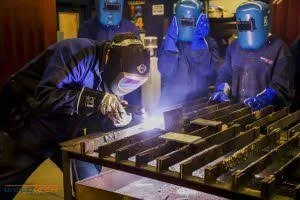
The industrial manufacturing, structural steel, and heavy construction sectors operate under demanding timelines, strict engineering specifications, and uncompromising regulatory standards. On contemporary job sites, overall safety and structural integrity depend entirely on the verified skills of certified tradespeople.
For welders and fabricators, maintaining an active qualification status is essential for continuous employment, career growth, and regulatory compliance. Regularly completing your CWB certification renewal guarantees that your technical skills remain fully aligned with updated CSASA standards and evolving industrial requirements.
Keeping your credentials current is more than an administrative duty; it reflects an ongoing commitment to craftsmanship and structural safety. Employers prioritise workers with valid credentials to minimize liability, reduce material rework, and streamline project audits.
Understanding the Renewal Cycle and Requirements
The Canadian Welding Bureau administers practical qualification testing under strict national standards, including CSA W47.1 for steel structures and CSA W47.2 for aluminium fabrication. Under these establishedframeworks, welder tickets do not remain valid indefinitely without periodic official verification Typically, a welder’s qualification requires a practical check test every two years to verify that manual dexterity, joint preparation techniques, and sound welding practices have been maintained. Holding a valid CWB certification proves to safety inspectors, general contractors, and project owners that a technician can consistently execute code-compliant, defect-free welds under demanding real-world field conditions across all authorised positions.
To keep credentials continuously active, tradespeople must balance practical work experience with scheduled evaluations before their tickets expire. Proactively planning for a CWB welder credential renewal prevents administrative lapses that could temporarily remove a technician from an active production line or construction site. If a qualification lapses due to extended workplace inactivity or a missed re-testing window, the technician may be required to complete the entire initial testing process rather than a standard check test. Maintaining thorough records in your official welder logbook and coordinating with shop managers ensures that re-examination is scheduled in advance of your expiration date.
The Practical Benefits of Keeping Credentials Current
Maintaining a certified cwb certification provides immediate practical advantages for career mobility, job security, and overall earning potential. Certified technicians can transition smoothly between commercial, heavy industrial, and public infrastructure projects without undergoing redundant preliminary testing for every new employer. Furthermore, securing multiple position endorsements such as flat, horizontal, vertical, and overhead makes a tradesperson indispensable during complex structural assembly tasks. In competitive industrial markets, fully qualified personnel are frequently selected for specialized high-value assignments, field supervisor roles, and quality control inspector positions that offer significantly higher compensation rates and expanded long-term career growth.
Overcoming Renewal Challenges on Active Worksites
Overcoming recertification challenges requires an organised approach, particularly for technicians assigned to remote job sites or working demanding shift schedules. Finding dedicated time to prepare test plates and execute flawless bend or radiographic tests can prove difficult during peak production schedules. However, proactive fabrication shops frequently establish dedicated on-site testing facilities and collaborate with certified inspectors to facilitate seamless re-testing during regular working hours. Taking advantage of these workplace training resources allows tradespeople to practise position-specific techniques, adjust machine parameters, and perform thorough visual self-inspections prior to official evaluation, maximising their chances of successfully passing on their initial attempt.
How Employers Support Continuous Qualification
Employers play a vital role in maintaining workforce qualifications by establishing an organisational culture grounded in continuous technical education and quality assurance. When companies invest in routine skill assessments, provide quality welding consumables and offer rest preparation materials, overall shop defect rates drop dramatically. Having a skilled team backed by current CWB qualifications greatly enhances a contractor's commercial reputation, enabling fabricators to successfully bid on major municipal, industrial, and commercial contracts that strictly mandate code compliance. Ultimately, ongoing training creates a beneficial environment where tradespeople secure stable employment while manufacturing businesses maintain uncompromised quality standards across every project.
Adapting to Technological Advances and Modern Standards
As automated systems, robotic welding cells, and advanced non-destructive testing (NDT) technologies become standard across industrial shops, keeping credentials current ensures tradespeople remain adaptable to modern work environments. Continuous skill upgrading allows welders to seamlessly bridge traditional hands-on craftsmanship with contemporary digital inspection methods and pulse-arc processes. Technicians who engage in ongoing professional development not only satisfies core re-testing benchmarks but also masters specialised alloys and automated techniques, reinforcing their versatility in an increasingly tech-driven market.
Conclusion
In the fast-paced world of modern industrial manufacturing and heavy construction, staying qualified is the cornerstone of a prosperous trade career. Regular qualification renewal represents far more than a simple paperwork exercise; it is a clear commitment to personal safety, operational precision, and structural excellence. By understanding national testing cycles, maintaining diligent documentation, and utilising Shopop training facilities, welders can effortlessly navigate the re-certification process without interrupting their work schedules. Keeping your professional credentials current guarantees that your craftsmanship remains respected, your welds remain code-compliant, and your career continues to flourish across the constantly expanding and evolving industrial trades landscape.