
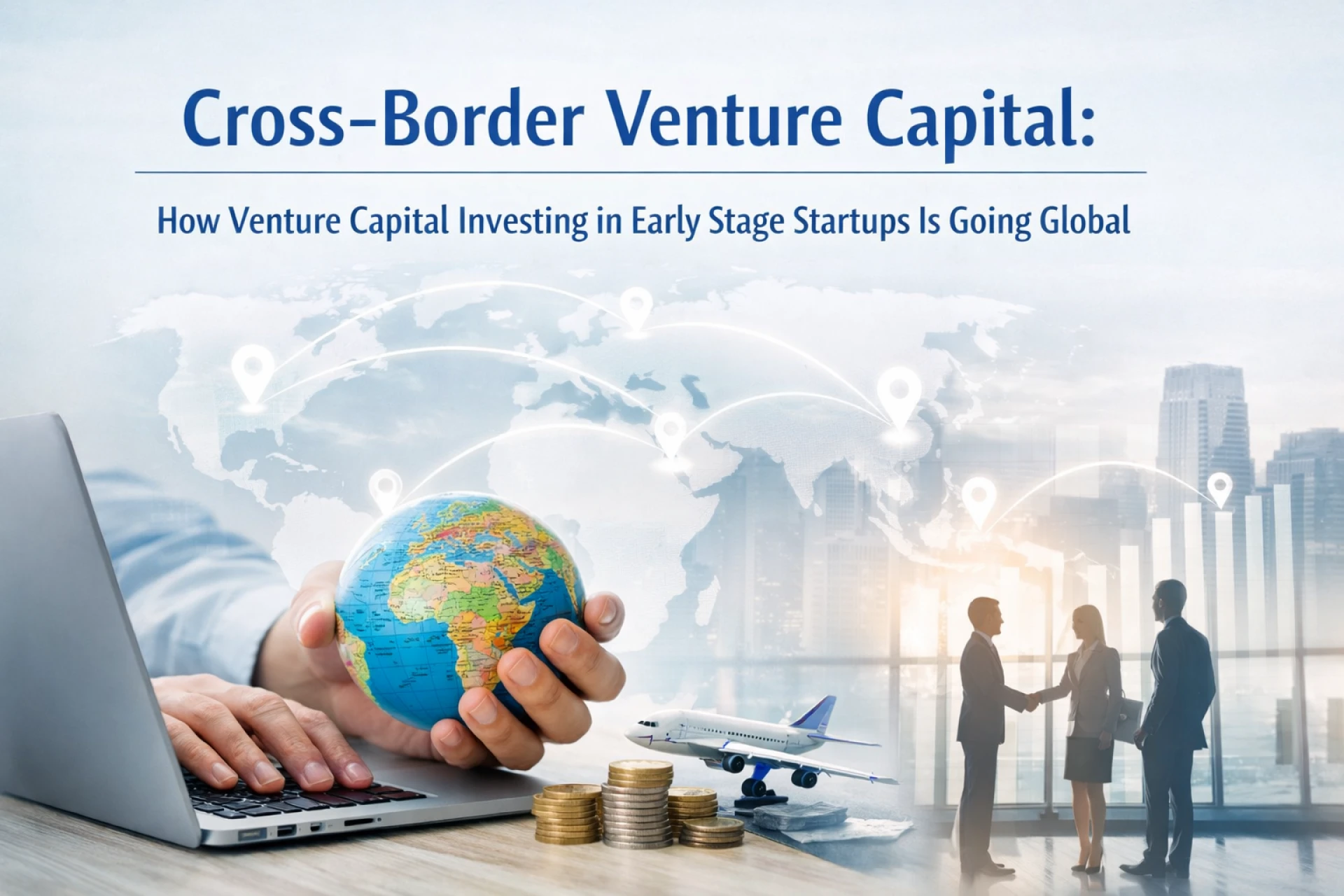
The New Geography of Startup Funding
The venture capital industry has undergone a profound geographic transformation in 2026, with cross-border investment flows reshaping how founders raise capital for startups and how investors deploy capital. Traditional boundaries between venture markets have dissolved, creating a truly global funding landscape where exceptional companies can attract investment from anywhere in the world, regardless of their headquarters location.
This globalization of venture capital has been accelerated by digital transformation, remote work normalization, and the maturation of startup ecosystems outside traditional hubs. As a venture capital firm in Singapore, Evolve Venture Capital has been at the forefront of this trend, building bridges between Southeast Asian startups and global capital sources while also bringing international investment opportunities to regional investors.
The data reveals a clear trend: cross-border venture investment now represents a significant portion of total deal flow in major startup ecosystems. European investors are actively deploying in Asia, Asian funds are establishing presence in North America, and emerging market-focused investors are diversifying geographically. This interconnectedness creates both opportunities and competitive pressures for founders and investors alike.
Drivers of Cross-Border Investment Growth
Several factors have converged to drive the cross-border venture capital boom. First, the search for yield in a low-return environment has pushed investors to explore markets with higher growth potential. Southeast Asia, Africa, Latin America, and the Middle East offer demographic and economic growth profiles that contrast favorably with mature markets.
Second, technology has enabled remote due diligence and portfolio management. Virtual data rooms, video conferencing, and digital collaboration tools have made it feasible for investors to evaluate and support companies across time zones without physical presence. While in-person relationships remain important, the barriers to cross-border investment have significantly lowered.
Third, successful exits from non-traditional markets have validated these ecosystems. Unicorn creation in Southeast Asia, Africa, and Latin America has demonstrated that world-class companies can emerge from any geography, given sufficient capital and support. These success stories attract follow-on investment and create positive feedback loops for ecosystem development.
The Singapore Advantage in Global Venture Capital
Singapore has emerged as a critical node in the global venture capital network, serving as a bridge between East and West, developed and emerging markets. The city-state's regulatory sophistication, legal certainty, and financial infrastructure make it an ideal base for cross-border investment activities. For venture capital investing in early stage startups with global ambitions, Singapore offers unmatched connectivity.
Evolve Venture Capital leverages Singapore's position to source deals across Southeast Asia while maintaining relationships with investors in Silicon Valley, Beijing, London, and Dubai. This network allows us to syndicate international rounds, provide portfolio companies with global market access, and facilitate cross-border strategic partnerships.
The regulatory arbitrage opportunities in cross-border venture capital require sophisticated navigation. Different jurisdictions have varying rules regarding foreign investment, data localization, and corporate structures. Singapore's extensive network of double taxation treaties and investment protection agreements provides a stable foundation for structuring international investments.
Opportunities for Founders in the Global Market
For founders, the globalization of venture capital creates both opportunities and challenges. On the positive side, exceptional companies can now access a much larger pool of potential investors, increasing competition for deals and potentially improving terms. Geographic constraints on fundraising have largely disappeared for companies with compelling value propositions.
However, global competition also means that founders compete with the best companies worldwide for investor attention. Local market advantages must be clearly articulated, and business models must be understandable to investors unfamiliar with regional nuances. Founders must become effective communicators across cultural and linguistic boundaries.
The global talent market has also opened up. Startups can now build distributed teams accessing talent pools worldwide, while investors can support portfolio companies with international expertise regardless of physical location. This flexibility has been particularly valuable for technical talent acquisition and market expansion.
Evolve Venture Capital's Cross-Border Strategy
At Evolve Venture Capital, we have structured our firm to capitalize on cross-border opportunities while managing associated risks. Our investment team includes professionals with experience across multiple geographies, enabling us to evaluate opportunities with appropriate cultural and market context.
We have developed partnerships with local investors in key markets, combining our capital and global network with their on-the-ground expertise. This syndication approach allows us to participate in opportunities we couldn't access independently while providing portfolio companies with comprehensive support networks.
For companies looking to raise capital for startups with international expansion plans, we provide strategic guidance on market entry, regulatory compliance, and talent acquisition across borders. Our portfolio includes companies that have successfully expanded from Southeast Asia to North America, and from Europe to Asia-Pacific, leveraging our network and experience.
Navigating Cross-Border Investment Challenges
Despite the opportunities, cross-border venture capital involves distinct challenges that require careful management. Currency risk, political risk, and regulatory changes can impact investment returns. Due diligence processes must account for different legal systems, accounting standards, and business practices.
Investors must also navigate cultural differences in business communication, negotiation styles, and relationship building. What constitutes appropriate persistence in fundraising outreach varies significantly across cultures, as do expectations regarding board involvement and governance structures.
The time zone coordination required for global portfolio management creates operational complexity. Regular communication with portfolio companies, co-investors, and advisors across multiple time zones requires intentional scheduling and sometimes asynchronous collaboration tools.
The Future of Global Venture Capital
Looking ahead, cross-border venture capital will likely continue expanding as startup ecosystems mature globally and technology further reduces geographic barriers. However, we may also see increased localization as markets develop sufficient depth to support dedicated local funds. The optimal strategy likely involves a hybrid approach—global networks with local expertise.
Regulatory developments will shape the cross-border landscape. Governments are increasingly scrutinizing foreign investment in sensitive sectors, implementing data localization requirements, and adjusting tax treatment of cross-border investment income. Successful investors will need to navigate this evolving regulatory environment while maintaining investment returns.
For founders, the key insight is that geographic location matters less than ever, but cultural adaptability and global mindset matter more than ever. Companies that can effectively communicate across borders, build diverse teams, and navigate international markets will have significant advantages in accessing capital and scaling globally.
"In today's globalized venture capital market, founders should think internationally from day one, even if initial operations are local. Build your company with global standards in governance, financial reporting, and corporate structure—this preparation pays dividends when international investors evaluate your opportunity. Develop cultural fluency and build diverse advisory networks that can help you navigate different business environments. Don't limit your fundraising to local investors; the best capital source for your company may be on another continent. However, be realistic about the additional complexity that international investors bring—time zone challenges, different expectations, and potential misalignment on exit timelines. At Evolve Venture Capital, we help our portfolio companies navigate these complexities, leveraging our cross-border experience to facilitate successful international fundraising and expansion. The founders who thrive in this environment combine local market expertise with global ambition and the humility to learn from diverse perspectives."
Contact Information:
- Website: www.evolvevcap.com
- Email: [email protected]
- Phone: +65 8181 4097