
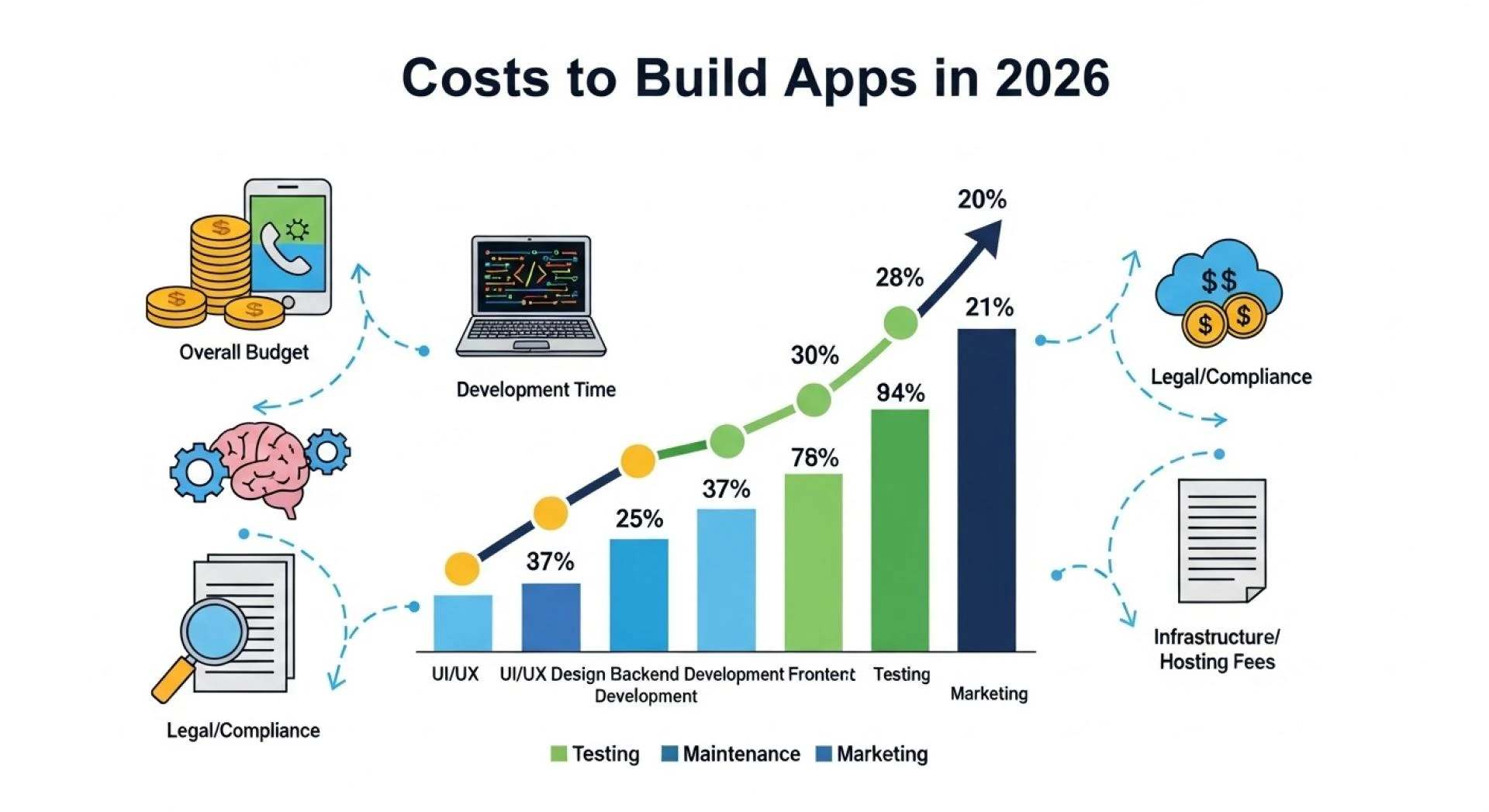
Building an app in 2026 is not just a tech trend—it’s a smart business pass that enables corporations to automate workflows, improve consumer experience, and scale faster. Before you start, expertise in the real development value is critical. Typical 2025 app charge tiers look like this: Basic apps: $8,000–$25,000, Mid-degree apps: $25,000–$80,000, and Advanced apps: $80,000–$300,000+, depending on capabilities, design, protection, integrations, and scalability wishes.
Cost varies even more while you're building niche apps consisting of transport structures, fintech tools, or e-commerce app development tasks. Knowing those ranges enables you to plan realistically and avoid hidden surprises later.
Why App Development Costs Keep Rising Every Year
The digital market grows increasingly competitive every year. As customers expect quicker reviews, cleaner UI, effective capabilities, and immediate assistance, development groups have to make investments of extra time and knowledge into developing notable packages. This certainly drives up the fee of expert improvement.
Moreover, preserving present-day apps requires cloud hosting, ordinary updates, and performance optimization. Companies that release low-budget apps frequently end up spending greater later on fixes, redesigns, and scalability enhancements.
The Hidden Cost Factors Most Businesses Ignore
Many corporations calculate only in advanced development cost, but several hidden fees appreciably affect the entire price range. For instance, third-party APIs like payment gateways, maps, SMS offerings, or analytics gear all include monthly fees. These may additionally seem small for my part, however collectively they make a sizeable impact on long-term prices.
Additionally, app protection is a major investment region now. With cyberattacks growing, encryption layers, steady logins, and compliance exams (PCI, GDPR, HIPAA) have turned out to be a must. These additional measures add both time and value to each improvement cycle.
Feature Complexity: The Primary Cost Driver
Feature intensity is one of the biggest motives why apps vary in fee. An easy information app may cost $10k, whilst a sophisticated multi-supplier marketplace may want to exceed $200k. The extra complex the capabilities, the more engineering time is needed.
For instance, real-time chat, AI hints, personalized dashboards, and push notifications can notably boost complexity. Apps with superior judgment, multi-role dashboards, or microservices architecture also require greater senior builders, increasing the final cost.
Platform Choice: Android, iOS, or Cross-Platform?
Choosing among systems impacts value greater than human beings think. Native apps for Android and iOS usually cost more because they require separate codebases. However, go-platform technology like Flutter and React Native helps lessen cost by the usage of a shared codebase for both platforms.
Still, native improvement may be useful for apps requiring high performance—like gaming, AR apps, or apps that rely heavily on device hardware. The proper approach relies on your overall performance desires and finances.
UI/UX Design: Where First Impressions Are Made
Design is no longer optionally available—it’s an enterprise advantage. High-quality UI/UX defines how customers engage with your app, and a clean interface can dramatically enhance conversion costs. Modern users count on seamless flows, clean layouts, and intuitive controls.
Design prices vary widely based on brand property, animations, screen counts, and customization stages. Apps with richer interactions or motion photographs clearly cost more; however, they also stand out and maintain customers engaged longer.
Backend Development: The Engine Behind the App
Your backend is where all the heavy lifting happens. It manages databases, APIs, logins, payments, user profiles, and real-time functions. Even in the case that your app seems easy, a solid backend guarantees it performs reliably under peak load.
Complex backends—specifically those constructed with microservices, automation workflows, or cloud infrastructure—fee extra. The advantage is lengthy-time period scalability, permitting your app to grow without breaking under strain.
Integrations and Third-Party Tools That Impact Price
Modern apps depend heavily on integrations like Stripe, Firebase, Twilio, Google Maps, AI engines, and CRMs. While integrations speed up improvement, in addition, they add setup time, trial-and-error cycles, and habitual expenses.
For instance, integrating superior AI features, including chatbots, advice engines, or behavior analytics, will grow value appreciably. However, corporations gain powerful insights that assist in enhancing consumer engagement and conversions.
Maintenance, Updates & Post-Launch Costs
The app’s adventure doesn’t cease after launch—maintenance is a year-round requirement. Businesses should allocate around 15–25% of the development value yearly for updates, malware fixes, server costs, and performance upgrades.
As people's expectations evolve, adding new features will become essential to live aggressively. Companies that prioritize ongoing improvements see higher retention and long-term ROI.
Developer Location and Team Structure
Hourly quotes fluctuate around the sector. Developers in the US usually charge more than those in India, Pakistan, or Eastern Europe. However, location shouldn’t be the most effective identifying component—reveal in and portfolio count extra.
A professional group commonly includes UI/UX designers, frontend builders, backend engineers, QA testers, assignment managers, and DevOps specialists. Each role contributes a unique skill set that, without delay, impacts best practices and reliability.
Real-World Price Examples for 2026
Here’s what ordinary apps may cost in 2026:
- Simple carrier apps (reserving, calculators, fundamental forms): $10,000–$30,000
- Mid-degree apps (health, transport, training, loyalty systems): $30,000–$90,000
- Advanced apps (marketplaces, fintech tools, social platforms, AI apps): $90,000–$250,000+
For apps needing superior AI, custom dashboards, or worldwide consumer bases, the value increases similarly. These numbers help organizations plan strategically and keep away from price range overruns.
How to Reduce App Development Cost Without Losing Quality
One clever technique is constructing an MVP (Minimum Viable Product) first. MVPs will let you check your idea fast, avoid unnecessary capabilities, and attract early customers. This reduces monetary threat and creates a higher foundation for destiny improvements.
Another powerful method is the use of move-platform frameworks. They cut improvement time, reduce fees, and nonetheless provide incredible overall performance for maximum enterprise use cases.
Final Thought
Building an app in 2026 is a protracted-time period funding that can remodel the way your business operates. When you recognize cost factors virtually, you can plan strategically, avoid financial surprises, and pick out the right crew. Whether you’re building a simple app or something superior like apps like Temu & Shein, the key is understanding your desires, selecting the proper technology, and investing in long-term scalability.